


Crawling between the plants in my abuela’s garden was always full of surprises because I never knew what I would find: a beautiful flower, a broken ceramic statue, or an edible delight hidden among the leaves. My grandmother's house and garden were my second home. She cared for me while my parents worked during the day, and her garden became my playground, refuge, and world of imagination.
Years later, during the pandemic, my husband John and I spent hours walking the streets of Rockridge. One day we stumbled upon Julianne's front yard garden, a hidden gem tucked into the neighborhood. We often wondered who lived behind such an enchanting landscape and what stories it contained.
Encountering the garden awakened memories of my grandmother’s yard and reminded me of the important role these landscapes play in Latino family life—serving as places of refuge, creativity, and belonging.
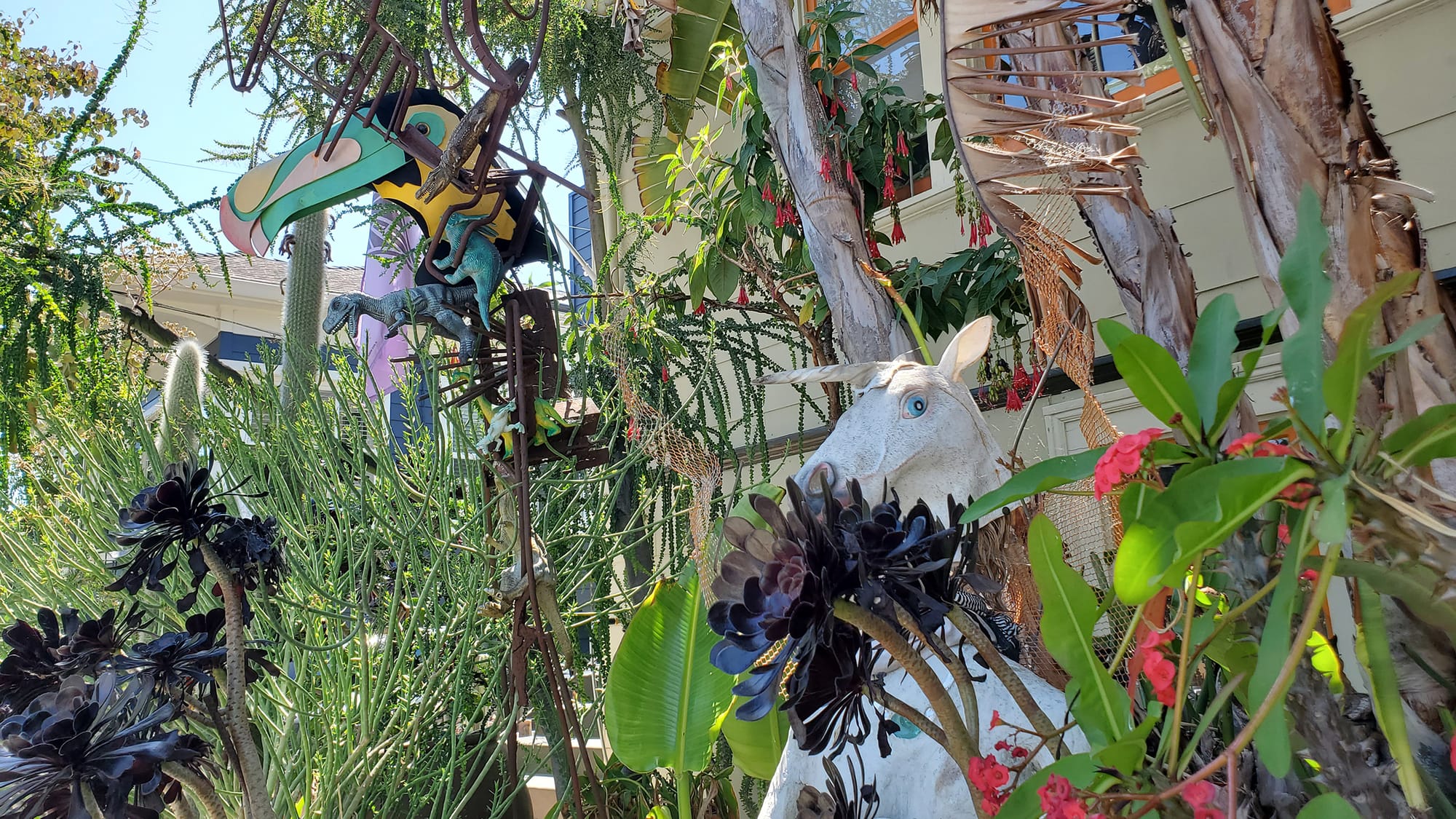
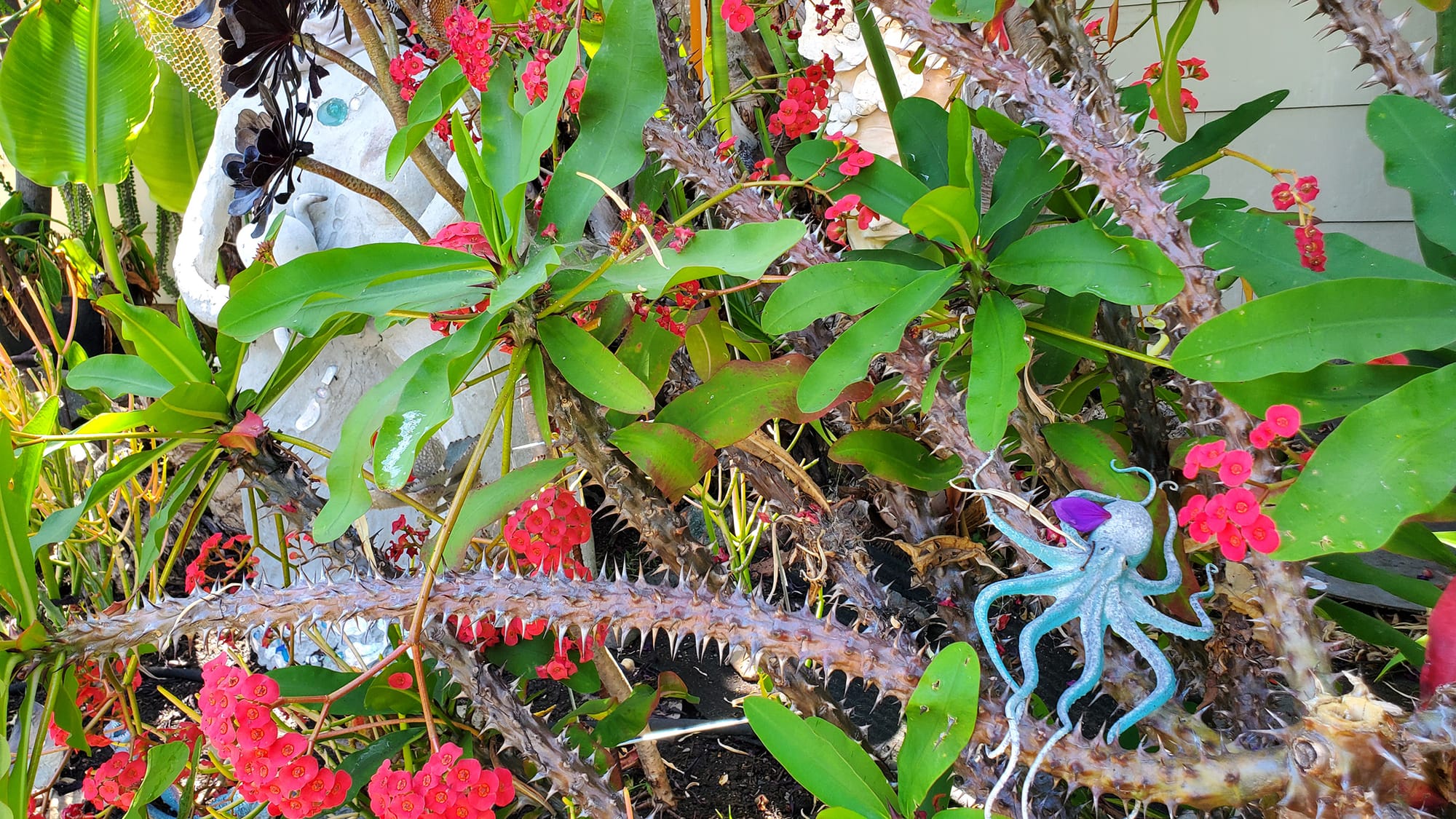
Eclectic and colorful, Julianne’s front yard invites passersby to look and linger. Photo: Anna L Marks
For Julianne, the front yard is a place of self-expression. Unlike the conventional American yard where order, perfection, and property values often define success, the beauty of her rasquache (DIY) garden cannot be measured by traditional design or architectural standards. Her garden transforms the front yard into an extension of the home and a welcoming space for social interaction.
Through landscape design, Julianne communicates her values and identity. The garden is filled with statues, found objects, and colorful knickknacks, yet plants remain at its center. Some are native, while others come from distant places, reflecting the migrations and journeys of the family itself.
A Garden of Delight
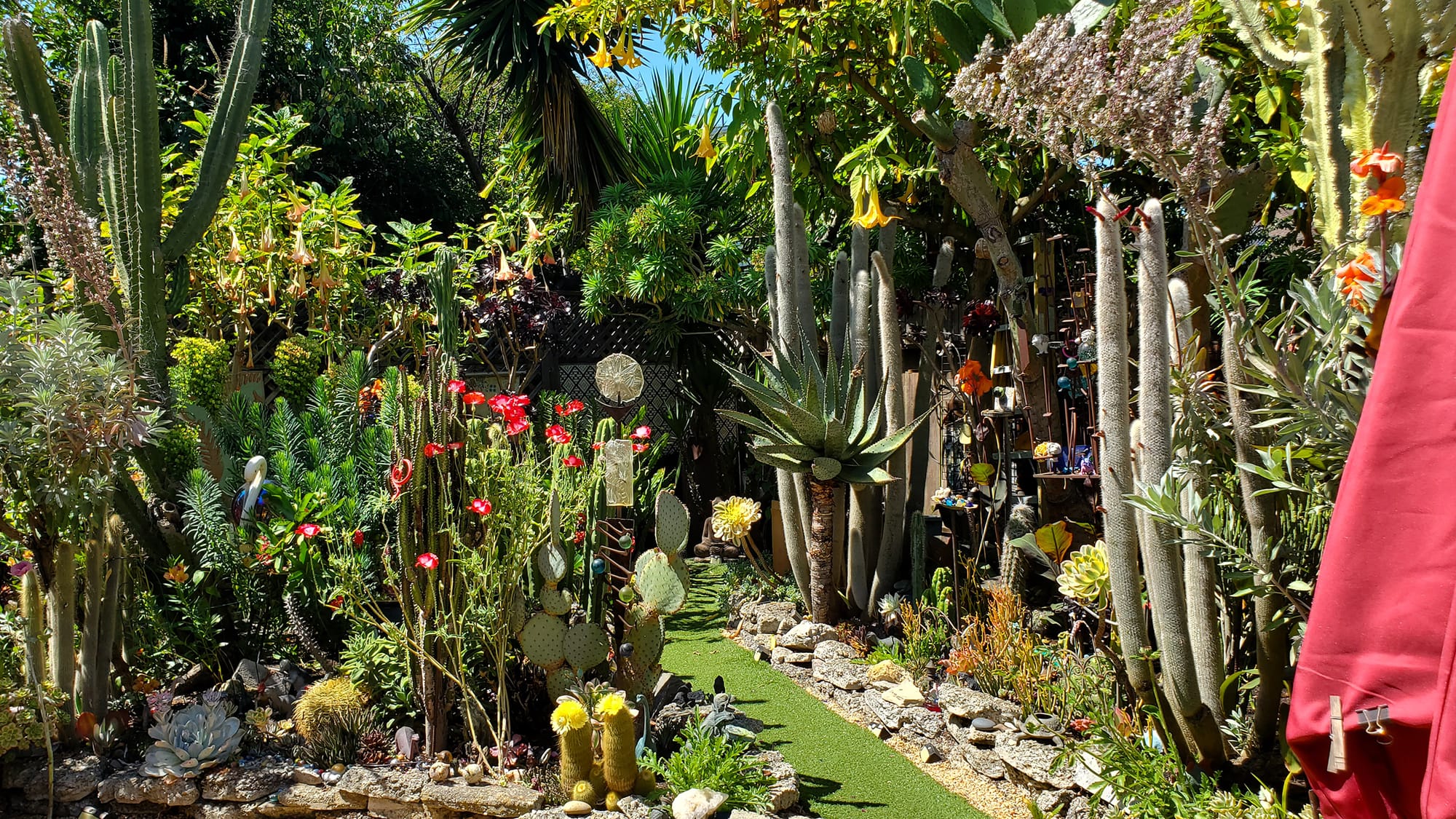
Like entering a womb, Julianne’s backyard garden envelops the senses from head to toe. From the gravel and marble ground cover beneath your feet to the petals dancing overhead, this enchanting landscape creates a feeling of being held within nature.
Surrounded by lush vegetation, it offers a retreat from the outside world, inviting visitors to slow down, linger, and imagine the stories embedded within its plants, objects, and spaces.
Every step reveals something new, a texture underfoot, a fragrance carried by the breeze, a flicker of color overhead. Nature is not a backdrop here but a living presence. The garden is animated and ever-changing, responding to the seasons, the weather, and the daily rhythms of life.
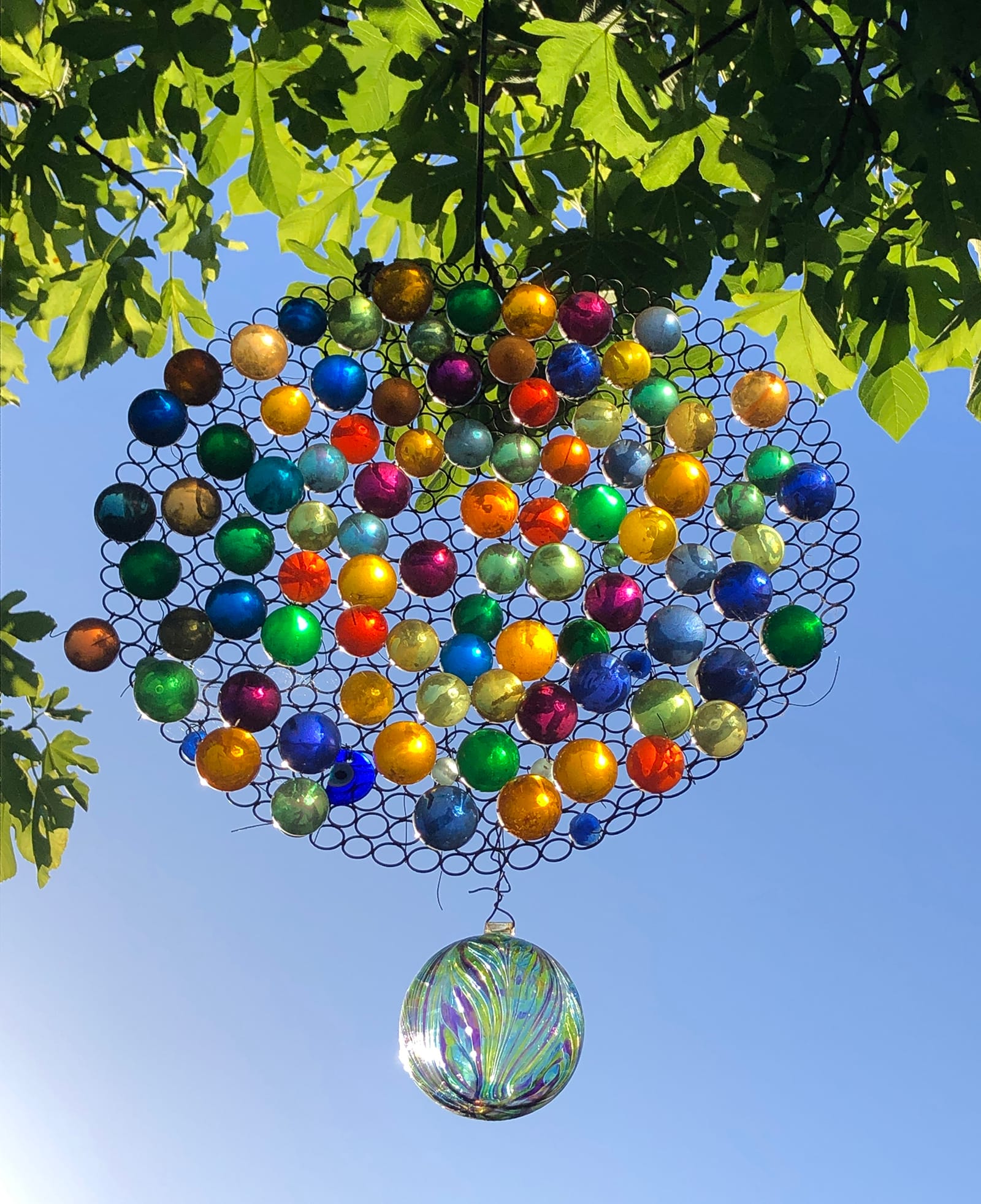
In most gardens, light falls upon the plants. In Julianne's garden, the afternoon light shines through them. Like a stained-glass window, the sun illuminates translucent leaves and vibrant petals, casting a luminous glow. The garden seems to radiate from within, transforming ordinary moments into experiences filled with wonder.
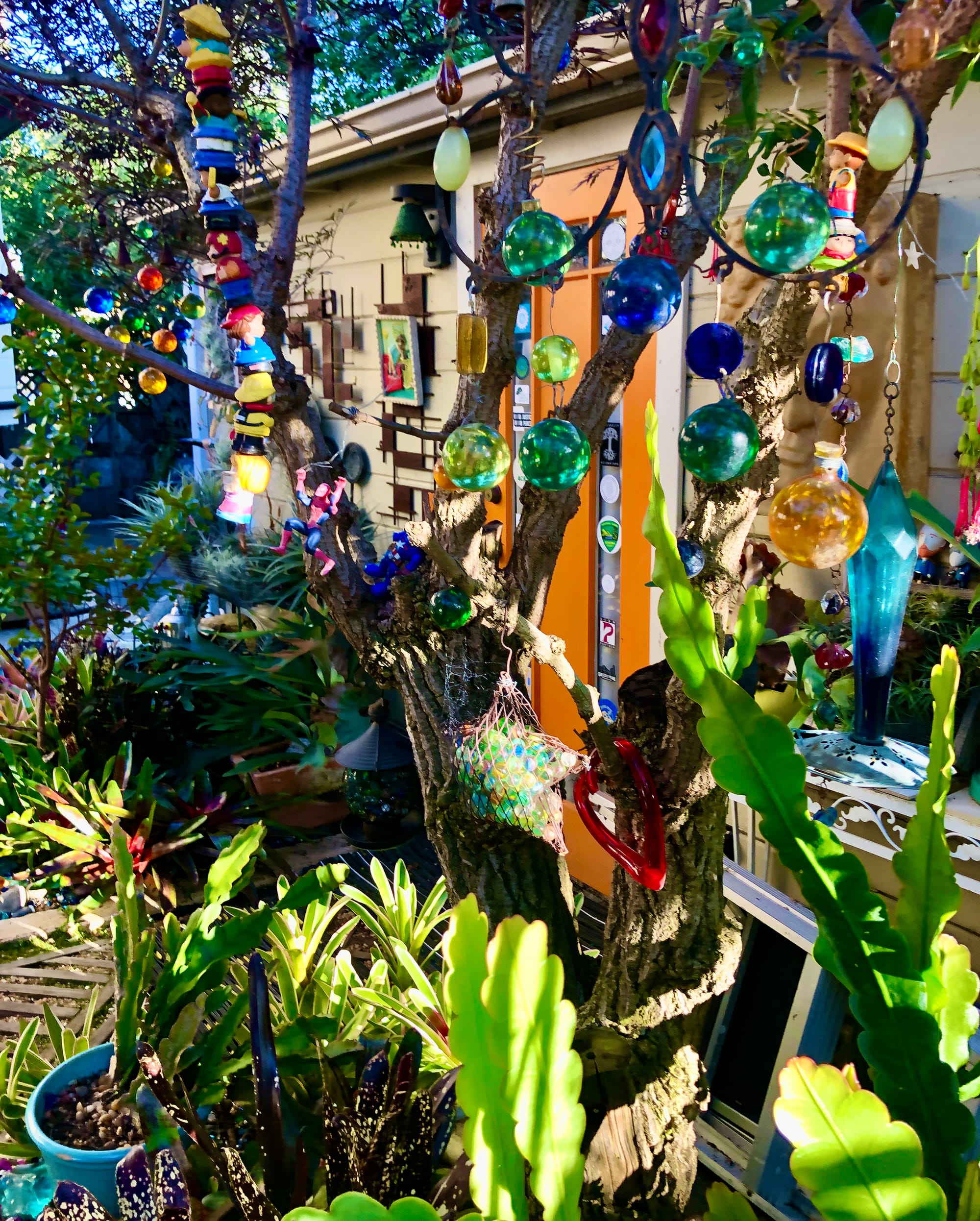
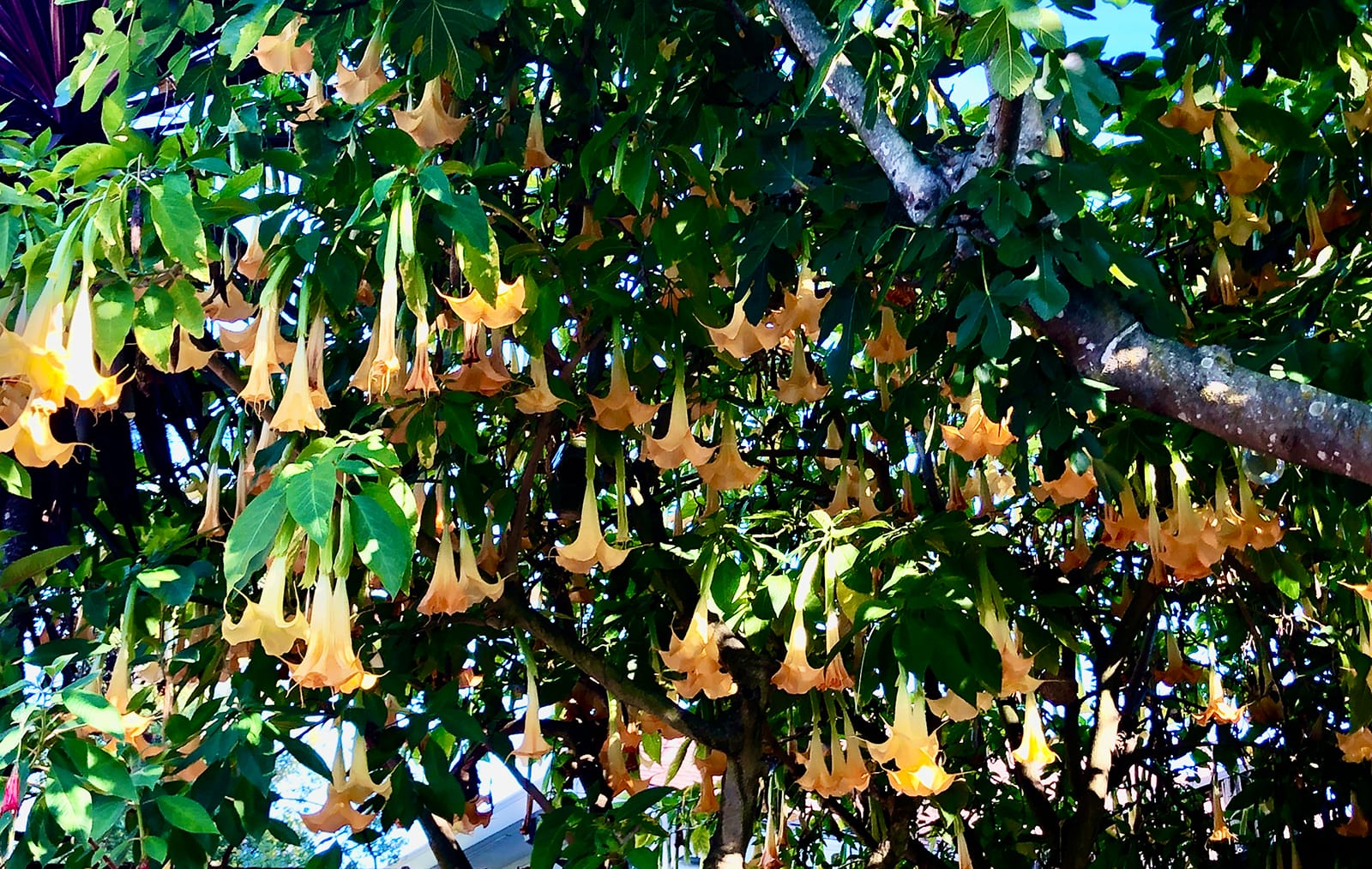
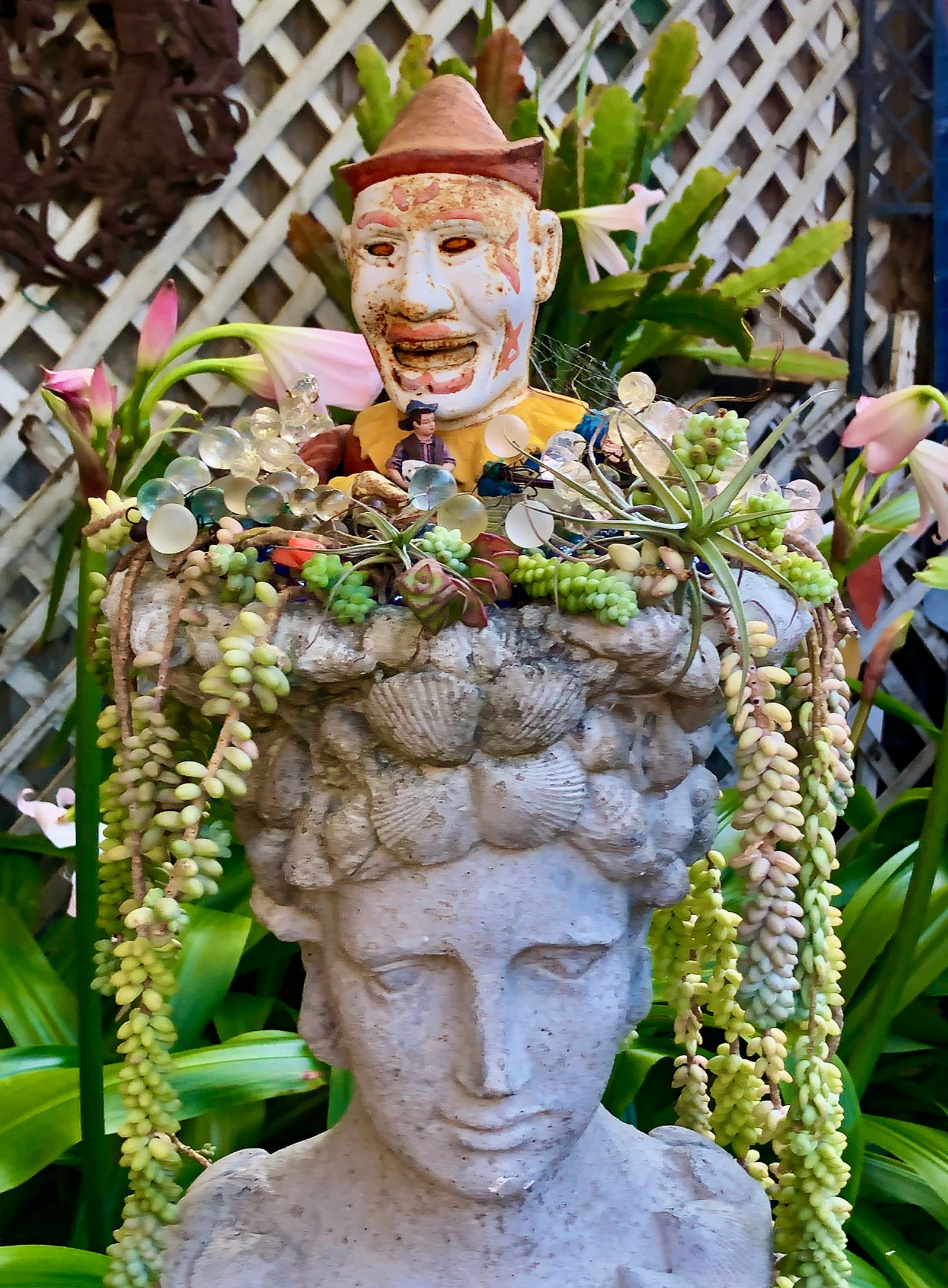
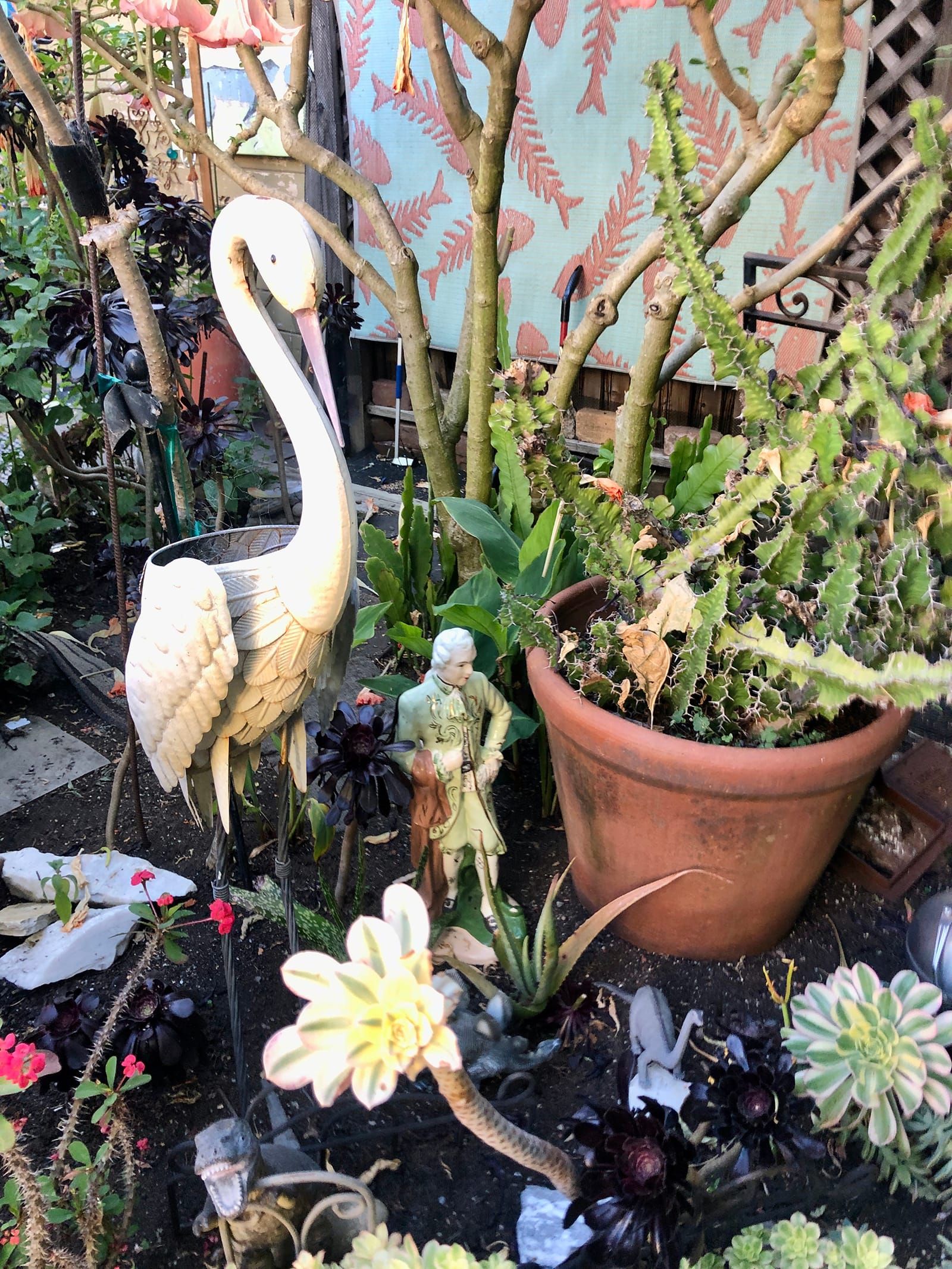
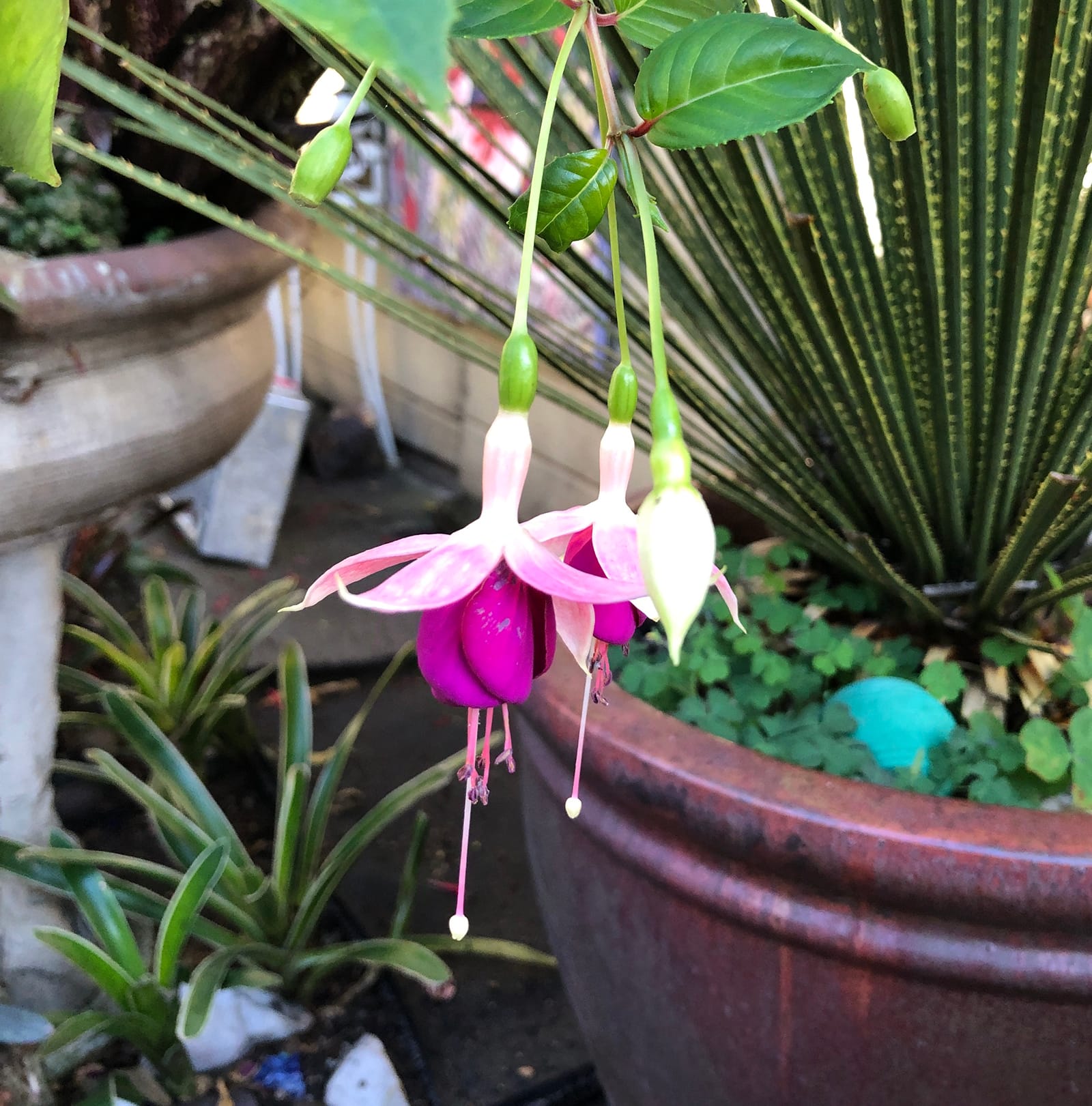
Photos: James Rojas
Julianne's garden did not emerge from a landscape architect’s plan or a design manual, but in a manner similar to the Watts Towers created by Simon Rodia. Built over 33 years on a small triangular lot in Los Angeles, the towers were constructed from recycled and found materials, including broken porcelain, glass bottles, seashells, and steel.
Like Rodia's masterpiece, Julianne's garden evolved gradually through daily acts of care, experimentation, and necessity—the landscape taking shape through years of improvisation and imagination. Neither creator relied on professional design credentials; instead, both produced meaningful places through lived experience, personal expression, and an intimate engagement with their environment.
Her garden reflects a lifetime of memories, relationships, cultural traditions, and journeys. Experiences gathered during travels from Greece to Goa, India, continue to live within the landscape through its plants, objects, colors, and sensory richness.
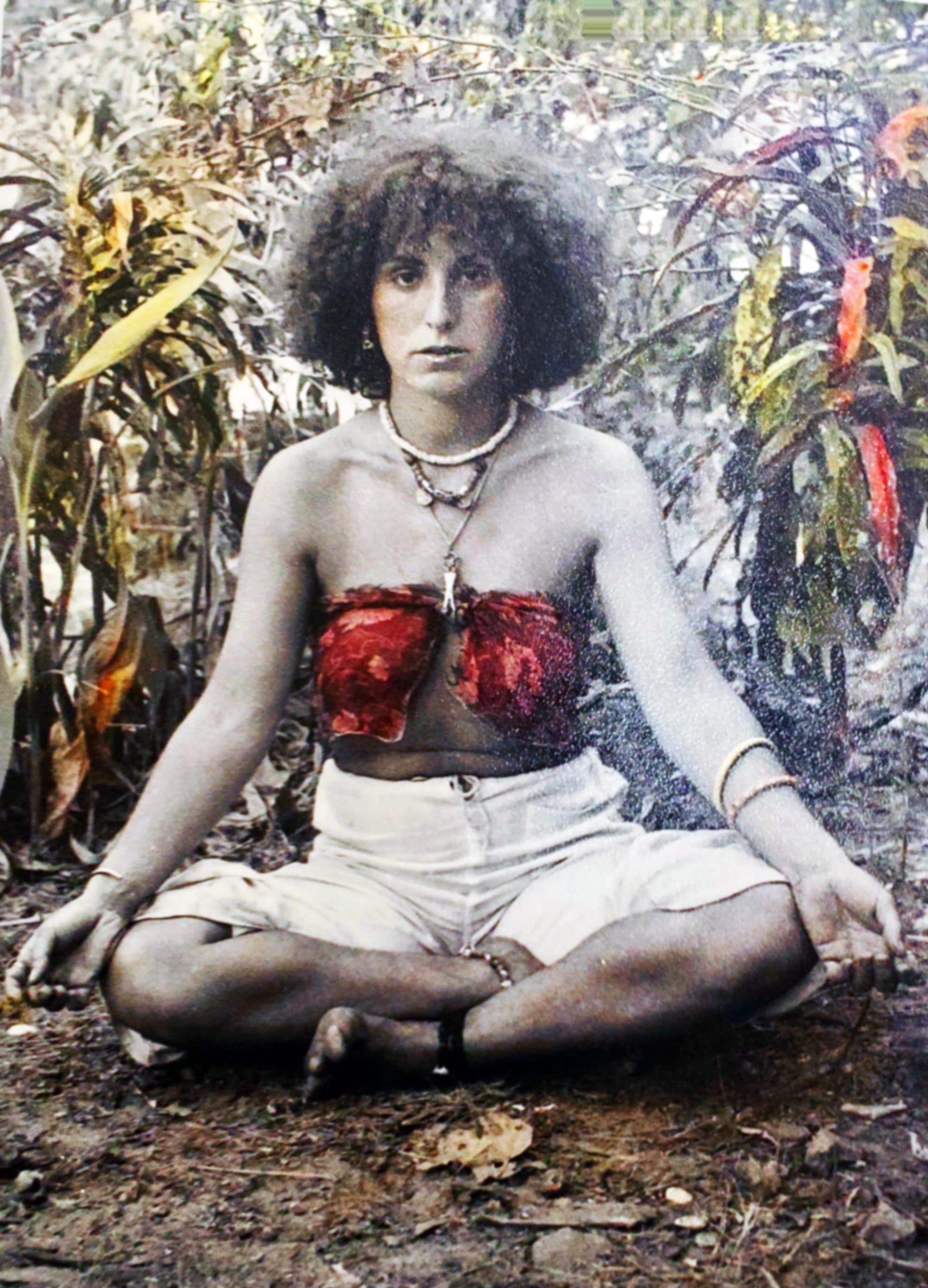
The backyard is organized around a large fig tree that forms a canopy and provides shade. Shrubs create another layer, establishing a sense of enclosure and defining the outdoor space. Overhead, flowering plants create a canopy of color. Potted plants add texture, vibrancy, and an intimate human scale that invites visitors to linger. Marbles scattered across the ground and small artifacts embedded into the landscape hint at childhood play and discovery.
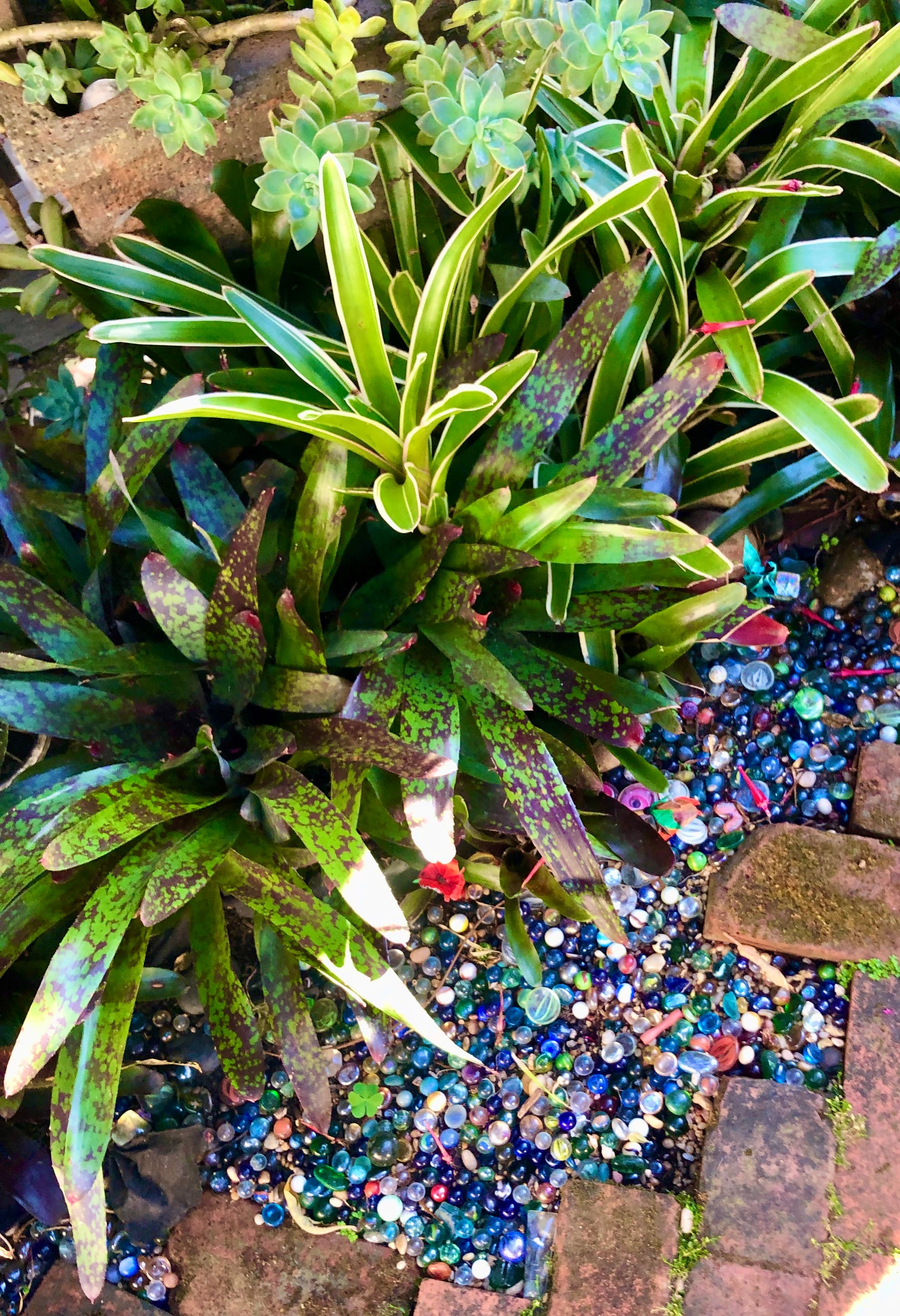
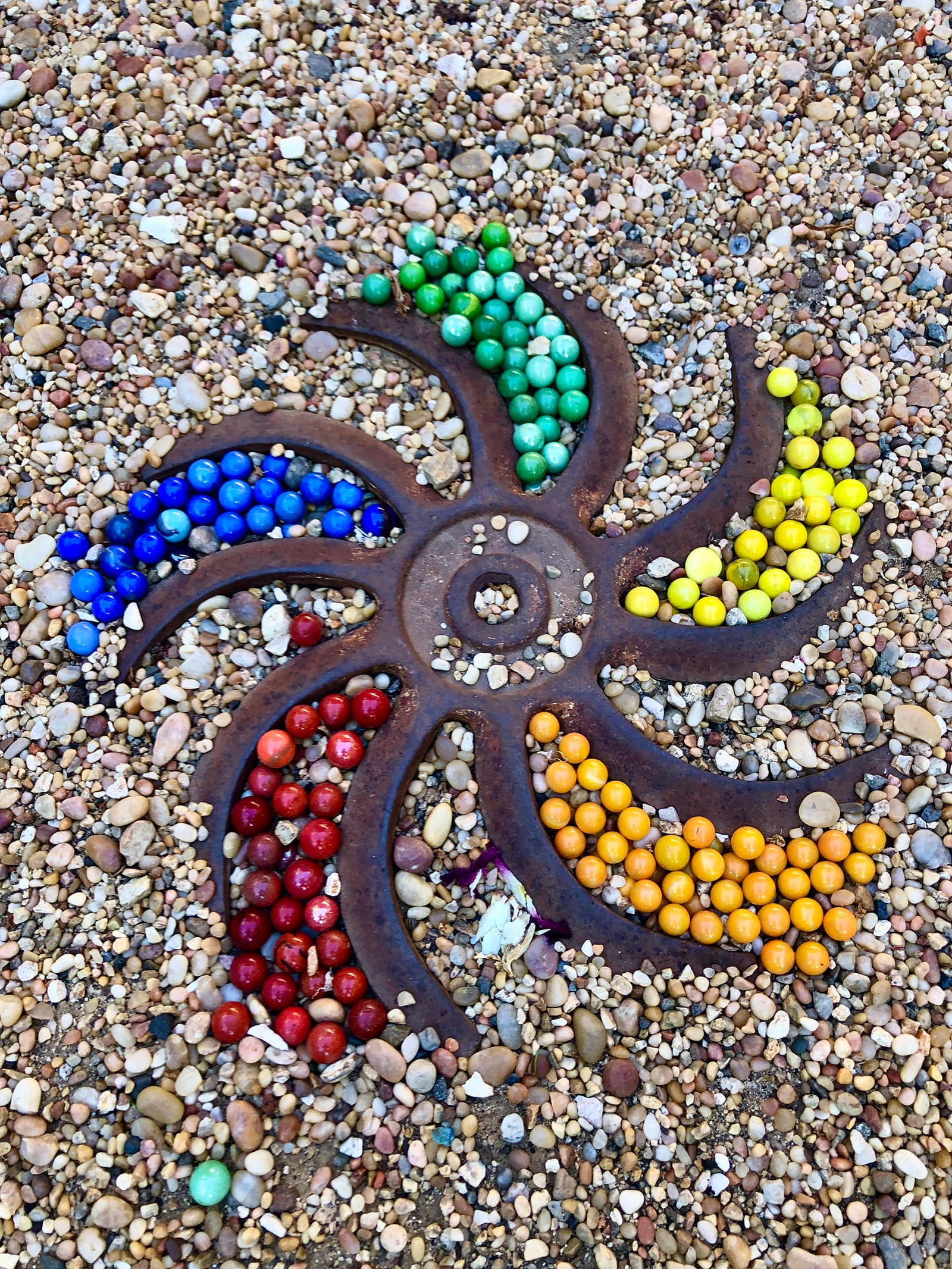
Photos: James Rojas
Julianne’s garden is a living archive of memories, beliefs, relationships, and dreams. Through countless acts of care, improvisation, and imagination, she has transformed an ordinary residential lot into a meaningful landscape.
I walk through her garden today like the child I once was, searching for surprises among the plants. In every flower, statue, marble, and found object, I see not only a garden but the cultural production of space—a living expression of memory, identity, and belonging.


