

This past semester, in my housing design studio at the University of San Francisco, I wracked my brain to come up with a final assignment that would teach students about mid-rise senior housing, have them wrestle with real world issues, and hopefully contribute insights to an issue that needed to be addressed. Suddenly, the problem became obvious.
As a Rockridge resident, I saw the Red Cross site—with its proposed eight-story senior rental housing project—as an ideal case study. The one-acre site presented the challenge of balancing neighbors’ needs for peace and privacy with the higher-density development permitted under new state regulations.
Although not presented at any community event, the models provide great examples of other design alternatives. The assignment also provided an opportunity for students to bring fresh perspectives and explore a range of potential solutions.
Their first assignment was to analyze the context and develop a site model at 1"=20' that showed the surrounding homes and offered a blank site for them to develop their individual solutions.
A student in the class modeled the proposed structure so that people who may have a difficulty conceptualizing two-dimensional drawings could better understand the massing relationship between the proposed building and the local neighborhood.
In the second part of the assignment, students were asked to make a model of their building in context of the large model by developing an affordable senior housing project, and balance the urgent need for low-income housing with the current one and two-story homes adjacent and across the street.
They were not told how many units to design, nor were they required to hold to any development proforma to pencil out a viable project. That said, it was interesting to see what they developed.
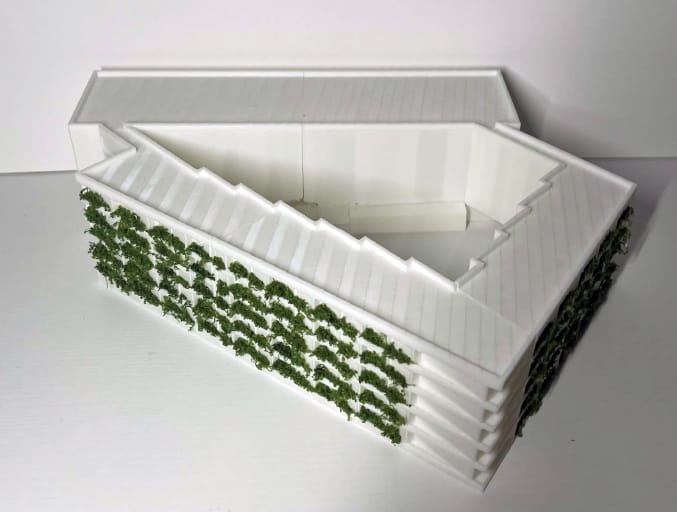
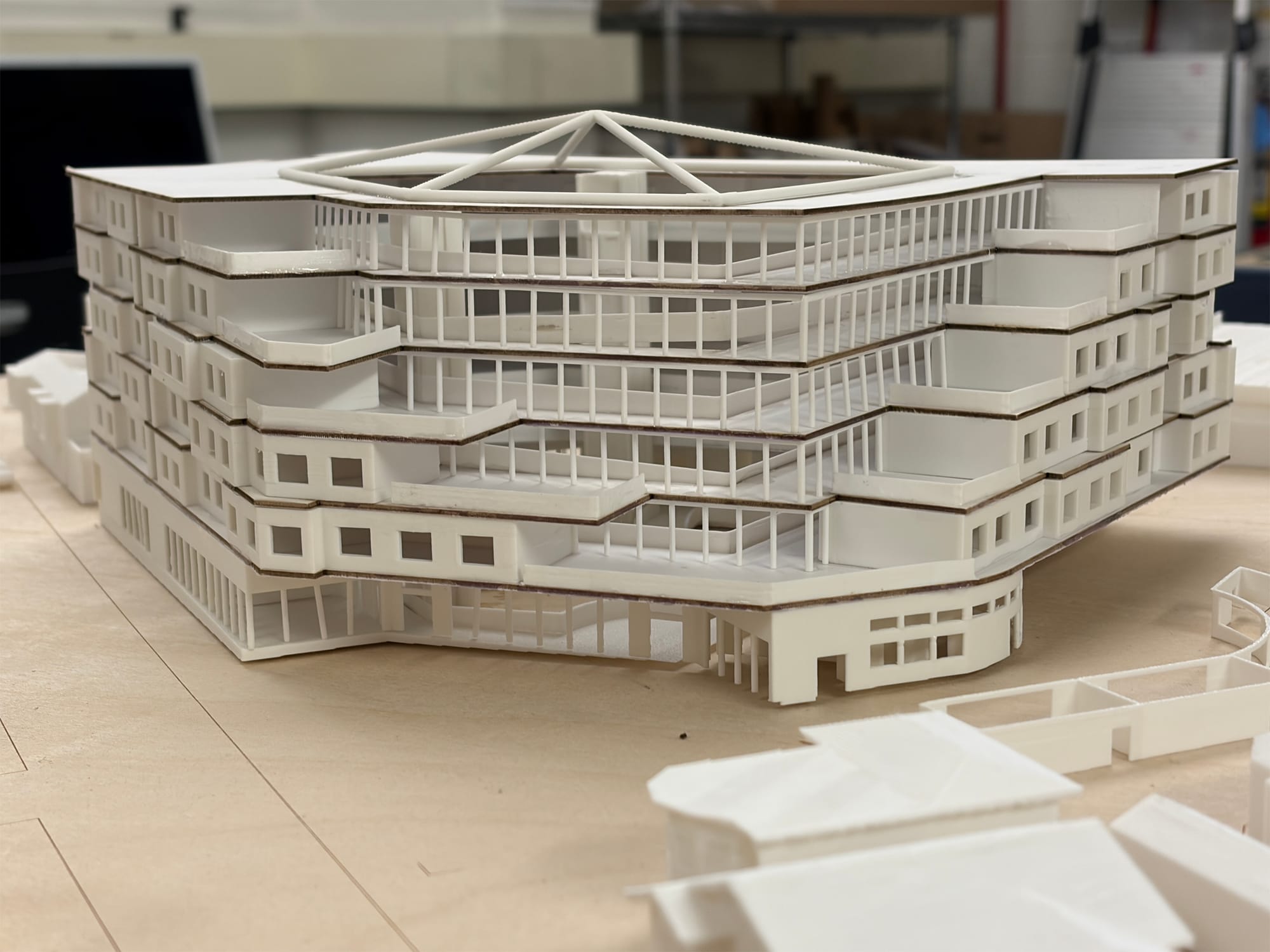
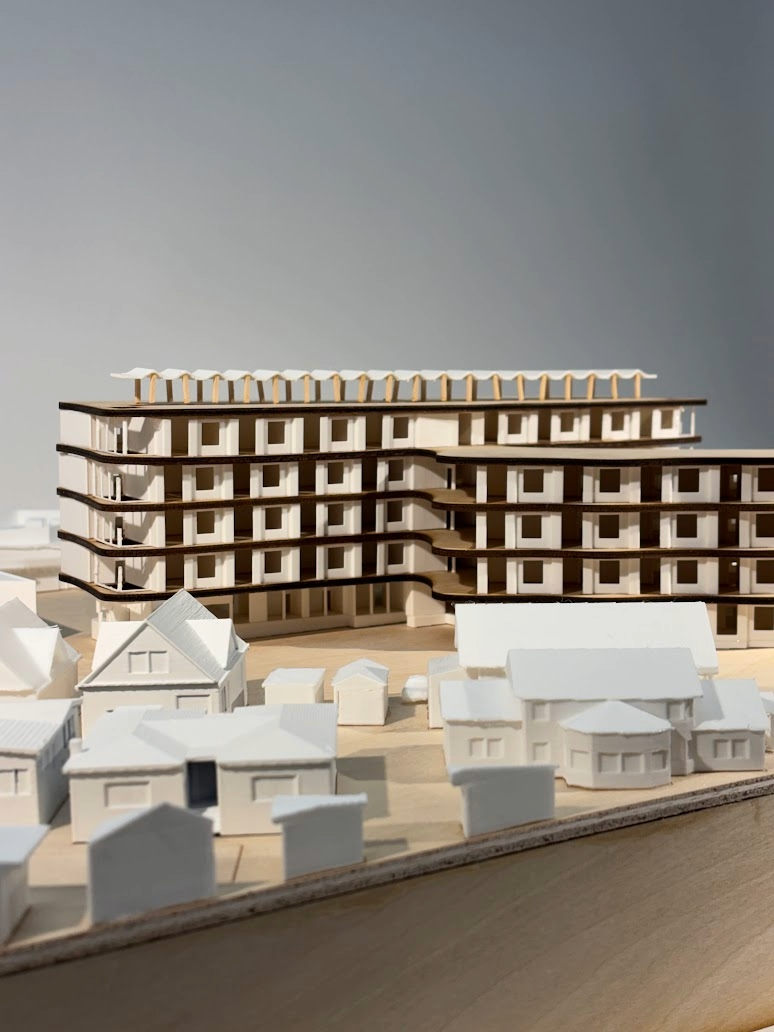
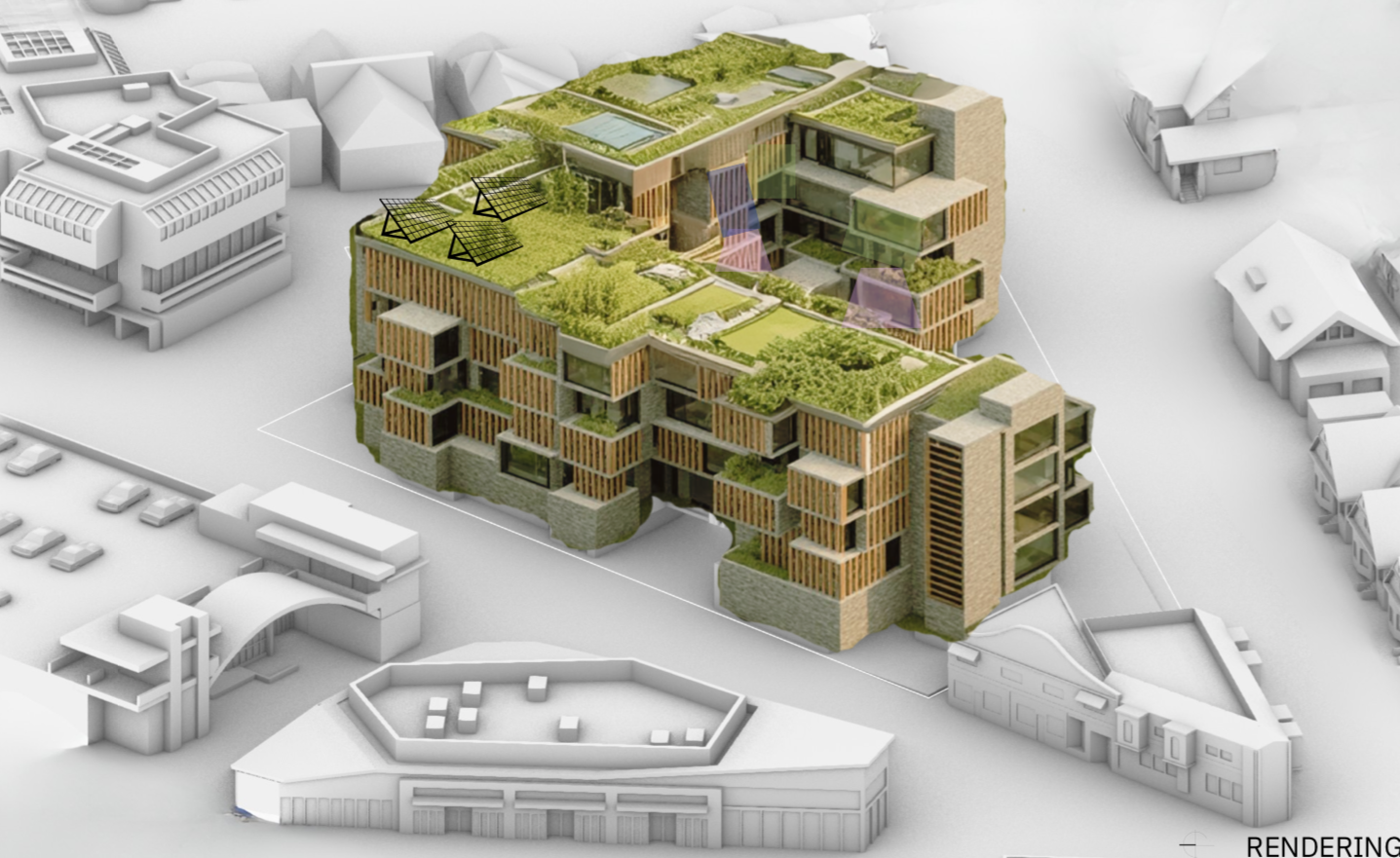
Students Charlize Diano, Douglas Doan, Peter Nedelisky, Sujana Gurung (left to right/top to bottom) showed various creative options for the 6230 Claremont development.
Most chose not to exceed five stories, and added some shared community common outdoor space. Some stepped the height of the building down closer to the homes, created an articulated facade that reduced the perceived mass of the building and set-back their proposed designs from the property line.
Their models and projects demonstrate alternative ways of developing the site, albeit with a different program and no economic requirements. The students successfully grappled with the lessons of the project and, hopefully, added to the community conversation.
Adjunct Professor of Architecture at USF, Leslie Moldow, FAIA, is 19-year resident of Rockridge with a 40-year career specializing in senior living design at Perkins Eastman where she has designed for-profit, not-for-profit and affordable projects.


