


Annual wildflowers are, by their nature, fleeting, beginning to sprout here in California with the first fall rains and then generally finishing blooming by the end of May, or sometimes earlier. Clarkia is an exception to this rule, blooming much later than other California wildflowers and giving an un-irrigated landscape an extra hit of color when many other plants are winding down their bloom time.
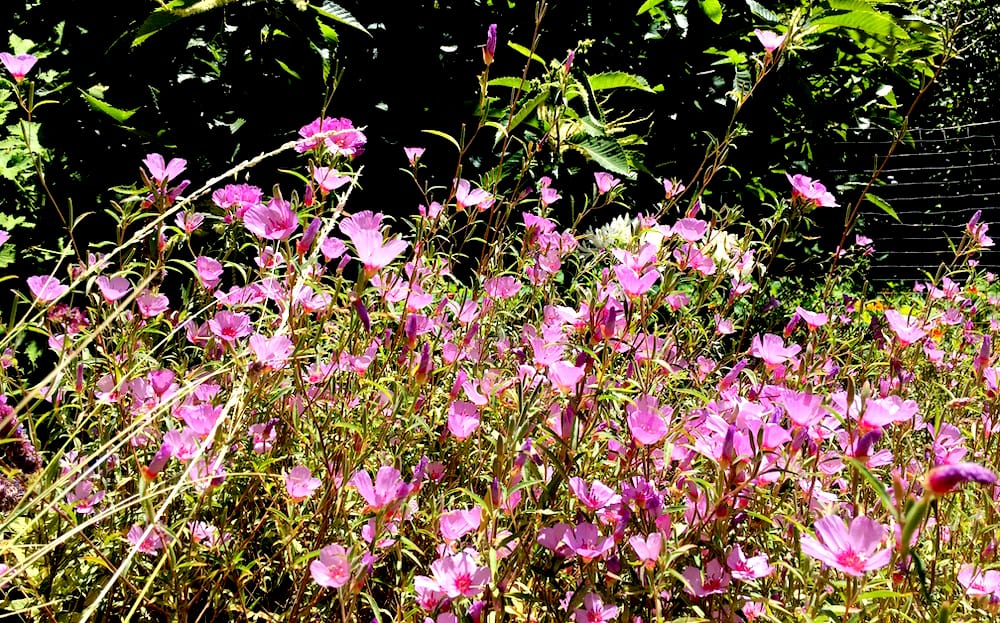
Annual wildflowers should be seen as accents rather than structure within a landscape. They are, by their nature, fleeting, but their shape and form can also be relatively insignificant compared to their flowers. Additionally, the foliage of some species can look a bit weedy (think jagged, narrow, toothed leaves). Clarkia, however, is almost impossible to confuse with a weed and thus will look at home in a more cultivated-looking garden or landscape.
Relatively unfussy about soil, it grows in both clay and more free-draining environments. Scatter seed over bare soil, walk on top of it, and then cover it with a thin layer of mulch (organic or inorganic, though it seems to prefer inorganic mulch). It likes sun, or at least partial sun, but shade less so. Bees and a range of other pollinators enjoy the flowers, and the foliage is thought to be a preferred food source for various moths, such as the hummingbird-like sphinx moth.
By early July, the plants are usually finished blooming and will set seed and die. You may let the dry seed pods open and scatter seed on their own, or you can harvest them and set aside seed for another year or another garden.
As a carbon-capturing hack, when removing the spent plants, snip them back at the base near the soil and leave the roots in the ground to decompose. Their presence and slow decomposition will aerate the soil and help it capture more carbon than it otherwise would. Long term, the decaying organic matter underground will aid in water retention, leading to a more successful un-irrigated landscape overall.


