

When BART first opened, each station included a substantial amount of parking to encourage the use of public transportation. Since not everyone lives within a short distance of a station, convenient parking was considered essential to BART's success.
Now, however, we are building housing on those BART parking lots, creating a new transportation challenge. If someone works in downtown Oakland or San Francisco but doesn't live within reasonable walking or biking distance of a BART station (neither of which is a practical option for everyone, particularly people with disabilities), they must get there by bus or ride-share, or perhaps decide to drive to work themselves—adding expense, time, and additional traffic impacts.
These competing demands—for more housing, convenient public transportation, and manageable neighborhood traffic—are becoming increasingly difficult to balance. As we add more residents to the neighborhood, these challenges will only grow. In one residential area, frustration with traffic has already brought neighbors together to discuss possible solutions.
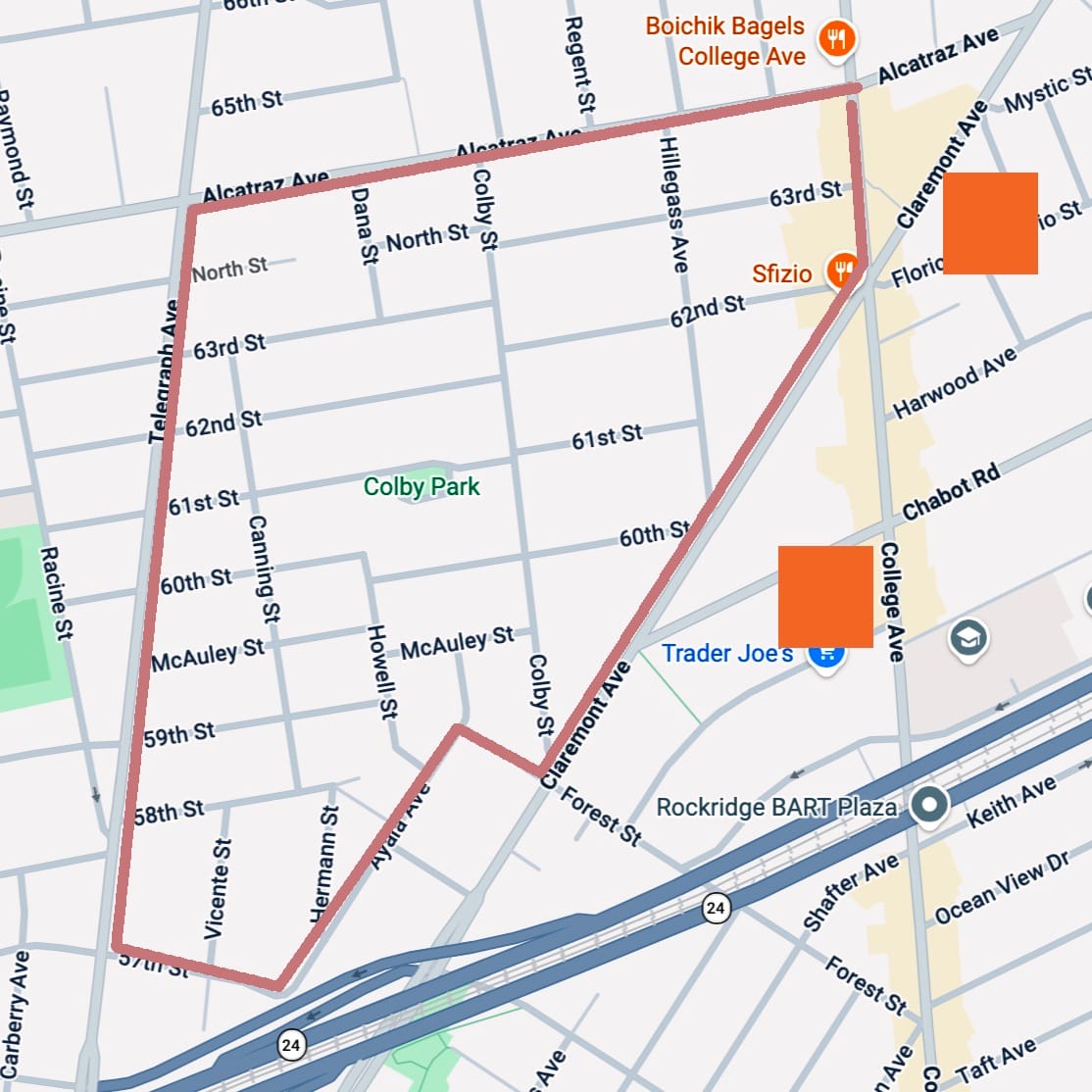
On Monday evening, October 26, some 150–200 residents of the Rockridge “trapezoid” (defined as the area bounded by Alcatraz, College, Claremont, and Telegraph Avenues) met at College Avenue Presbyterian Church to talk about traffic. The meeting was hosted and led by members of an ongoing committee of residents who have been in discussion since January of last year.
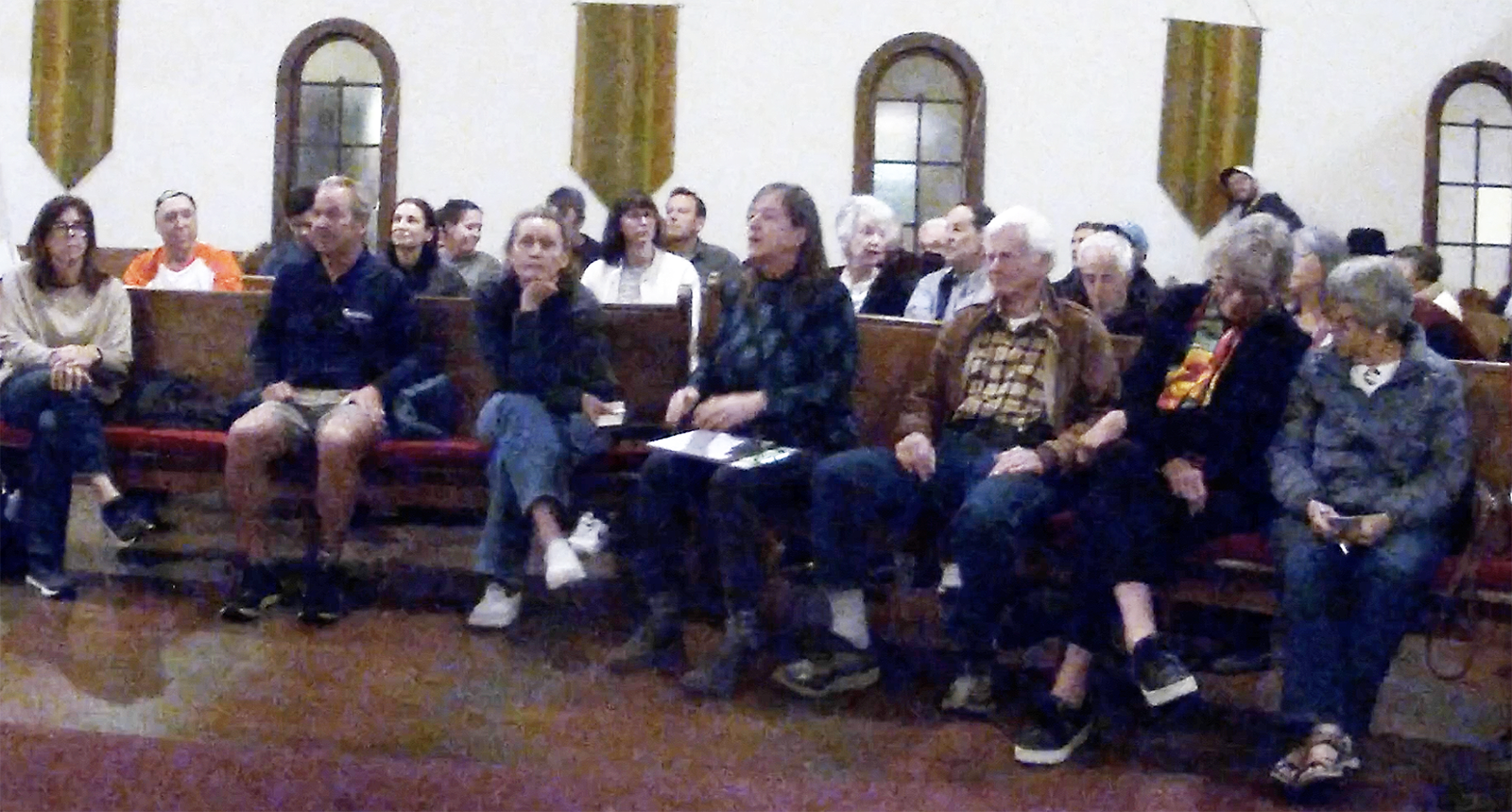
“Can we agree on anything?” was the opening question, reflecting the frustration left over from previous contentious meetings where attendees questioned the desire of some to add diverters. But this meeting was meant to be more constructive— a fresh start, and to hone in on what's most important now.
Mayor Barbara Lee and city leadership have already stated that traffic diverters that merely move one street’s problems to another are unfair and “off the table,” and nothing will be considered by the city until the trapezoid residents have come to a complete consensus on how they want to move forward.
After a brief introduction, the moderators stated that the goal of this meeting was to clarify which of the issues must be addressed—and not limit discussion to the issue of cars cutting-through the trapezoid when driving from Alcatraz to/from Claremont via Hillegass or Colby.
Assemblywoman Buffy Wicks, a resident living on Hillegass, within the boundaries of the trapezoid, insisted to one of the questioners that her legislative initiative (a reference to SB79 that allows city agencies to circumvent the desires and needs of residents impacted by large-scale construction) would not have any bearing on the meeting.
The attendees broke up into groups of ten to twelve, met for 30 minutes or so for brainstorming, and created an inclusive list of concerns. After the small-group discussions, each group’s representative presented its list, which were then combined into one comprehensive master list.
It was agreed that a small leadership group will use the master list as a guide, with the intent of organizing and prioritizing the issues prior to discussion at the next community meeting, possibly in January. At that time, the group can begin consideration of possible responses/solutions, and see if any are actually needed and feasible.
How to Improve Traffic Flow?
Underlying all these concerns was the recognition that automobile and truck traffic that use local streets to bypass College Avenue when traveling between Alcatraz and Claremont is unlikely to diminish, regardless of what actions the community takes. The plan to reduce Telegraph from two lanes in each direction down to one (known as a “road diet”) will also increase driver frustration as pressure to find alternate routes grows.
Any discussion and decisions must also take into account the impact of the two proposed senior housing developments. These two large residential buildings—at 6230 Claremont and the Trader Joe’s site—would add substantially to traffic volume along College Avenue's two-lane artery, causing even more traffic to flow throughout the trapezoid.
One suggestion was made to focus on improving the flow along the main arteries—Claremont, College, Telegraph, and Ashby in order to discourage cut-through traffic and bad driving behaviors like speeding and ignoring stop signs.
Today, visible police presence and enforcement of existing traffic laws in the trapezoid is frustratingly limited, and currently, our city budget does not allow for traffic mitigation solutions such as traffic lights, speed bumps, and the like.
Despite the obstacles, the first step is to carefully and comprehensively identify the most important issues that residents are currently encountering.
List of Resident Concerns:
(1) Increasing volume of traffic, especially on the cut-through streets of Hillegass and Colby.
(2) The speed of many vehicles, exceeding posted limits; 25mph limit too high
(3) The failure of many vehicles (and bikes) to stop at stop signs.
(4) Recklessness and rudeness of many drivers.
(5) Double-parking by some cars and many delivery trucks.
(6) Large commercial trucks on residential streets.
(7) Increasing noise and air pollution.
(8) Danger to pedestrians seeking to cross streets.
(9) Danger to cyclists—and sometimes from cyclists.
(10) Special dangers of traffic at the Hillegass/Claremont intersection.
(11) High speed of vehicles on Claremont between College & Hgwy 24 entrance.
(12) Congestion on 62nd and 63rd at College and Colby at Claremont.
(13) Sideshows at College and Claremont.
(14) Lack of vivid, clear pedestrian crosswalks and stop signs at many intersections.
(15) Lack of enough traffic bumps to slow traffic.
(16) Failure of Oakland police to enforce traffic laws in trapezoid.
(17) MapQuest and Google suggest cutting through Colby and Hillegass during times of heavy traffic congestion.
When the group first in January of last year, their primary concern was focused on traffic along Hillegass and Colby—and the protest against adding diverters on 62nd Street. But this longer list shows that the challenge is broader, and concerns all nearby residential streets.
It may not be possible to diminish the volume of traffic moving around or through the trapezoid—or improve the attitudes and behaviors of drivers, but there may be multiple steps possible to improve the flow, slow down traffic, and improve the behavior of drivers, and thereby ensure the health and safety of our residents.
For now, we remain impatient and eager to see experimental actions that can become permanent, and finally address these issues.


