

Dear Editor:
Jane Jacobs revolutionized urban planning by simply looking around her neighborhood in New York City’s Greenwich Village and basing ideas for better, more livable cities on what she observed.
She ran counter to the prevailing planning doctrines of the day, promoted by such male heavyweights as Robert Moses and Le Corbusier, who advocated radically altering cities through wide-scale demolition in the name of what they considered “improvements.” Her radical innovation was simply to recommend in her book, The Death and Life of Great American Cities, that cities should be tailored to the needs and proclivities of the people who actually lived and worked there.
Today, we’re also faced with being force-fed a vision for reshaping our cities and neighborhoods by planners, developers, and politicians who think they know better than we do what’s good for us. Like mothers and cod-liver oil.
But the solution for more housing isn't as simple as skyscraper projects and massive increases in density. As a longtime resident of an “Outer Rockridge” neighborhood, next to Bushrod Park, I’ve marveled at how advocates for more dense housing have ignored obvious fixes like reinhabiting the vacant houses in my neighborhood, which sometimes remain vacant for decades, and utilizing development sites that also lie fallow.
For lack of a better term, “ghost houses” aptly describes these buildings that exist in limbo, providing no shelter and often becoming blighted.
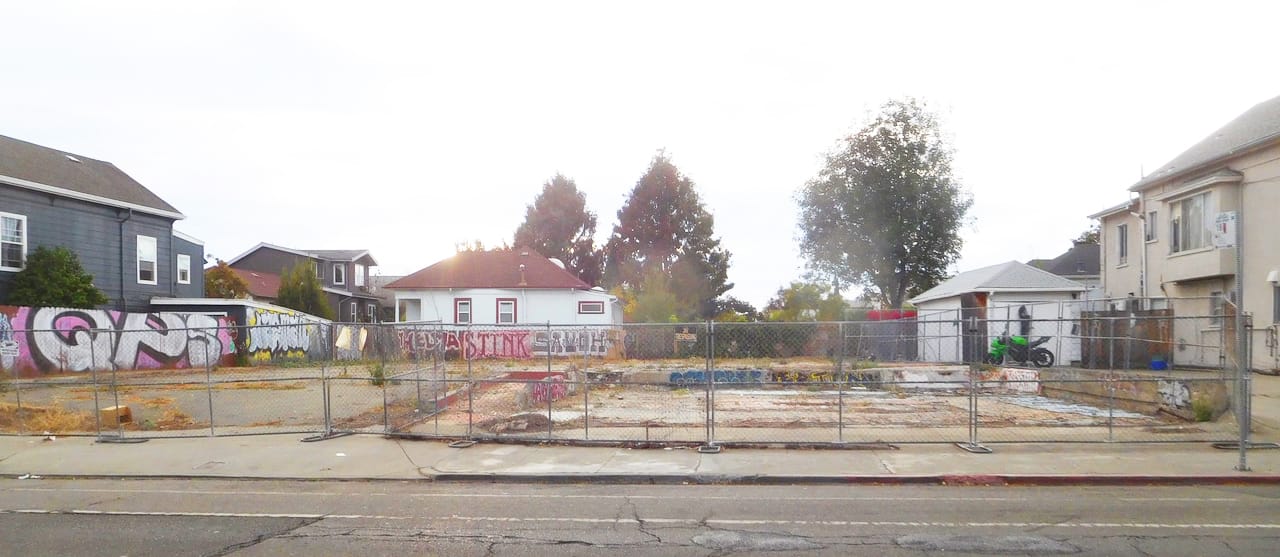
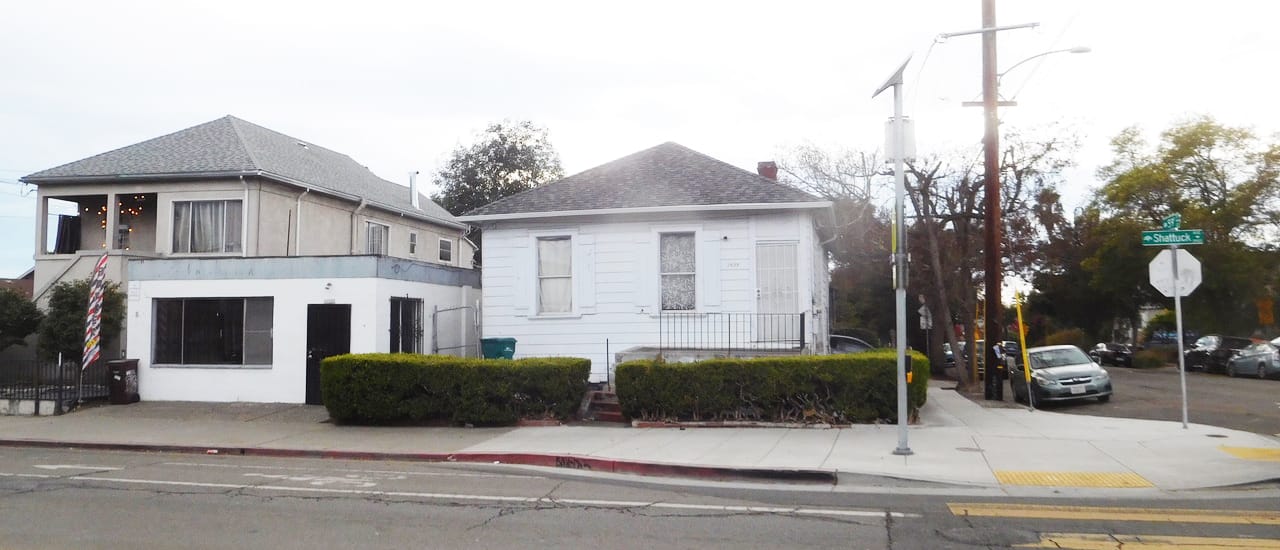
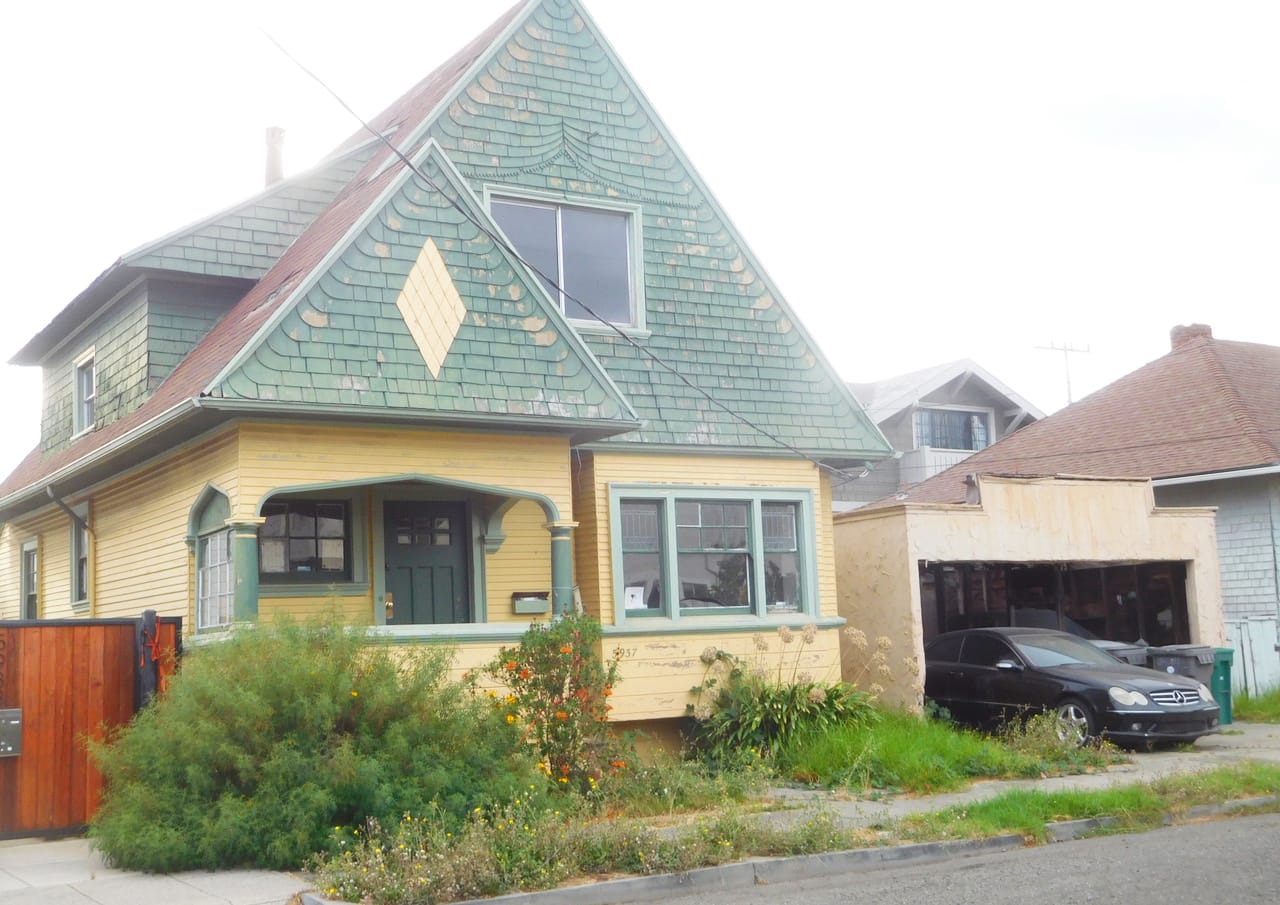
(Left) Dorsey’s Bosn’s Locker site, 5817 Shattuck. (Center) Ghost house for several decades, and vacant barbershop corner of 59th and Shattuck. (Right) Vacant for several decades, ghost house at 5937 Whitney. Builder splurged on leaded glass windows and elaborate shingle work.
Four houses on my block alone were vacant for decades: two were tied up in the complicated estate of an acquisitive librarian with a portfolio of dilapidated properties in several East Bay cities, one was involved in a messy transfer to a daughter who ran the house into the ground, and one remains vacant still, next to an adjoining former barbershop. Nearby, 5817 Shattuck is the site of Dorsey’s Bosn’s Locker, a bar and restaurant with housing above, dating from 1941 (pictured above on left).
Donald Dorsey sold the property to someone who briefly operated a Brazilian restaurant, who then sold it to South Bay Diller Capital, which promptly tore the place down in 2017, but whose plans for a three-story apartment building with 9 units of housing fizzled. Years later, the site is periodically cleared of weeds that poke up through cracks in the cement. Graffiti adorns the fencing on the edge of the property.
I know of several other ghost houses nearby, each with its own story, no doubt, but cumulatively depleting the available housing stock for sale or rental.
The Shadowy Airbnb Network
Oakland's Planning Code generally prohibits the use of residential properties for rentals of less than 30 days, subject to specific exceptions and requirements for certain types of lodging. Accessory dwelling units (ADUs), for example, must be rented for at least 30 consecutive days.
However, according to the website Insideairbnb.com, some 2,500 Airbnb units exist in Oakland. There are 3 or 4 on my block. Most are single-family homes, but one is an ADU. They may make sense from the perspective of the owners, who are willing to take their chances and put up with the endless rotation of guests. Nearby, a small basement granny unit, rented at its advertised Airbnb rate, will pull in $60K a year—that’s $5K a month.
The financial incentive to operate these units as short-term rentals rather than conventional long-term housing is obvious. Owners may also avoid some of the obligations and oversight associated with traditional residential tenancies, depending on the property and rental arrangement. Oakland's transient occupancy tax is 14% of the rent charged, and rental property owners are also subject to applicable business taxes.
Whether these taxes are actually being collected and remitted by all operators is an important enforcement question. The potential to circumvent tenant protections, rent control, and just-cause eviction requirements also raises concerns about the loss of long-term rental housing. Gentrification is further exacerbated.
The City of Oakland has aggravated this problem by kicking the can down the road (sound familiar?), neither reaffirming nor modifying the blanket prohibition on short-term rentals.
An October 19, 2023, Oaklandside article by Natalie Orenstein was titled, “There are 2,600 illegal Airbnbs in Oakland. The city could rein them in.” Her update in the September 4, 2025, Oaklandside article mentions that Airbnb lobbyists have met with city officials, and the city's goals included updating and revising the code by late 2026.
As of November 2026, the city’s published timeline anticipates formal adoption hearings in Fall 2026. The question is whether these hearings will finally produce meaningful regulations and enforcement. The fine print of Airbnb postings mentions that they take no responsibility for whether a listing is allowed by local jurisdictions, but Airbnb is global and vast—the niceties of local rules are the responsibility of the “host.”
Baning Airbnb Rentals
But Oakland is screwed by turning a blind eye to the rapid proliferation of Airbnbs, particularly if operators are failing to register, pay applicable business taxes, or collect and remit transient occupancy taxes. It’s a bit like the gray world between the legal and illegal operations of marijuana farms and distribution centers.
An example of effective enforcement of an Airbnb ban is New York City, where the hotel industry, joined by tenants’ organizations, curtailed their existence. I know from personal experience, having tried to find one on a recent trip there. Nothing was listed.
Presumably Rockridge, a very desirable neighborhood on a major transit line, and close to San Francisco and institutions like UC Berkeley, major hospitals, and other medical establishments, and numerous tourist attractions, is also home to many Airbnbs, making those properties unavailable for home buyers or renters.
So why are the City and concerned neighbors unwilling to acknowledge and tackle ghost properties and Airbnb proliferation? Perhaps it's due to intellectual laziness, pie-in-the-sky grandiose prescriptions for “fixing” cities by New York Times YIMBY advocates like Ezra Klein, Conor Dougherty, and the editorial board, and a laissez-faire City government, with minimal parking meter staff ticketing vehicles blocking street sweeping or enforcing restrictions on “illegal” fireworks and dumping.


