

The Place It! Aging in Place workshop helped Rockridge residents articulate their physical, social, and long-term well-being needs. Rather than simply talking about what their future might look like, participants used their hands, everyday objects, memories, and imaginations to build it.
Working individually and together, they transformed abstract ideas about aging into physical models of their future utopias. Their hands became a way of thinking, revealing needs, desires, and possibilities that words alone might not capture. Through this creative process, participants envisioned not just where they wanted to live, but how they wanted to live: connected to neighbors, surrounded by nature, physically active, socially engaged, and part of a community that supports them throughout the different stages of life.
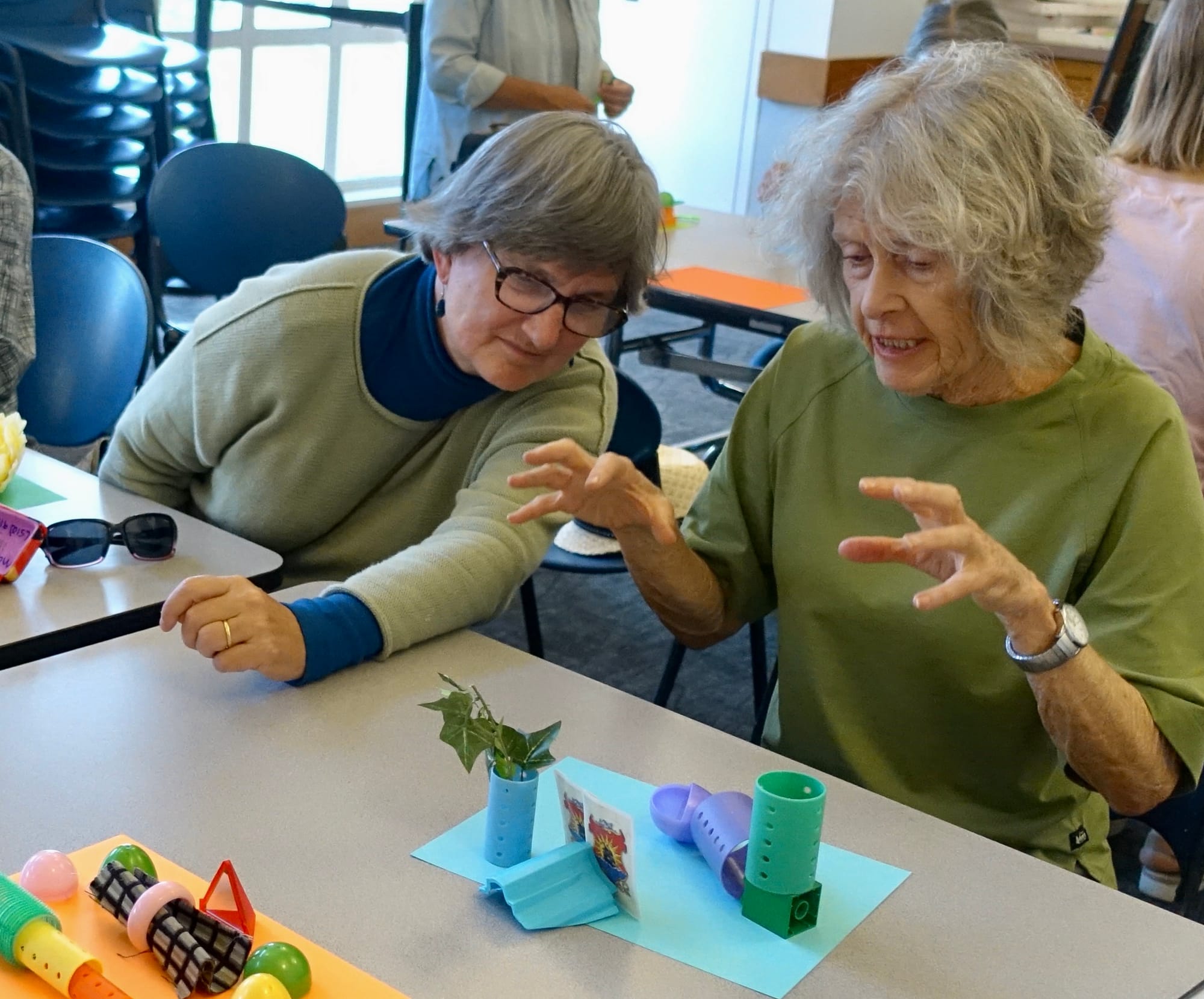
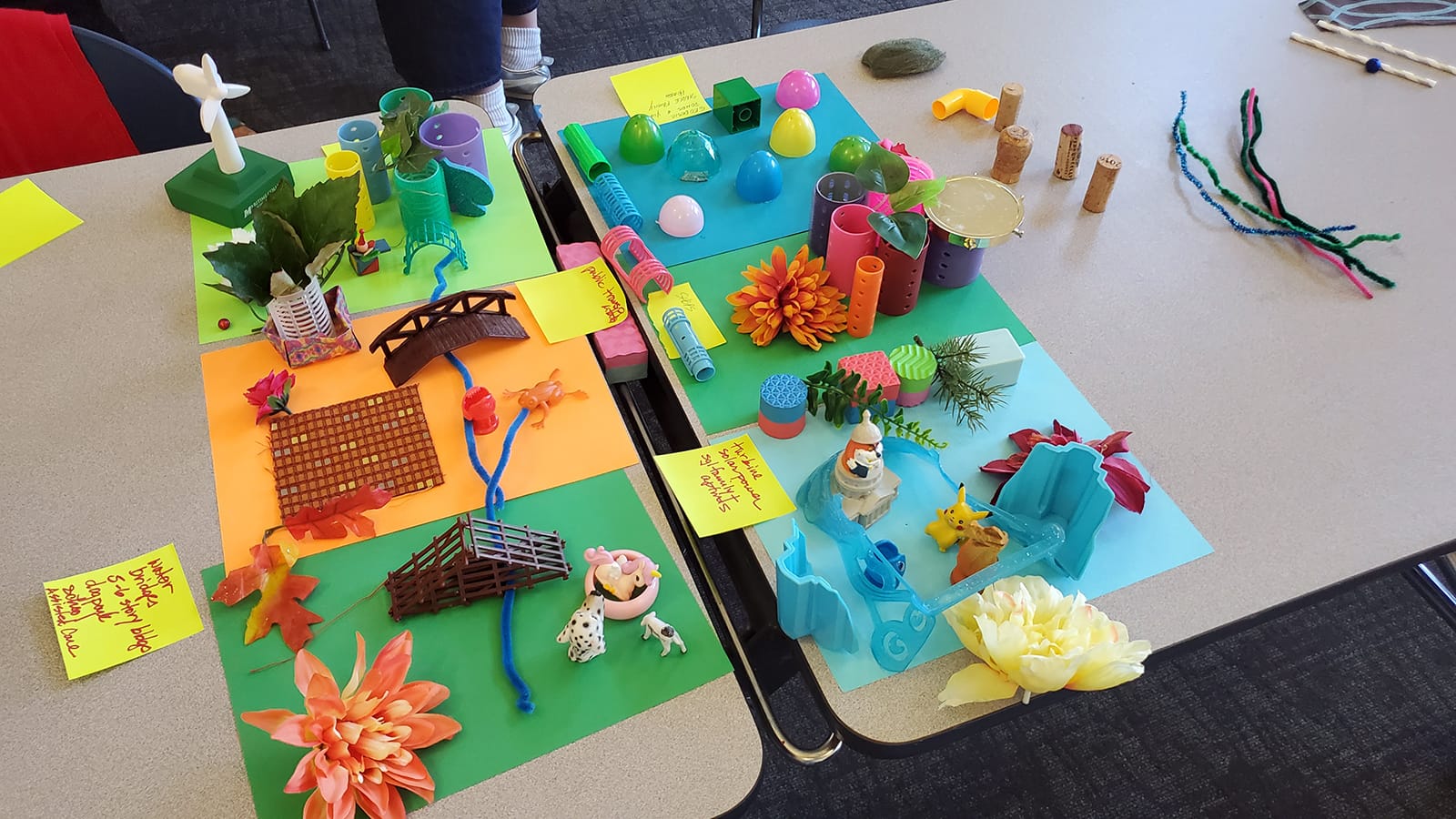
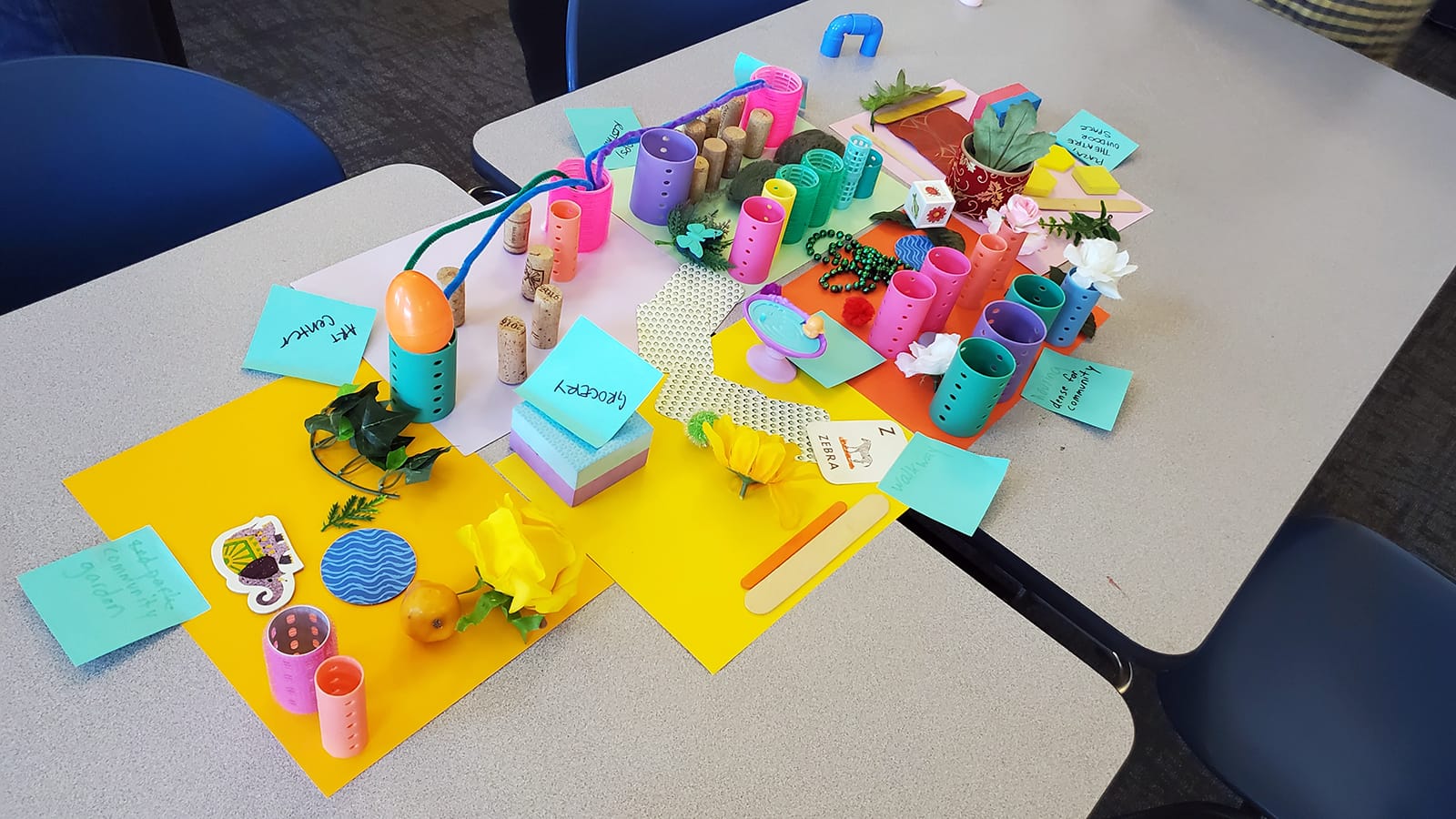
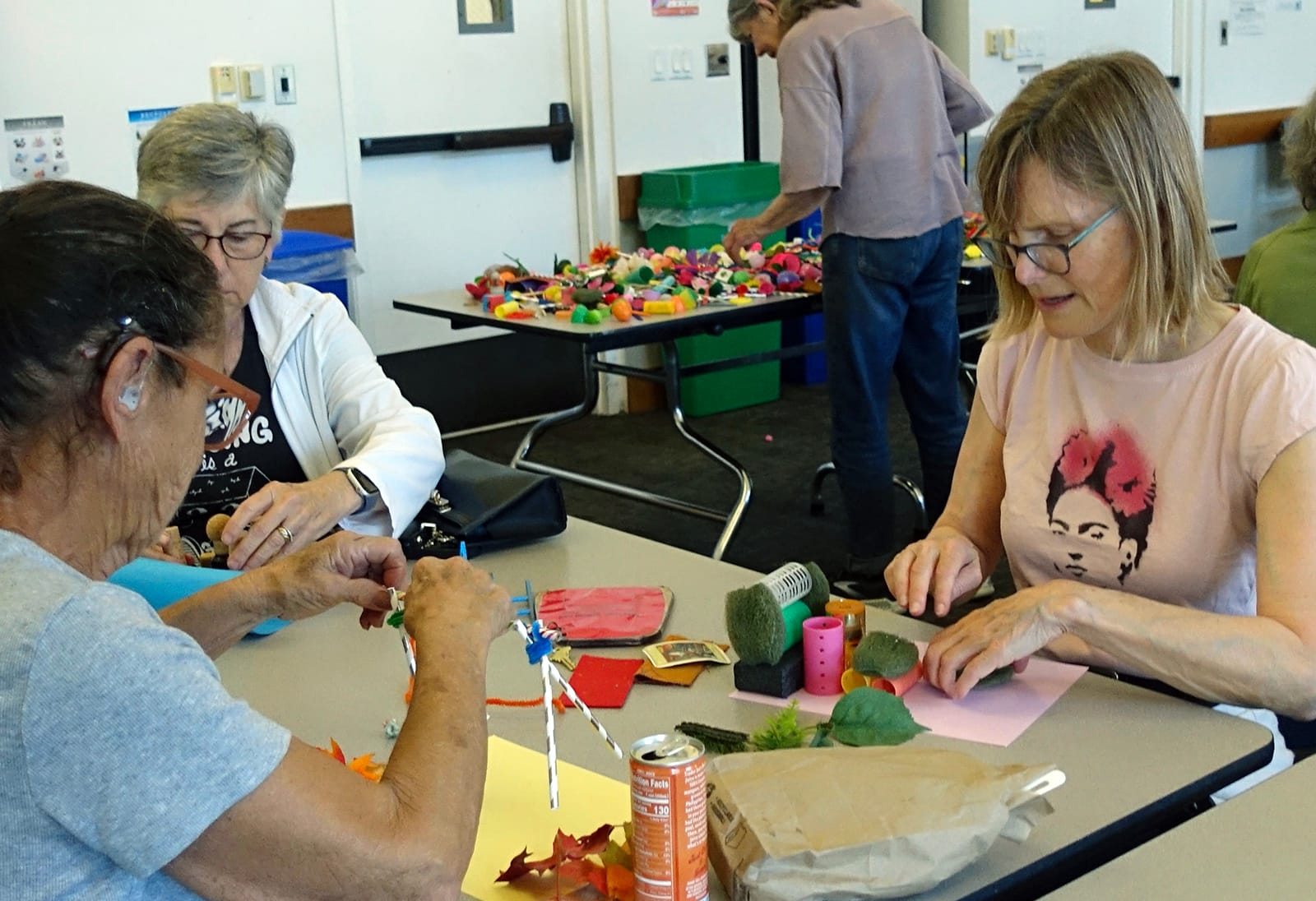
Participants worked with colorful objects to visualize and shape an imaginary neighborhood. Photos: James Rojas and Anna Marks
It brought together neighbors from different backgrounds who might never have met otherwise, and created a welcoming environment where they shared stories about where they came from, what connects them to Rockridge, and what gives meaning to their lives today.
As a facilitator and a 10-year resident, I learned a great deal about my neighbors by asking them to build their favorite childhood memory. At first, this exercise might seem unrelated to aging in place, but it reveals something fundamental: our earliest experiences of place often shape our understanding of happiness, safety, freedom, belonging, and well-being.
"What surprised me about this workshop was how James and John helped us imagine the possible delights—yes, of aging. We started the workshop sharing all our different childhood beginnings, but ended by creating a shared vision for the future. It was so refreshing to focus on what we want, instead of what we don't,” said workshop participant Rebecca Kidd.
Through their models, participants recalled streets where they played, parks they explored, gardens, trees, water, neighbors, family members, and places where they felt free to wander and discover. These memories helped participants recognize the physical, social, and sensory qualities of places that had supported their well-being throughout their lives.
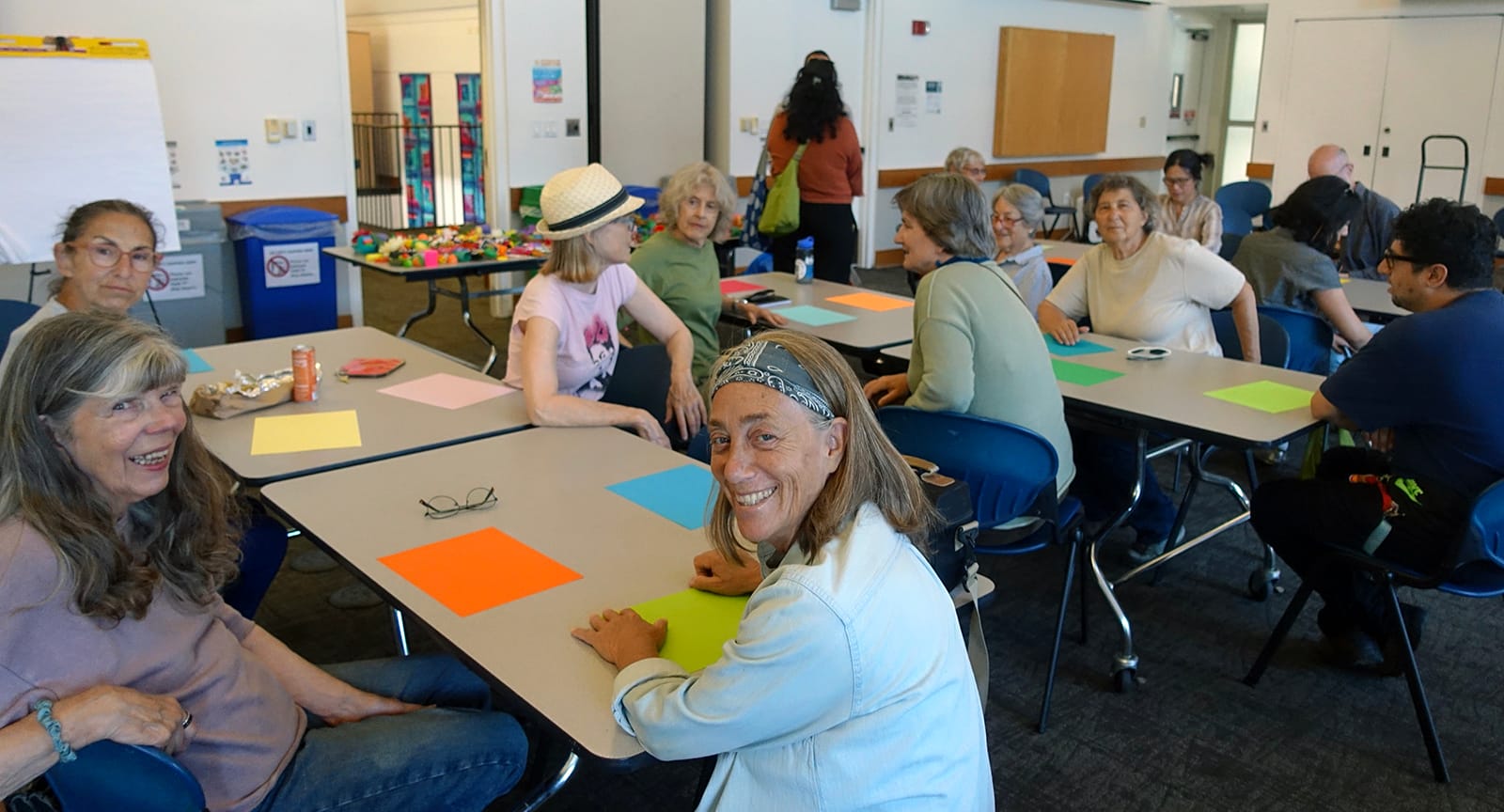
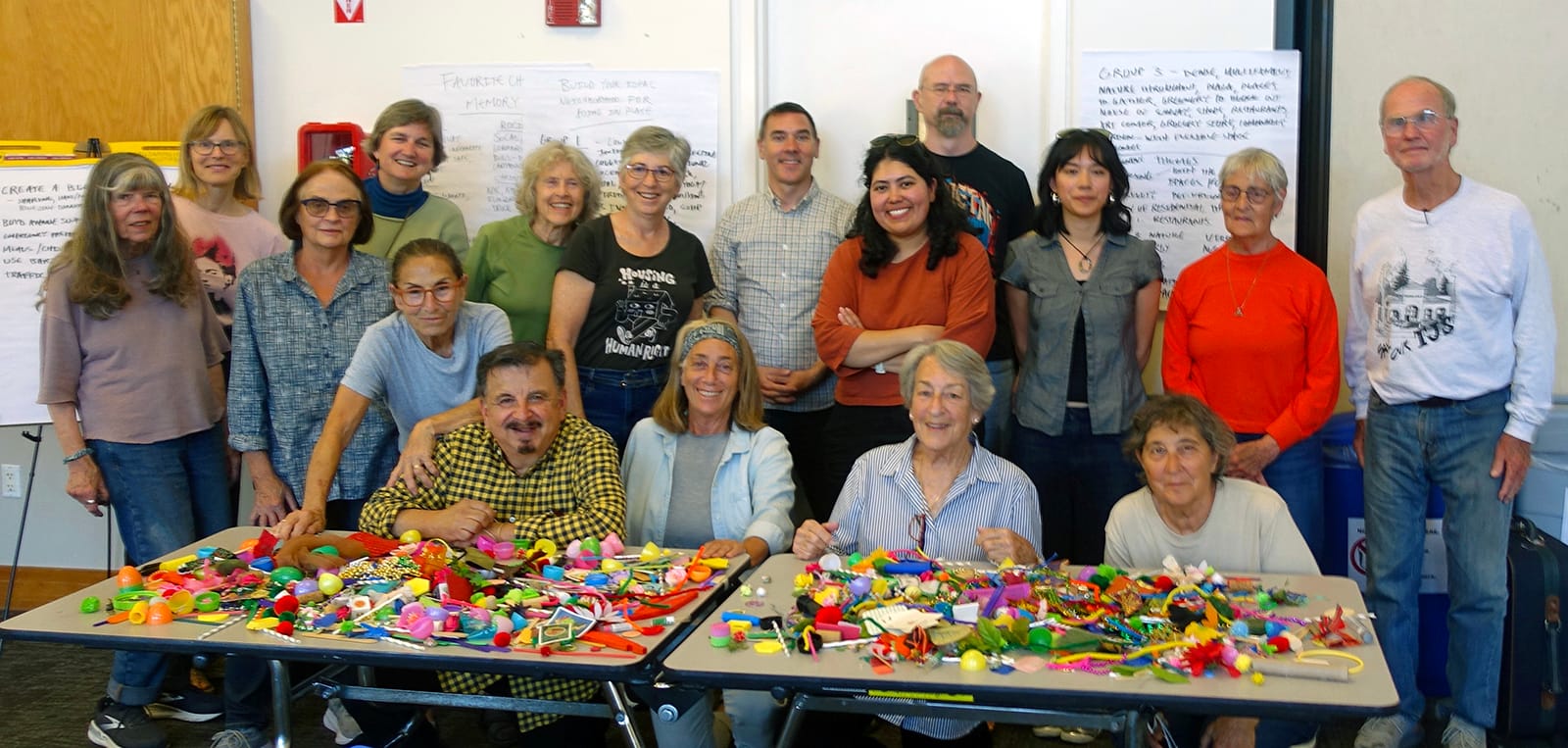
Participants built models, moved around the room, laughed, reminisced, and imagined new possibilities.
By beginning with memory rather than with housing types or planning policies, participants could identify what they truly valued before imagining their future. The question became not simply, “Where do I want to live as I grow older?” but “What qualities of place have made me feel alive, connected, and at home and how can we create those qualities again?”
Different Approaches, Common Values
The participants were divided into three teams and built the Aging in Place Utopia. Each team approached aging in place from complementary perspectives. Team One emphasized the importance of staying socially connected to neighbors, friends, and community. Team Two explored a range of housing types that could support people throughout different stages of their lives. Team Three focused on mobility, highlighting the importance of safe walking, accessible streets, and reliable public transit in maintaining independence as people age.
Yet, beneath these different approaches was a common set of values: connection, independence, belonging, accessibility, beauty, nature, and a sense of community. The workshop revealed that aging in place should begin with these values rather than with predetermined housing types, densities, or development models.
Aesthetics are also part of this conversation because the way a place looks, feels, sounds, and functions can express the values of the people who live there. Trees, gardens, porches, sidewalks, building scale, gathering spaces, sunlight, and even the materials used in buildings can communicate whether a place values social interaction, nature, privacy, beauty, or human connection.
This is often what gets lost when development begins primarily with financial calculations, zoning capacity, and market demand. Developers and other decision-makers may not share the lived connection residents have to a particular place. Residents know which tree provides shade on an afternoon walk, where neighbors stop to talk, which storefront anchors a block, or why the scale of a street simply feels right.
The challenge, therefore, is not to resist change but to ensure that change grows from an understanding of place. Before asking “what should we build,” we should first ask “what do we value,” and “how can the physical environment express and sustain those values as we age?”


