


My husband and I had been in Tahoe for a week, returning on Saturday as the fire started. Driving home, we listened to the Cal–Washington game on the radio and heard interspersed reports of a fire in the canyon by the stadium.
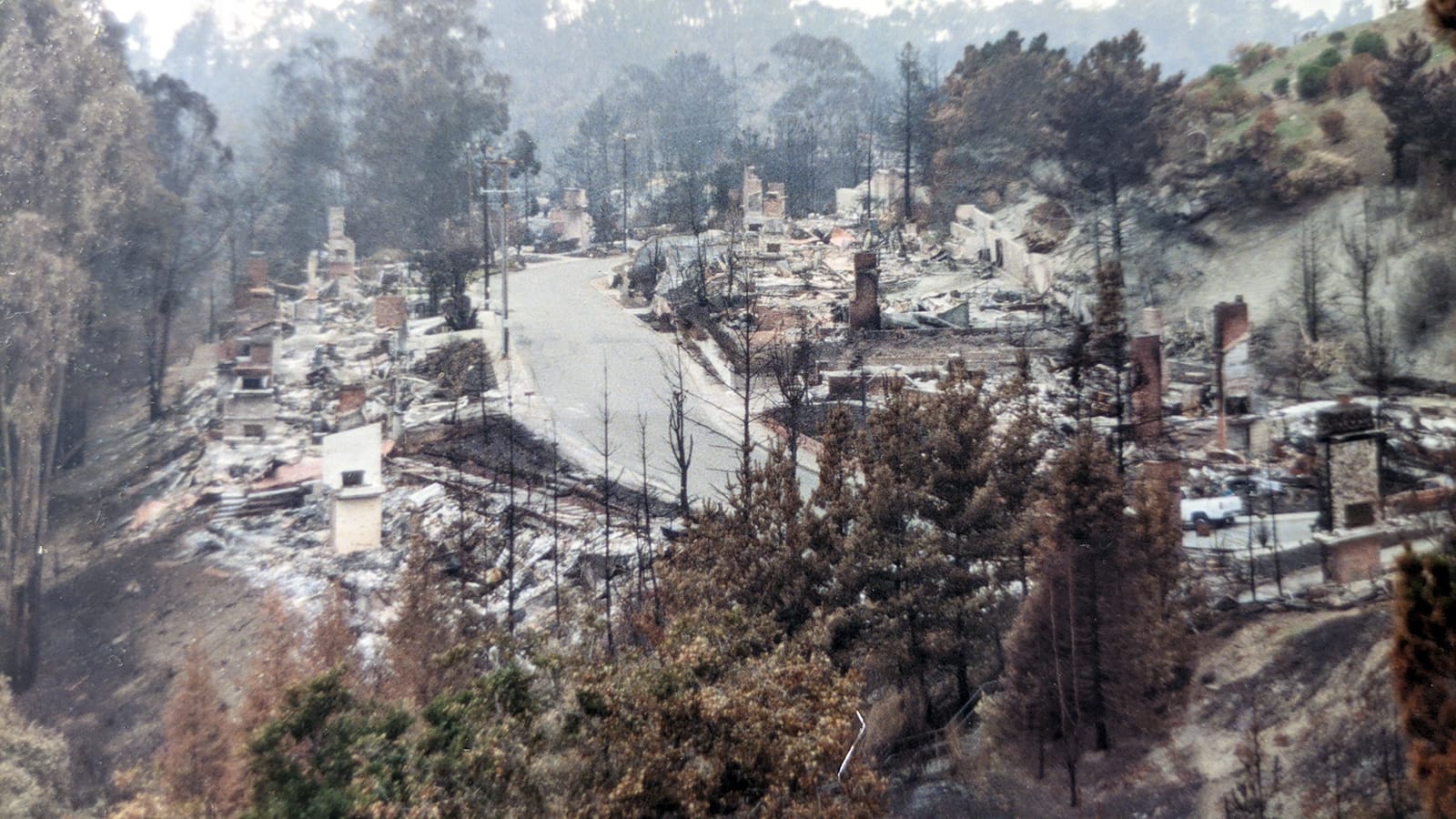
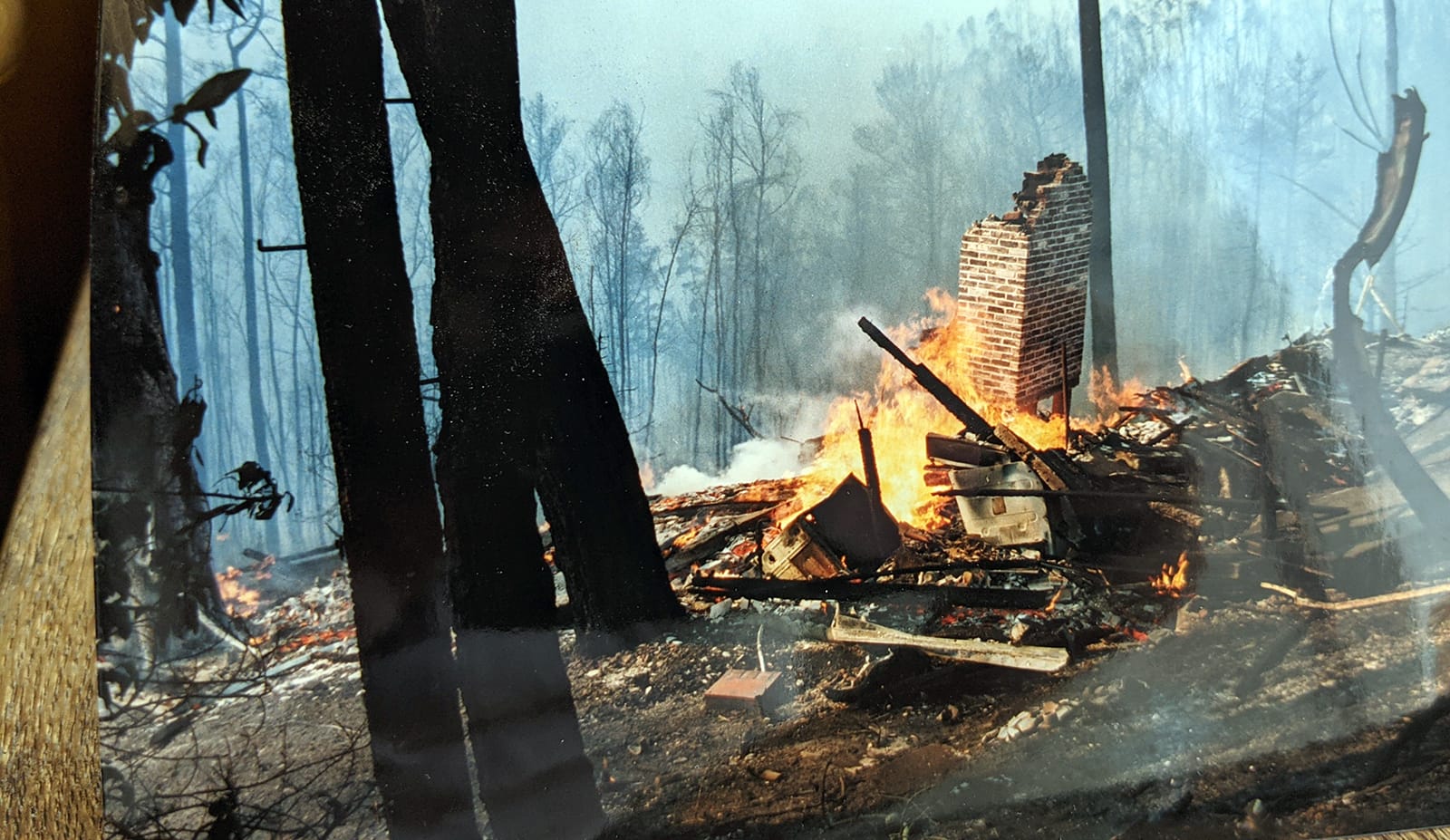
Photos: Oakland History Room
Sunday morning, I called my parents to let them know we were home and told my mother that the sky was the same golden color as in Rome and, I realized, for the same reason—smoke and air pollution. I told her that the little fire in the canyon must have blown up again and we needed to get busy.
We spent hours filling forty 30-gallon garbage bags with pine needles from the 145-foot-tall Monterey pine that stood just outside our front door. We swept the roof and scraped the ground clean, then wet the roof and the area around the house thoroughly. We had to wear dual-canister face masks to breathe because the sky was dark with swirling smoke, soot and ash all day that Sunday.
Our cats were stashed in the kitchen with their carriers while we methodically packed our personal papers, including all our important insurance documents and my business papers, since I worked from home as a manufacturer’s rep. Then we packed the pictures (we kept paper documents and printed photos then!), meaningful mementos like handmade gifts from family, and finally valuables like jewelry.
We threw open cupboards, closets and drawers and took lots of pictures for the insurance company—you will never remember what you had unless you take pictures—and then went shopping for food at Lucky.
On our way home, we stopped and watched the fire from the Claremont schoolyard fence. We watched as tree after tree was fully outlined by fire and then exploded from top to bottom like torches. And we saw house after house afire.
The entire area was on fire as far as the eye could see. Prepared to evacuate, we benefited from a wind shift that stopped the fire from spreading further down Chabot Road and along the freeway edges. It actually burned to within a block of College Avenue, along Highway 24 on Keith Avenue.
We spent the days and nights listening to thousands of explosions—car gas tanks, electrical transformers and ruptured gas lines booming night and day. And all day we heard helicopters flying back and forth, scooping up water from Lake Temescal and tracking the fire’s progress. Highway 24 was closed, and hundreds of fire vehicles were parked there. Volunteers prepared food for the firefighter, and exhausted firefighters could be found resting here, there and anywhere before starting up again.
Driving through the barren and desolate moonscape left behind just a few weeks later, I saw many shiny, silver rivers of melted aluminum engine blocks and burned-out hulks of cars. All that was left of most houses was a chimney or just a foundation. Dozens of my friends or their families lost homes in those three days.
Many lost precious work—noted author Maxine Hong Kingston, who walked by our windows through St. Albert’s every day on her way to coffee on College, lost a manuscript she had been working on for two years. An architectural historian friend on Chabot Road lost his slide and picture collection—his entire life’s work. Many precious works of art were destroyed, including many canvases by the Society of Six painters. Another friend’s mother, just widowed, lost her home and all its contents.
As my friend and her mother later sifted through the ashes, they found her mother’s platinum wedding band, totally blackened by fire but intact. Michael Endlich’s staff jewelers at Pavé spent weeks cleaning and restoring it without charge. Many similar kindnesses were extended to the Firestorm survivors.
Former RCPC chair Brooke Levin, who had gone to work for Mayor Elihu Harris after her term as chair, had a brilliant idea that was quickly implemented. The old Safeway on Claremont Avenue by the DMV was turned into a one-stop disaster recovery center with representatives from all the utilities, agencies and insurance companies needed to help Firestorm victims begin the process of recovery.
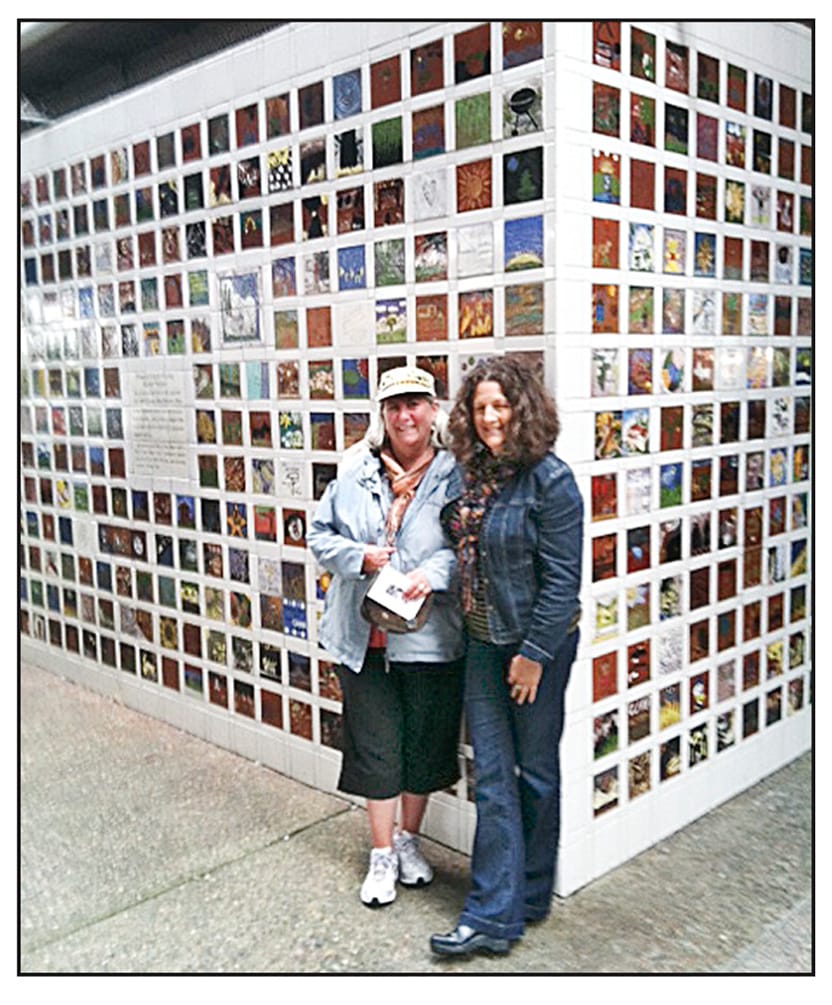
Afterward, Brooke’s great idea became the model for FEMA’s Disaster Recovery Centers nationwide. It was also Brooke who, along with Oakland Heritage Alliance’s Annalee Allen, helped bring about the Firestorm memorial wall.
In the aftermath, we put our passports and all-important life documents in a bank safe deposit box. We bought archival negative sleeves and stored our photo negatives there as well. In the digital era, most of our older photos have been scanned, and we have our devices all backed up to the cloud as well as portable hard disks, but those backup options weren’t available to us 35 years ago.
In my life, nothing has compared to the sheer terror and trauma of the Firestorm. Nothing. The reality that you may lose your home to fire is frightening, and today, it is very real.
Be prepared to save your own lives. Prepare now for the coming wildfire.


