


The Mediterranean climate of California—that is, cool, rainy winters and warm (or hot) dry summers—is actually unique amongst the world’s climate zones. Only five Mediterranean climate zones exist in the entire world. One of those other five lies within the Western Cape of South Africa, which also happens to be home to the Cape Floristic Region, the smallest but most diverse of the world’s six floral kingdoms and containing over 9,000 plant species, 70% of which are endemic to the region.
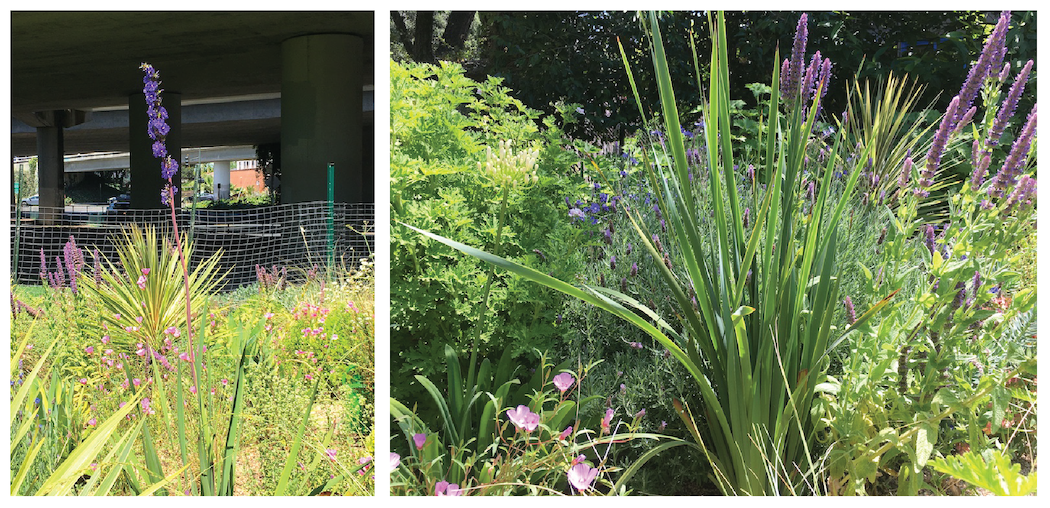
Aristea major / Aristea capitata is one of the plants that call this region home. Characterized by strap-like leaves, the plant can be confused for an African iris (Dietes iridioides) when it isn’t in bloom. However, once in bloom, it is quite clear that this is an altogether different plant, as it will send up tall, four- to five-foot flower spikes with electric purple-blue flowers that open during the day and close in the evening.
Like many plants from the Western Cape, Aristea major can be slow to bloom the first few years in the ground, devoting much of its energy to root growth so that it can be tough enough to withstand the long summer dry season. Once thoroughly rooted and ready, though, the plant will send out its flower spikes in late spring, and you’ll be treated to quite the show each year after that. Bees, especially carpenter bees and larger varieties, love the flowers.
As far as watering goes, expect to give Aristea major a deep watering when planted in the fall, and a couple more spaced out a couple of weeks apart after that depending on rainfall, and then you shouldn’t need to water it again save perhaps once or twice at the tail end of its first dry season.
Shape-wise, the plant can serve as a much-needed vertical/sculptural/punctuation-like element that can offset an un-irrigated landscape of plants with smaller leaves (a common drought adaptation). On a primal level, we as humans like to see patterns in new landscapes we encounter, thus adding in a set of plants like Aristea major can give us that sense of calm our human selves need.


