


In this column, I continue to feature not simply plants that are in bloom in Rockridge, but ones that can grow and thrive in unirrigated environments. There is a wide, wide world of plants out there that hail from Mediterranean climate zones (such as ours), where it rains in the winter but almost never in the summer.
While our assumption is that all plants really want regular water, most plants in Mediterranean climates have evolved in unique and curious ways to withstand the months-long dry season. Giving them water at the wrong time just gets them confused and leads to a short-lived plant, or one that grows in ways it’s not accustomed to (lavender being a case in point).
As the spring bloom season progresses, I will feature some of my favorite plants that both look cool in bloom and are also nice additions to the garden even when they aren’t in bloom (some plants do look like a whole lot of nothing when not in bloom).
Here is my Pick of the Day:
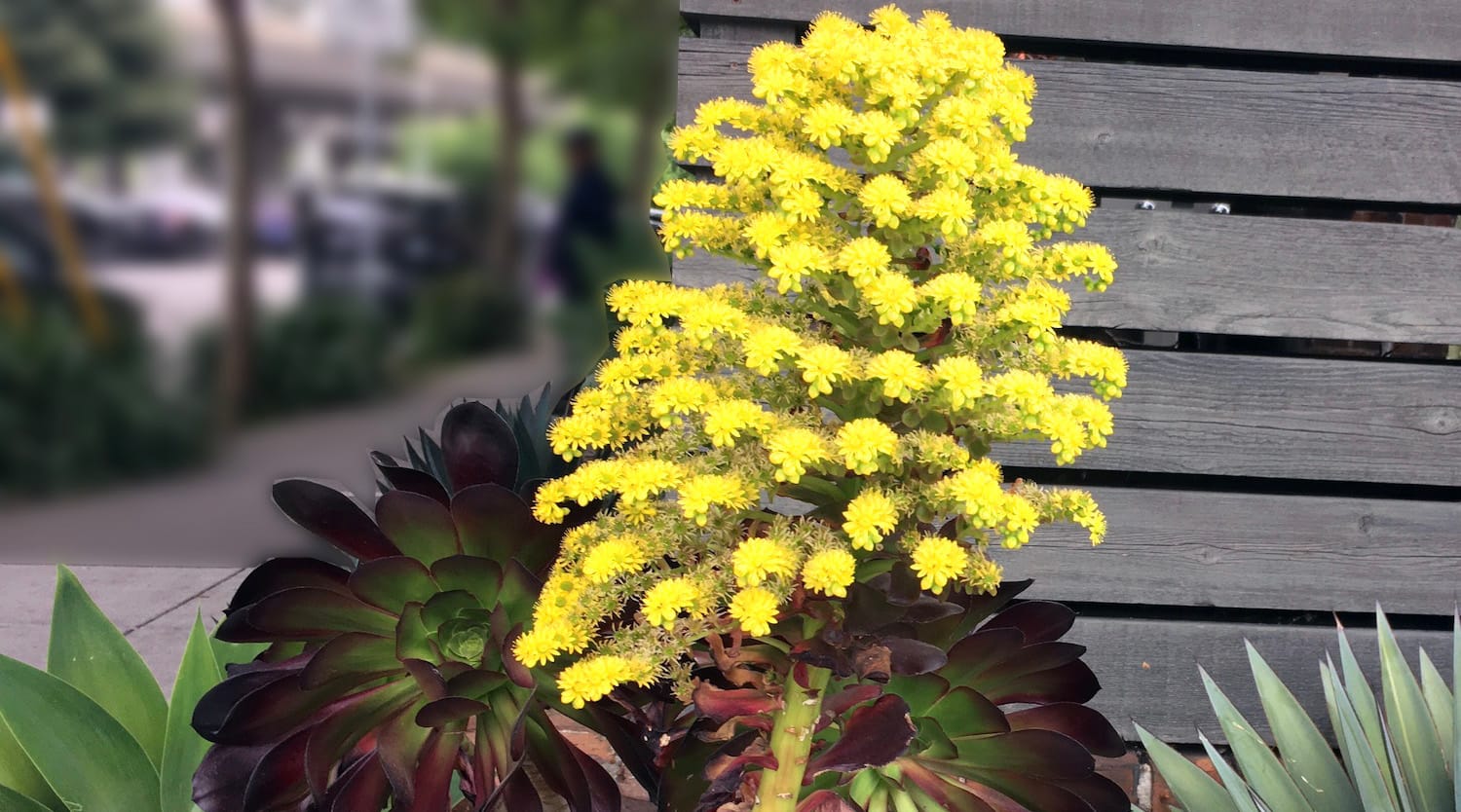
Aeonium ‘Cyclops’
Aeonium is a genus of about 35 species, most of which hail from one or more of the three Macaronesian archipelagos. They have evolved within maritime Mediterranean climates and manage to grow in very rocky and very dry conditions, using their succulent leaves and stems, along with extensive root systems, to survive the long dry season.
While it is common to see—and tempting to do—not all succulents like the same growing conditions and don’t always thrive when planted together. Many, such as Echeverias, hail from summer-rainfall climates and thus have evolved on the opposite precipitation cycle from ours—and from what Aeoniums are used to.
Some succulents, such as many species of Sedum, have quite shallow root systems and thus could not survive in an unirrigated environment in our climate. As a useful tip, always check where the plant comes from and what conditions it has evolved in, as this will give you a clue as to whether it might work in a Mediterranean garden without irrigation.
An interesting feature of succulents such as Aeoniums is that they divide their photosynthesis over the course of the day and night, starting the process in the daytime sun but completing it at night, when temperatures are cooler and they won’t lose as much water. This process is called CAM photosynthesis.
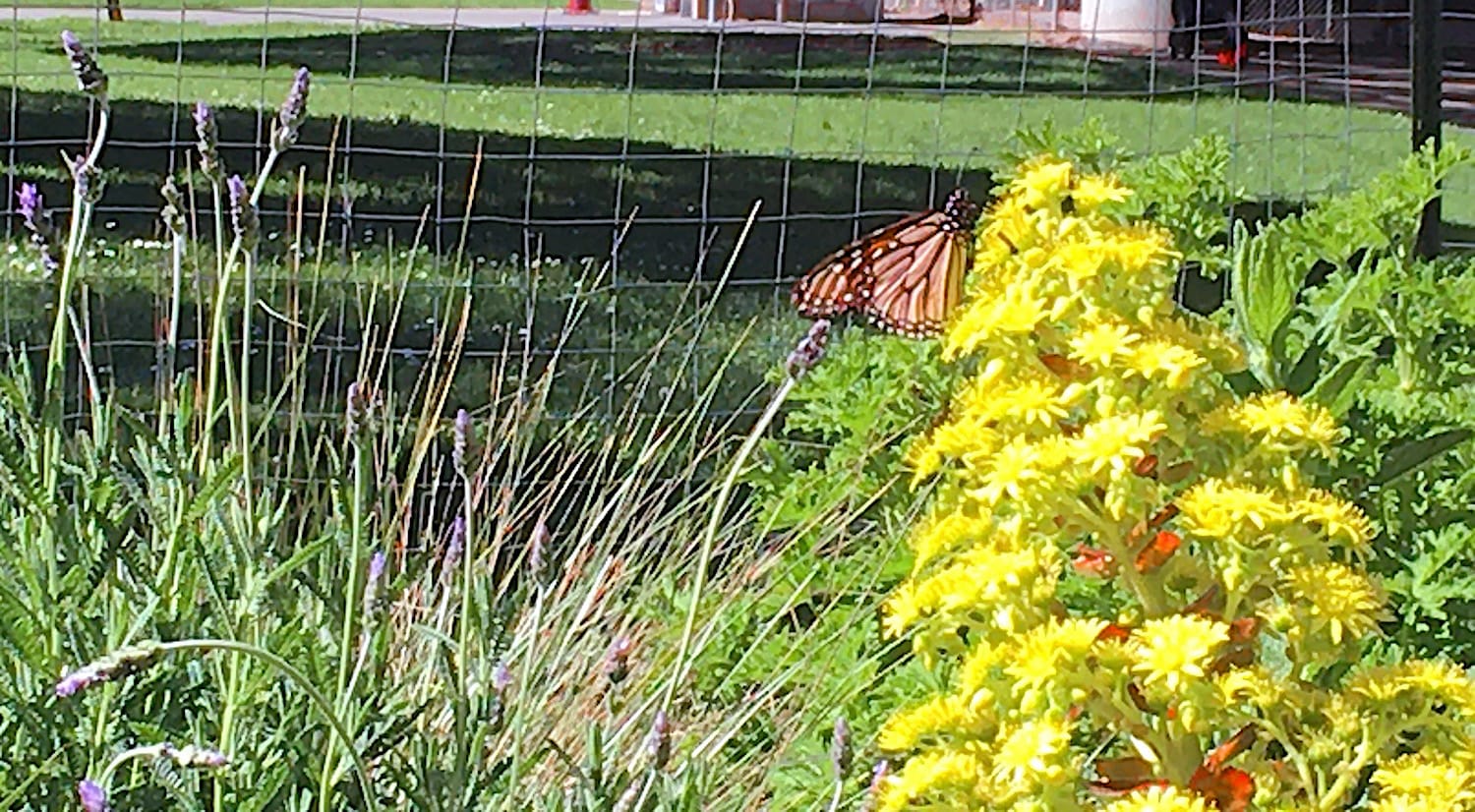
Aeoniums have a sculptural, punctuation-like quality that can serve as a useful foil to smaller-leaved Mediterranean and arid-climate plants like lavenders, salvias, and grasses. Aeonium ‘Cyclops’ is a particularly large-leaved and wild-looking variety with red-tinged leaves, blooming in late winter with sprays of electric-yellow flowers that a variety of bees and butterflies love.
In summer, as the dry season progresses, they will curl up a bit to shield themselves from the sun and conserve moisture as they wait for the rains to return in the fall.


