


Every Tuesday night, Belly restaurant at 5634 College Avenue reverberates with sounds of laughter and the staccato of tiles in motion. Owner Alice Woo shares her love for mahjong with Rockridge, creating a destination for everyone who wants to enjoy this iconic game.
“I used to hear this clattering sound downstairs in my parents’ house. When I was fourteen, I decided I had to discover what all the action was about.” She concluded that “obviously this is something that Chinese people do, so I should be doing it.”
Woo learned from relatives, later playing with friends at venues in Chinatown. “The games brought everyone together,” says Woo. “Now, when there is a lull at the restaurant, I break away for a game in a Chinatown parlor.” Her staff were impressed with her devotion. They asked her to teach them about what she loved. Demand grew as regular customers also heard about Woo’s passion.
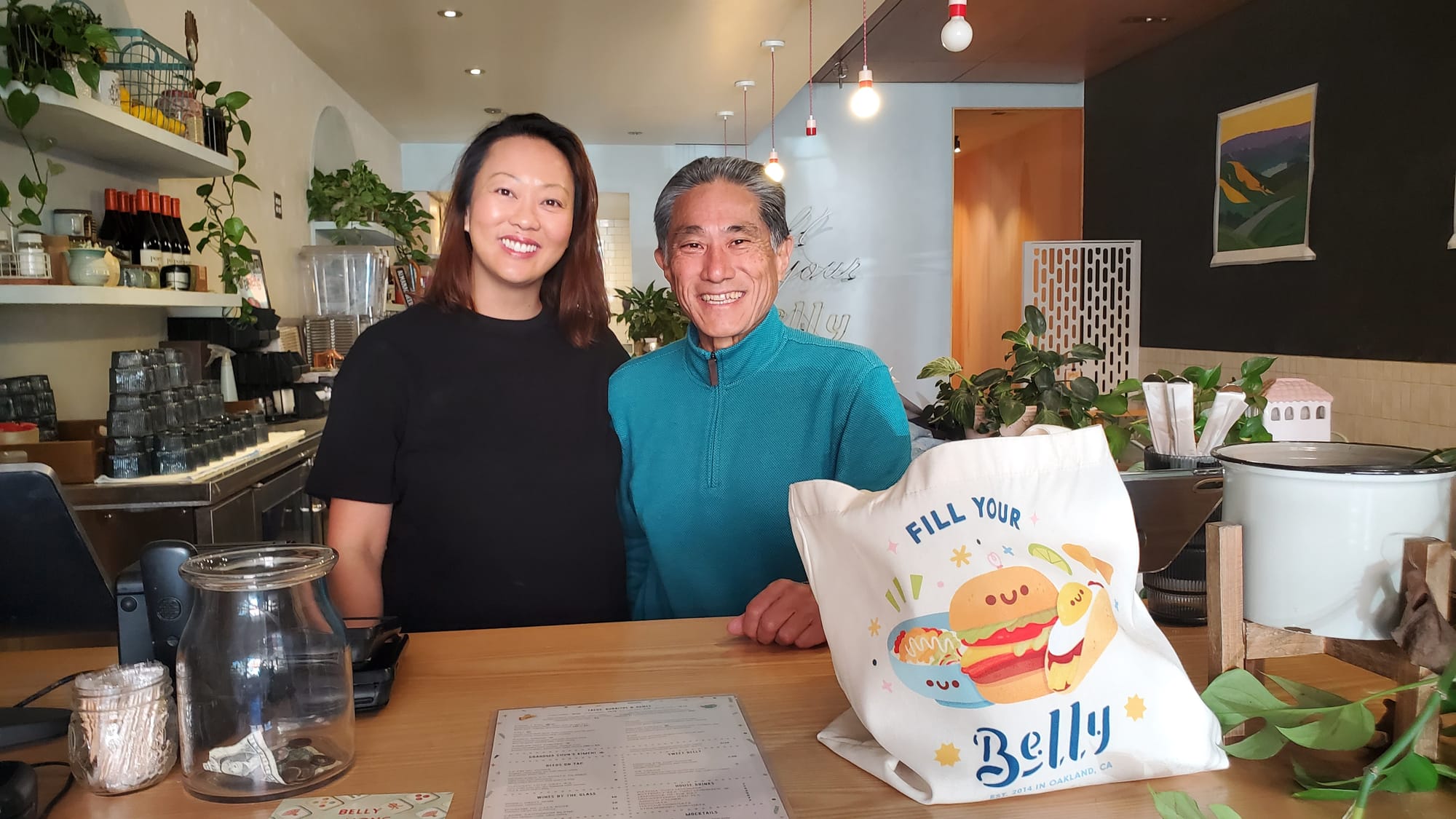
Last month, Woo made a move by filling the right side of the restaurant on Tuesdays with special game tables, each with a bright set of 144 tiles. Belly features the Hong Kong style of play, not the American version. Beginners are welcome to join in at a special table where Stephen Hamano, an intrepid trainer, walks novices through the intricate, rapid-fire play — providing patient, precise, and wise guidance to folks who have yet to click a tile.
Hamano stayed with our table of complete novices throughout an entire game. All participants are provided with handouts they can take home, and additional materials for advanced play that stay in the restaurant. Some folks come in as foursomes; Woo helps others form foursomes to fill the eight tables. No betting—rather, playing for points and pride—are the order of the evening.
Mahjong developed on the Chinese mainland, evolving from local games of skill and chance. Exquisite playing tiles were designed, incorporating nature and mythology. Winds, Circles, Flowers, Seasons, and Dragons become part of each player’s wall as they build their winning hand.
Some of the oldest tiles are ivory, emblazoned with characters and numbers. Modern versions are porcelain or plastic. The interplay between players and chance culminates in a final “Mah Jong” for the lucky, astute winner. Elaborate rules and combinations help build the intensity and speed of play.
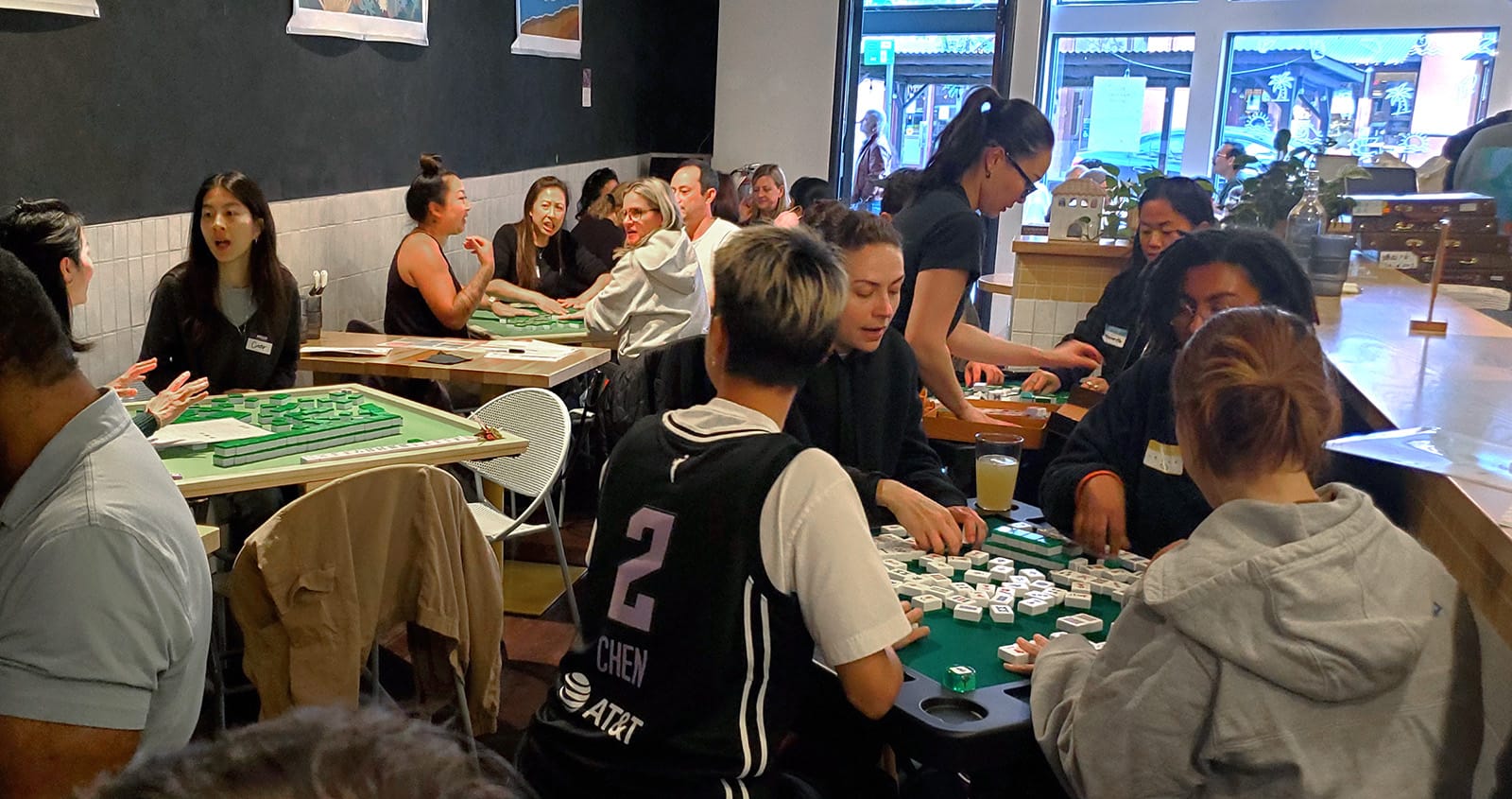
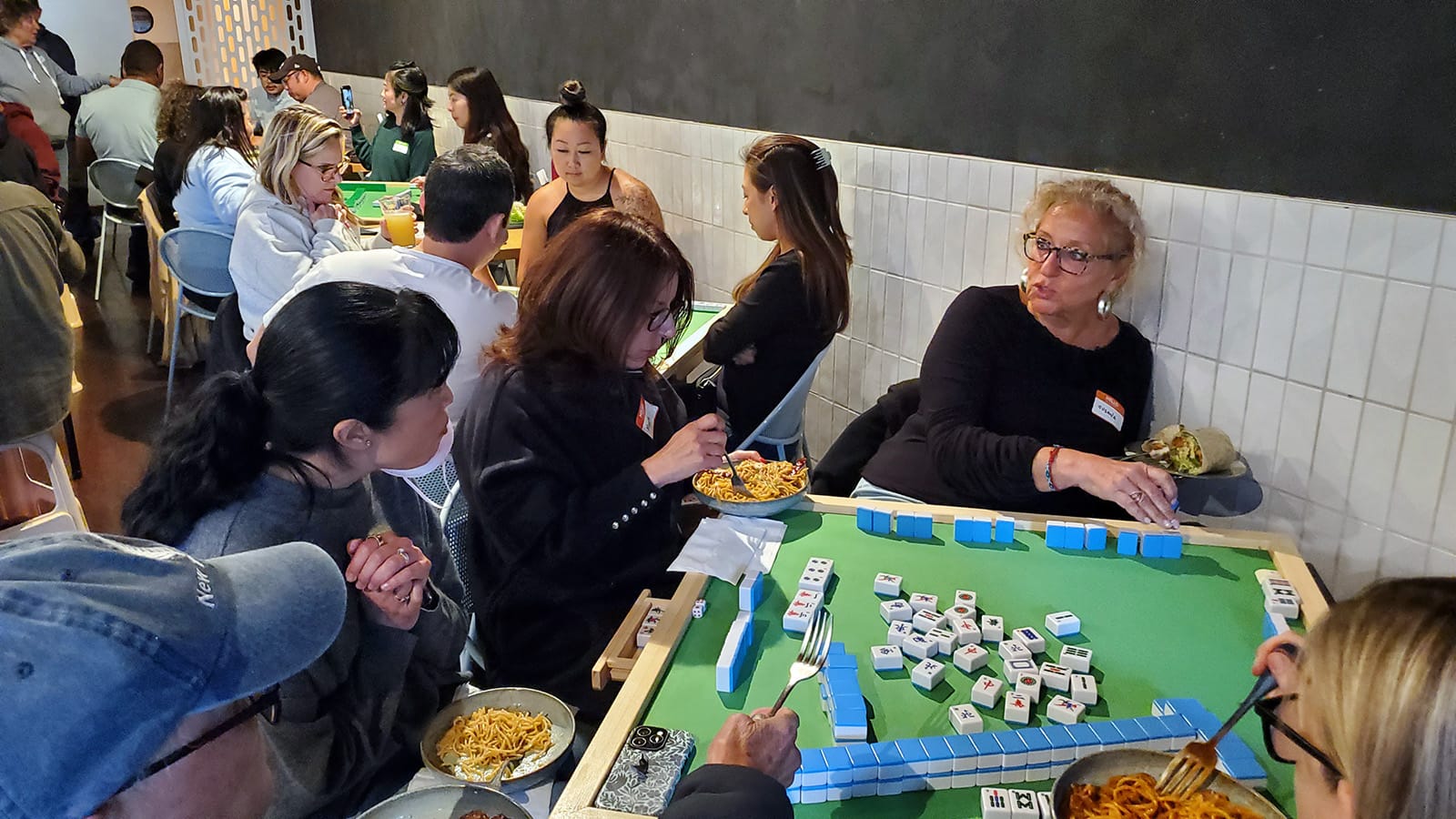
The venue was packed with new and seasoned players. Photo: Anna L Marks
Immigrants from China brought the game to America in the 1920s and ’30s, providing a sense of community for newcomers. Gatherings were more often all women, an outlet for what was initially an isolated position in this country. Sharing the need for community, Jewish women began playing the game in their new settlements. Their focus led to the formation of the National Mahjongg—yes, an extra “g”—League (NMJL) in 1937.
The NMJL formalized a different set of rules and practices for what is now known as American Mahjong (American style uses 152 tiles, has an additional element of Jokers, and issues new designated winning hands or “Cards” every year). Participants of both Hong Kong and American styles often refer to their mothers for their introduction to the game.
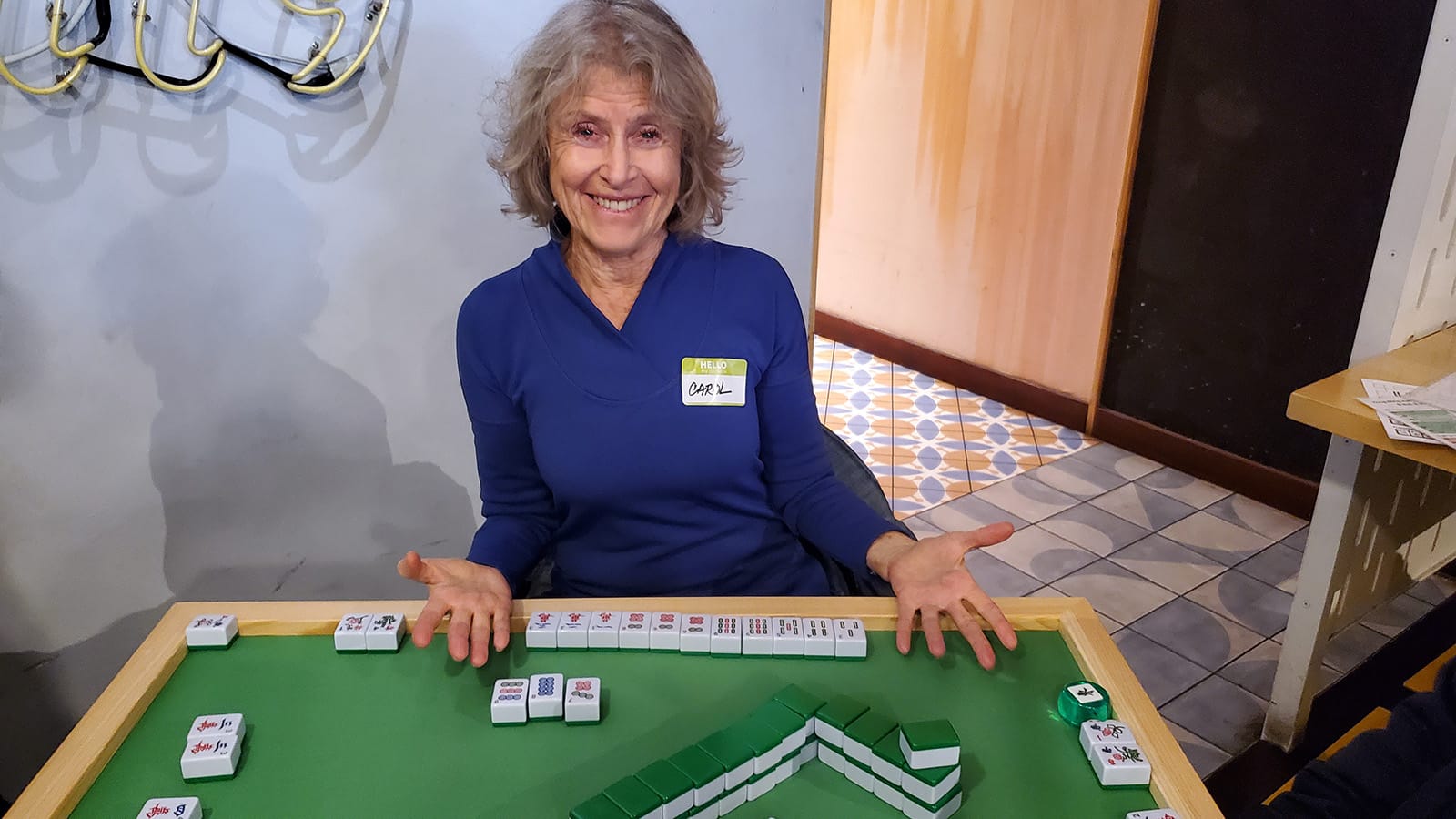
They all listened to the clattering of tiles in the next room with wonder. What was once marginalized became an influential force in connecting families and communities. Both variations have changed through time; however, each has maintained its distinctive character — culture is preserved through many means.
Join Alice and her team for an energetic, delightful continuation of this tradition. Food and drink are available; play goes from 5pm to 8pm. Beginners are encouraged to come early for instruction. American-style nights may be in the future. As Alice urges, “Come play with us!” Bring your mother.


