


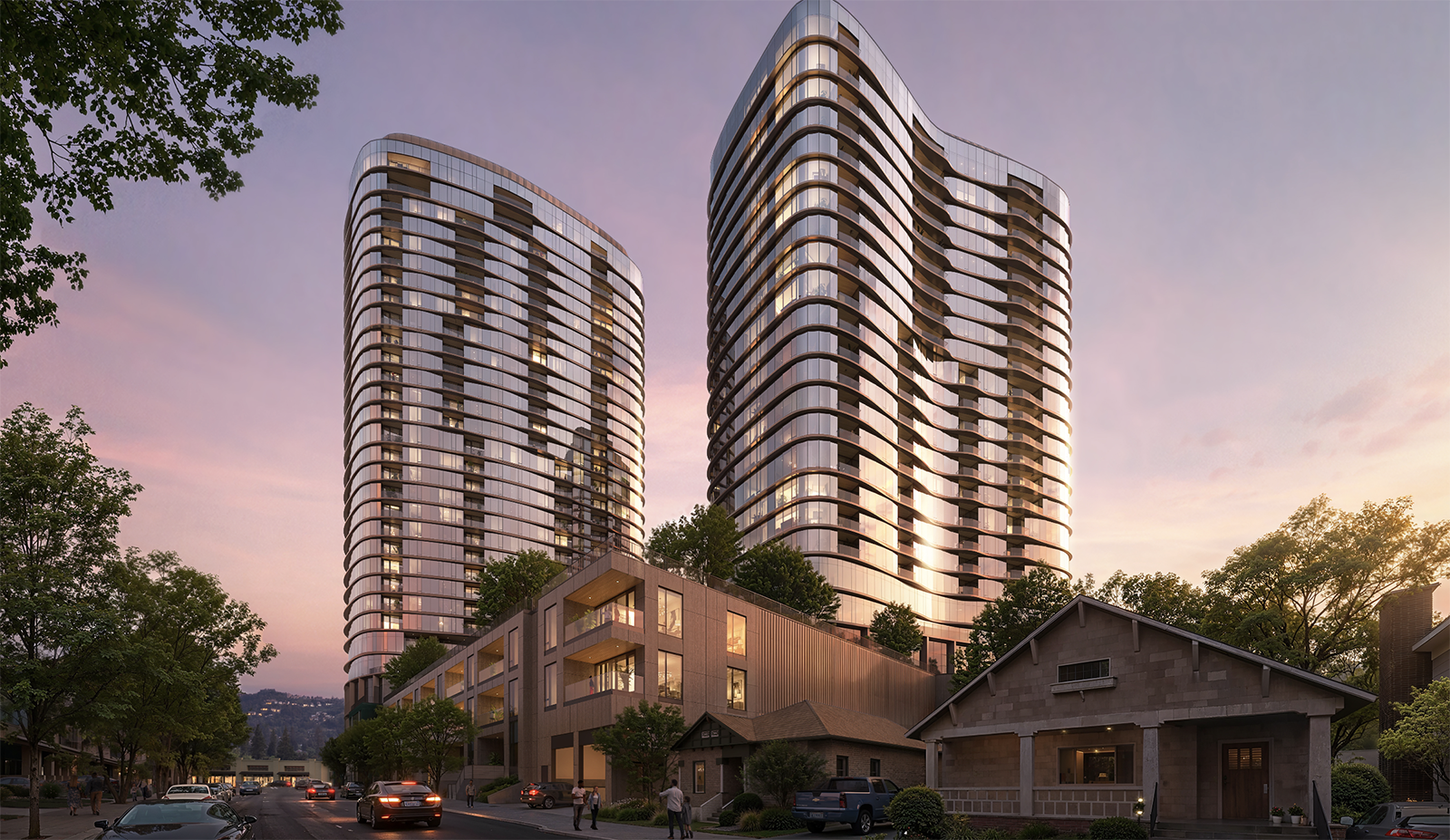
The proposal to construct two high-rise senior housing towers at the Trader Joe’s site has sparked widespread debate, raising important questions about who new development is meant to serve and whether current housing policies are truly addressing the needs of Oakland residents. At the center of this discussion is a growing divide between the rapid expansion of market-rate housing and the severe shortage of housing that is genuinely affordable for low- and very-low-income households.
Will the Towers Be Built Soon?
First, let us look at the likelihood that this project will be built within the next five years. A number of factors, both economic and practical, make it unlikely that this project can be built, or even started, during the period of a granted planning approval, known as an entitlement. The usual term of an entitlement is two years and can be up to five years for a major project like this one. Additionally, entitlements can be bought or sold, allowing for a similar project to be built with minor modifications with Planning Department approval.
Financing: Seven large housing projects in Oakland were returned to lenders between 2024 and 2026, including The Logan in Temescal, because the owners could no longer keep up with payments as rental income was not covering their expenses. This is a regional problem. An April 4 article by Nico Savidge in Berkelyside, explained that due to high interest rates and construction costs, 17 projects planned for downtown Berkeley are now on hold. (See also KQED’s Forum with Alexis Madrigal on this topic from February 2026.)
Additionally, our economy has yet to see the impact of disruptions to oil transit through the Strait of Hormuz on our trading partners. While America is the world’s largest oil producer, the economies of countries that produce goods American businesses rely on are taking a major hit.
Several Asian nations have adopted four-day work weeks or increased remote work for public-sector employees as a direct emergency response to the 2026 oil crisis and surge in prices. Key countries implementing these measures include the Philippines, Pakistan, and Sri Lanka. Additionally, current estimates indicate that American farmers will have at least 25 percent less fertilizer for spring planting, at double the average price, adversely affecting yet another important economic sector.
In the current economic climate, lenders are being extremely cautious. As the war in Iran continues, this along with many other factors cast doubt on the continued use of the dollar (commonly designated as the petrodollar) as the preferred global currency.
Practical Impacts: Immigrants comprise about 30–35 percent of the total U.S. construction workforce. According to a survey by the Associated General Contractors of America, 28 percent of construction firms reported being directly or indirectly affected by immigration enforcement within the past six months, including audits, raids, and worker fears. In key states like California and Florida, about 50 percent of the skilled construction workforce has disappeared, creating a critical shortage of skilled trade workers.
Tariffs: Another factor to consider is tariffs. Key construction materials, particularly steel and aluminum, are currently subject to 50 percent tariffs as of earlier this year. The cost of steel used in construction has also increased by 20 percent.
Why Senior Housing?
Population: In America, 80 percent of seniors (65+) are economically insecure, and 50 percent cannot meet basic needs. While the population of seniors in the Bay Area stands at about 20 percent, Oakland has a significantly smaller percentage of seniors, comprising only about 13.5 to 14.7 percent of the population.
Approximately one in eight seniors (roughly 12–13 percent) in Oakland lives at or below the federal poverty line, making it one of the highest concentrations of elderly poverty in California. Americans aged 50 and older are the fastest-growing segment of the homeless population.
Benefits to Developers: Building senior housing in California offers significant benefits under state law, primarily through the Density Bonus Law (Gov. Code § 65915). The primary benefit to developers is increased density, often 20–50 percent or more. Projects, including senior residential care facilities, can often bypass local zoning restrictions.
Under California’s Density Bonus Law, developers can obtain up to an 80 percent density increase for projects that are 100 percent affordable (more information on that below). A senior housing development, even without affordable units, can qualify for a 20 percent density bonus on 35-unit projects.
Developers can also request reduced parking standards, such as 0.5 spaces per bedroom, reducing development costs even further. Senior housing projects frequently benefit from additional state laws, including the Housing Accountability Act, which limits the ability of local governments to deny projects or require density reductions.
Who Defines “Affordable”?
The U.S. Department of Housing and Urban Development (HUD) calculates the Area Median Income (AMI) statistics upon which affordability metrics are based. AMI is calculated annually and then adopted by the California Department of Housing and Community Development (HCD). For fiscal year 2026, HUD defines “low-income” households in the Oakland-Fremont HUD Metro Fair Market Rent Area (which includes Alameda County) as those with gross incomes not exceeding 80 percent of the Area Median Income (AMI).
What Constitutes Affordable?
Affordable housing is a component of nearly every project and proposal for new housing, but what does the term actually mean? How do we define affordable? The term “affordable housing” is a powerful buzzword that conjures visions of everyone from un-housed individuals to moderate-income workers, such as essential hospital and educational personnel, being able to afford housing near their jobs. Typically, in market-rate developments—as are all the units built and proposed in Rockridge since 2020—“affordable” set-aside units are sold or rented to people earning 80 to 120 percent of AMI.
Affordable housing is desperately needed in Oakland if we are to retain housing stock for low-income workers, seniors, and people with disabilities. Oakland’s valuable diversity is increasingly threatened by gentrification driven by the continued construction of expensive market-rate developments, such as The Logan in Temescal, which is currently under receivership — while little to no housing affordable to low- or very-low-income residents has been built. Although many luxury-class market-rate apartments remain unrented and vacant, genuinely affordable housing is nearly non-existent, with demand far exceeding the available supply.
What Is the Area Median Income (AMI) for Alameda County?
Below are the 2025 AMI figures for Alameda County, effective April 1, 2025. They are used by the California Department of Housing and Community Development (HCD) and Alameda County government for affordable housing programs.
1-person household: $111,850
2-person household: $127,850
3-person household: $143,800
4-person household: $159,800
5-person household: $172,600
According to the National Low-Income Housing Coalition, housing is considered affordable if it costs no more than 30 percent of one’s income. Renters who pay more than this are considered “cost-burdened”; those who pay more than 50 percent are considered “severely cost-burdened.” In Oakland, approximately 58–61 percent of residents are renters.
According to Bay Area equity data, just under 57 percent of Oakland renters are cost-burdened. More than 20 percent of Oakland residents are severely cost-burdened, meaning they spend more than half of their income on housing.
Data indicates that more than 100,000 households in Oakland are renter-occupied. According to 2022–2026 data, the median household income for renter households has risen sharply to approximately $68,434, up from about $40,000 during the 2012–2020 period. This dramatic increase is largely attributable to the addition of roughly 12,000 market-rate housing units in Oakland over the five years leading up to early 2026, many of which were rented to higher-income tenants. Despite this shift, renters in Oakland still spend an average of 34.7 percent of their income on housing, underscoring the ongoing affordability crisis.
Despite this reality, due to the high cost of Bay Area housing, even households earning six-figure incomes can be designated as “low income,” as defined by HUD. The threshold applies to those earning incomes at or below 80 percent of Area Median Income (AMI). In Oakland, 80 percent of AMI is very high — $85,840 for a single person and $103,550 for a four-person household.
What Type of Housing Is Needed Most?
Affordable housing for low- and very-low-income households is essential, particularly units suitable for families, older adults, and people experiencing homelessness. The City faces an extreme shortage of housing and a regional mandate to plan for thousands of new affordable units to address high displacement risks and the needs of residents earning 50 percent or less of the Area Median Income.
Low-Income Thresholds, 2026 (Alameda County/Oakland)
- Low Income (80% AMI): Generally, around $159,800 for a family of four, though this varies based on household size.
- Very Low Income (50% AMI): Typically, in the $54,000–$60,000 range for a family of four.
- Extremely Low Income (30% AMI): Below 30 percent of the area median income.
Who Is the Builder’s Target Market?
According to insiders knowledgeable about the two-tower project proposed for the Trader Joe’s site, the minimum buy-in will be $1 million, with rents ranging from $5,000 to $10,000 per month. This is very much in line with the buy-ins and monthly fees described in the information packet and questionnaire distributed for the Claremont Avenue project across from Safeway, where buy-ins ranged from $1 million to more than $3 million, with monthly fees in a similar range.
The Affordable Housing Component
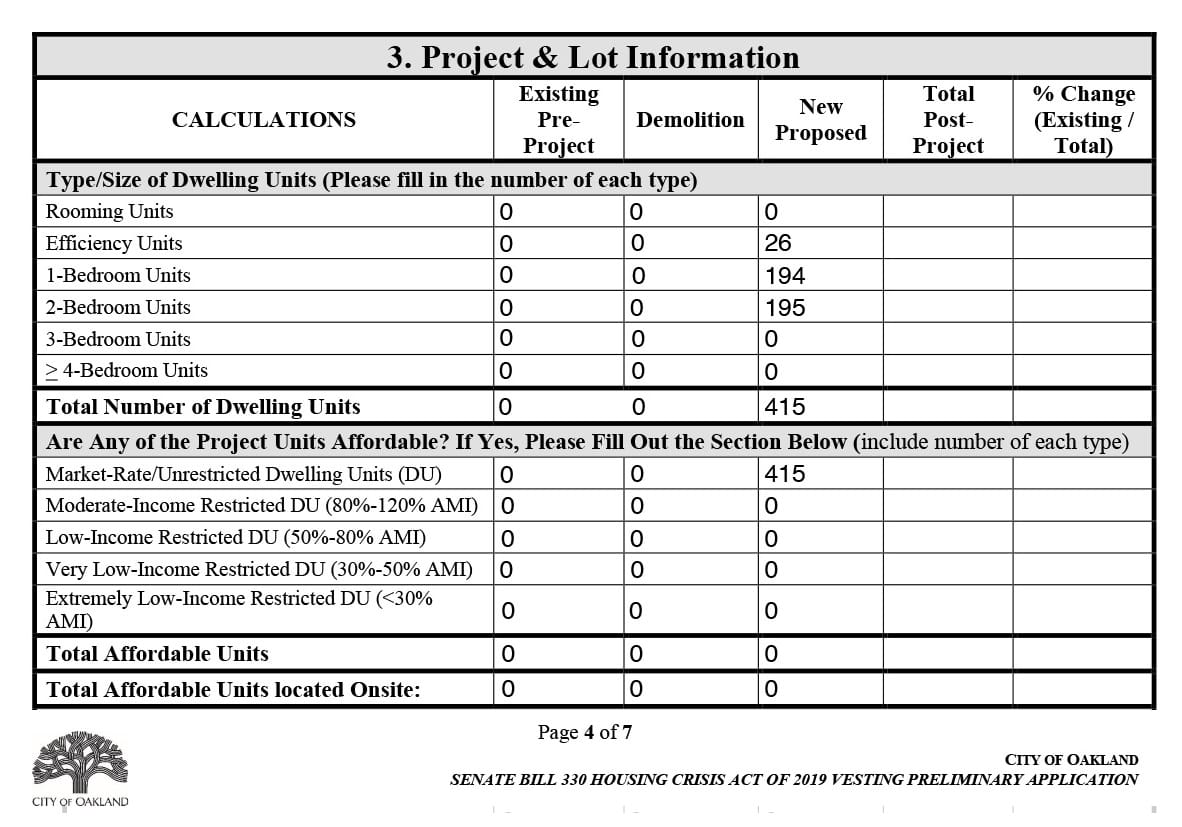
The TJ’s project will most likely include only a very small percentage of affordable housing. In a similar development originally proposed for the former California College of the Arts (CCA) site, the affordable units were priced at 120 percent of Area Median Income. At current levels, that would equal $134,220 per year for a one-person household and $153,420 for a two-person household.
As Oakland continues to confront a deepening housing crisis, the central question is not simply how much housing is being built, but who that housing is actually intended to serve. While luxury and senior developments may provide financial advantages to developers and satisfy certain state housing incentives, they do little to address the urgent and growing need for truly affordable housing for low-income families, workers, seniors, and vulnerable residents already struggling to remain in the city.
Without a stronger commitment to building housing that is genuinely affordable, Oakland risks accelerating displacement, widening economic inequality, and losing the diversity and community character that have long defined it.


