


Back in 2023, when we embarked on the Frog Park Climatescape project, we were greeted with a site of dirt penned in by a perimeter of concrete. Formerly a rose garden (and, well before that, a decrepit playground), the site’s irrigation system had broken and the roses didn’t stand a chance on their own, and thus perished. The City was going to put in a new irrigation system and try again, and this is when former Friends of the Rockridge Greenbelt (FROG) Committee Chair Theresa Nelson approached me about doing a planting plan for the site.
For those who don’t know, my area of expertise and focus of my landscape work is creating landscapes without irrigation that can be both climate-responsive and adapted to climate change. I call them Climatescapes, and they are now built upon years of documenting and monitoring how much water plants actually need vs. how much water we think plants need.
They are also built on years of site prep, planting, and watering approaches I’ve honed to help get the plants to the point where they can be on their own after the first year.
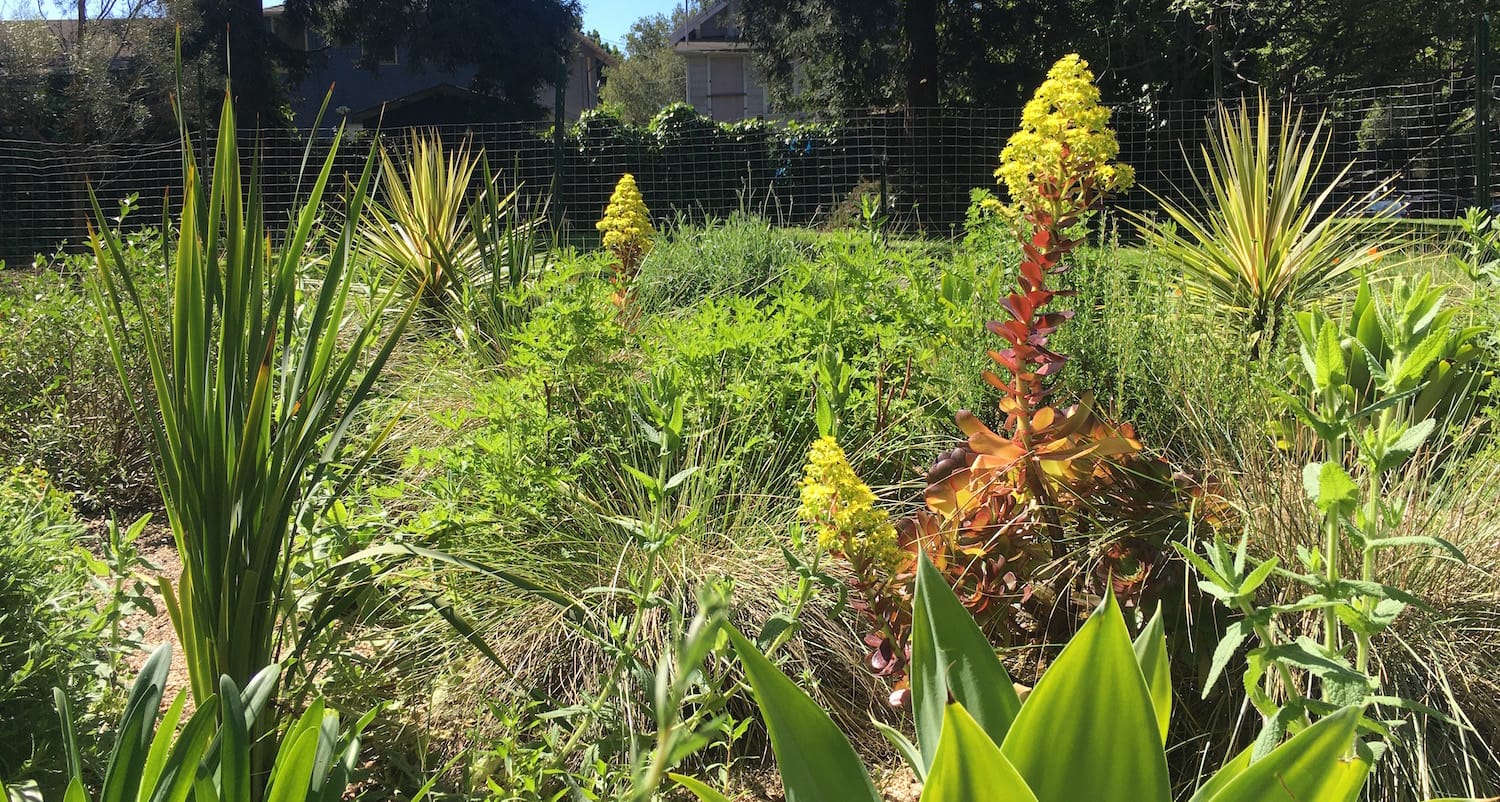
Knowing that the irrigation system the City installed would invariably break again–not because of the City and their work, but simply because all irrigation systems eventually fail–and knowing that year-round irrigation creates plants that are, in essence, addicted to that irrigation, I pitched the Climatescape approach to Nelson, which she then pitched to the FROG Committee—and so began the project.
My partner and husband James Rojas and I held a community workshop at the site and used a play-based method of engagement he has developed in which participants use found objects we provide to build models of both favorite memories and ideal spaces and places. In this case, we first had folks build models of both a favorite memory of a landscape, and then models of their dream Climatescape.
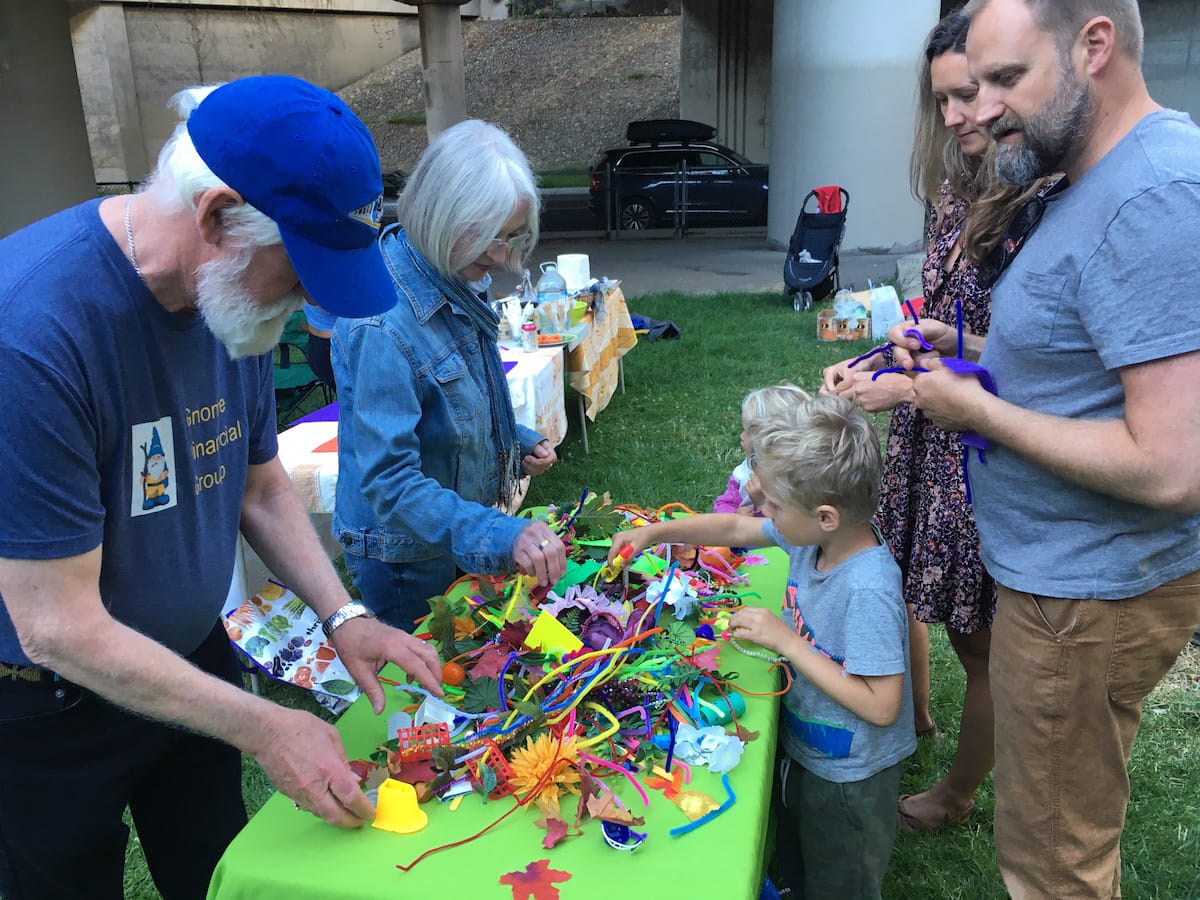
Recurring themes of the models included a sense of quiet awe and wonder, and elements people could perch themselves or climb on. The range of creative ideas and themes ultimately led me to the overall concept of the Climatescape as a quiet spectacle on a stage that would then have bleachers or risers around it, and that would allow anyone and everyone to observe, explore, and marvel in the “spectacle.”
Well, in early fall of 2023, we planted that quiet spectacle, starting first with removing asphalt that we discovered underneath the site (one more reason why previous garden iterations within the site haven’t seen much success). With much of the asphalt removed, the plants’ roots would now be able to go deep into the soil and allow them to survive our dry Mediterranean summers. Since the completion of this Phase 1, the plants have grown by leaps and bounds, needing to be watered only twice during the first summer.
Now we are at the point of moving Phase 2 forward, which will include the removal of more asphalt around the site, the addition of decomposed granite as a surface material, the installation of the bleacher/riser elements (in the form of log rounds at different heights), a permanent fence around the planted area, an interpretive sign that explains how the Climatescape works, two slab benches, a new tree, an additional gate in the chain-link fence that will be located to the south of the existing one, and the cleanup of an area of dead grass and exposed dirt underneath the freeway—converting that surface to a simple decomposed granite finish. The wooden elements will all be made out of reclaimed redwood.
In June, we will be presenting before the Parks and Recreation Commission to get Caltrans approval. Once these steps have been completed, we will be putting the plans out for bid from a contractor, selecting one (although I am a licensed landscape contractor, Phase 2 of this project is on a scale too large for me to take on), and then raise the money for the project. Given the City’s ongoing budgetary issues, we have to do our own community fundraising—the City communicated that they wouldn’t be able to pay for any of the project.
We are aiming to have Phase 2 completed in the fall. Once that has happened, the space will be open and available for all to enjoy, with ample seating and hangout spots that invite people to linger, explore, and learn about the quiet spectacle of the Frog Park Climatescape—a landscape that grows and thrives on rainfall alone, delighting the senses and welcoming bees, butterflies, and other pollinators into the space.


