


In this column, I feature not simply plants that are in bloom in Rockridge, but ones that can grow and thrive in non-irrigated environments. There is a wide, wide world of plants out there that hail from Mediterranean climate zones (such as ours), where it rains in the winter but almost never in the summer.
While our assumption is that all plants really want regular water, most plants in Mediterranean climates have evolved in unique and curious ways to withstand the months-long dry season. Giving them water at the wrong time just gets them confused and leads to a short-lived plant, or one that grows in ways it’s not accustomed to, lavender being a case in point.
Given the oddly warm and dry weather we had in March this year, many plants are a couple of weeks early in blooming. In any case, as the spring bloom season progresses, I will feature some of my favorite plants that both look cool in bloom and are also nice additions to the garden even when they aren’t in bloom (some plants do look like a whole lot of nothing when not in bloom).
Below is my Pick of the Day:
Pelargonium ‘Torrento’
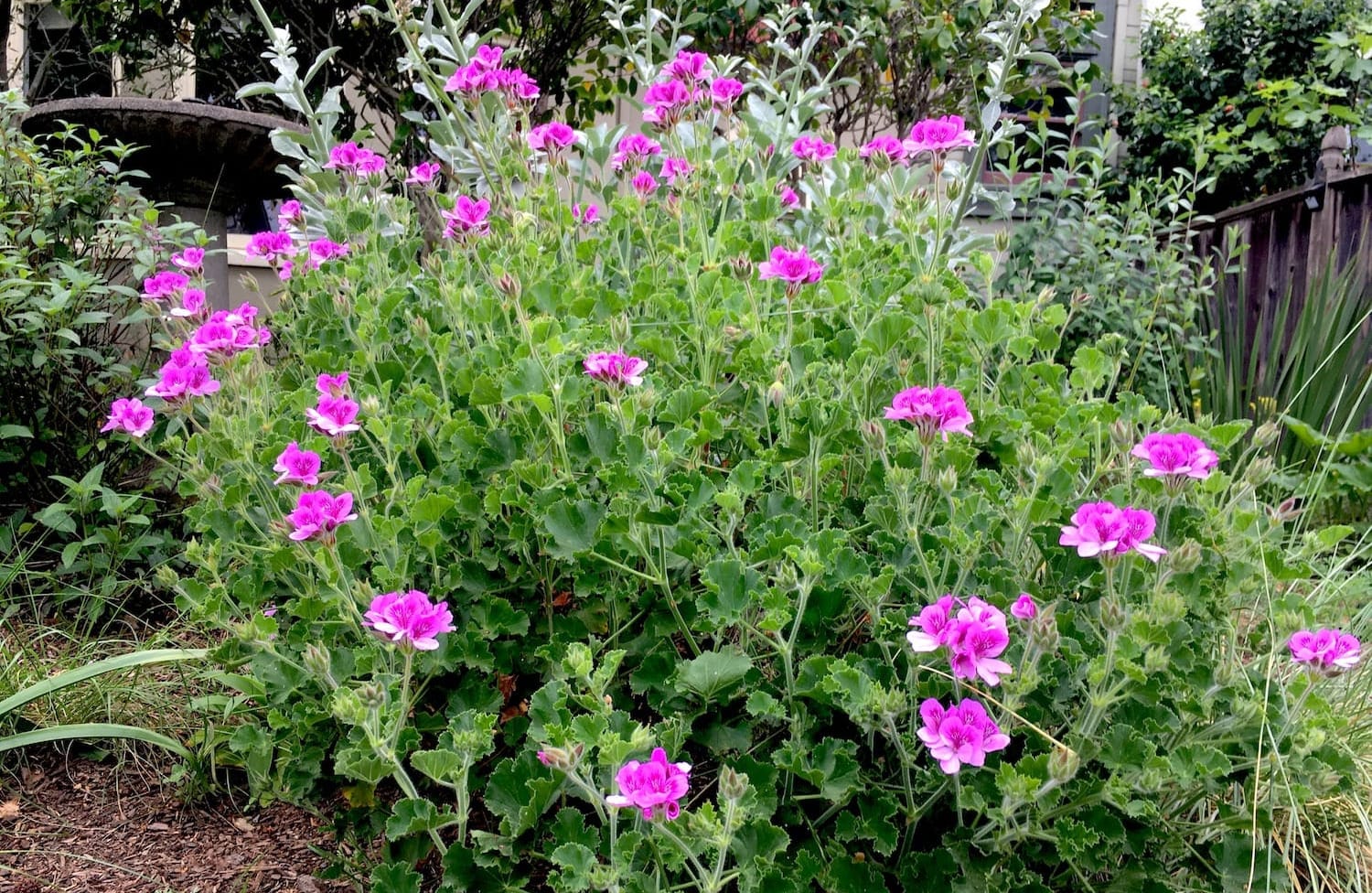
Pelargonium species are part of a large genus of plants that many people commonly refer to as “geraniums” (which is a misnomer—a holdover from when Swedish taxonomist Carl Linnaeus lumped Geraniums and Pelargoniums into the same genus).
While traditionally thought of as bedding plants or plants that you grow in containers, separate from other plants, most Pelargonium species will be quite at home mixed in with other Mediterranean-climate species in a garden.
Hailing largely from Southern Africa, they are used to low-nutrient rocky soils and seasonal moisture. Since their discovery by the nursery trade, they have been hybridized for foliage color, foliage scent, and flower color and shape.
Pelargonium ‘Torrento’ is a scented-leaf variety that is supposed to smell like ginger; however, as each person smells (and tastes) things differently, you might say the leaves smell more like lime—or even pine.
To give you a sense of its water needs: in the front yard here, I planted it in the fall and then watered it once in July and once in August (1.5 gallons each time) in its first year, and have largely left it alone since.
As a drought adaptation, it will drop some leaves toward the tail end of the dry season, but a hard pruning (cutting it down by half or two-thirds) in fall, around the first rains, will help stimulate the regrowth of fresh green, fuzzy new leaves toward the base.
As seen in the photo, its flowers are pinkish-white and bloom for at least a month in spring. Bees and other pollinators enjoy them too. When not flowering, the plant has a relatively tidy, cushion-like shape, and its green is lime-like rather than gray, thus giving it a fresh look in the garden despite its drought tolerance.


