

My wife and I have lived on Auburn Avenue for 29 years, adjacent to the proposed site at 6230 Claremont Avenue. While I support the development of a senior care facility at this location, I am concerned that the scale of the 83-foot, 203-unit facility proposed by Ellis Partners and Spirit Living Group presents significant risks to public health and safety.
Several of my neighbors have already communicated requests for systematic risk-assessment studies regarding seismic, traffic, and fire safety. The purpose of this message is to elaborate on the request I made at the February 18 Planning Commission meeting for a systematic shadow and sunlight study comparing the proposed design against a zone-compliant building, accompanied by a comprehensive health impact study.
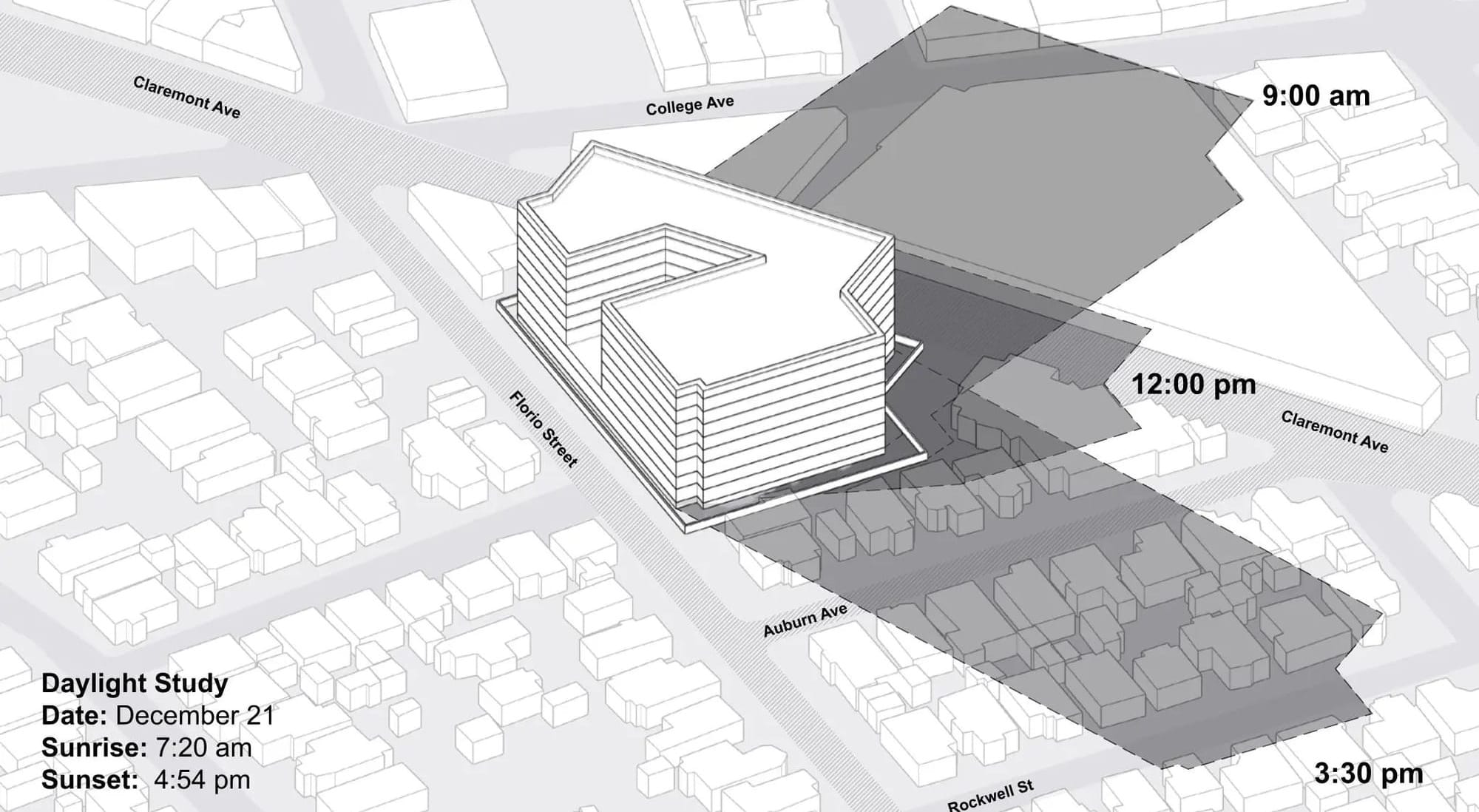
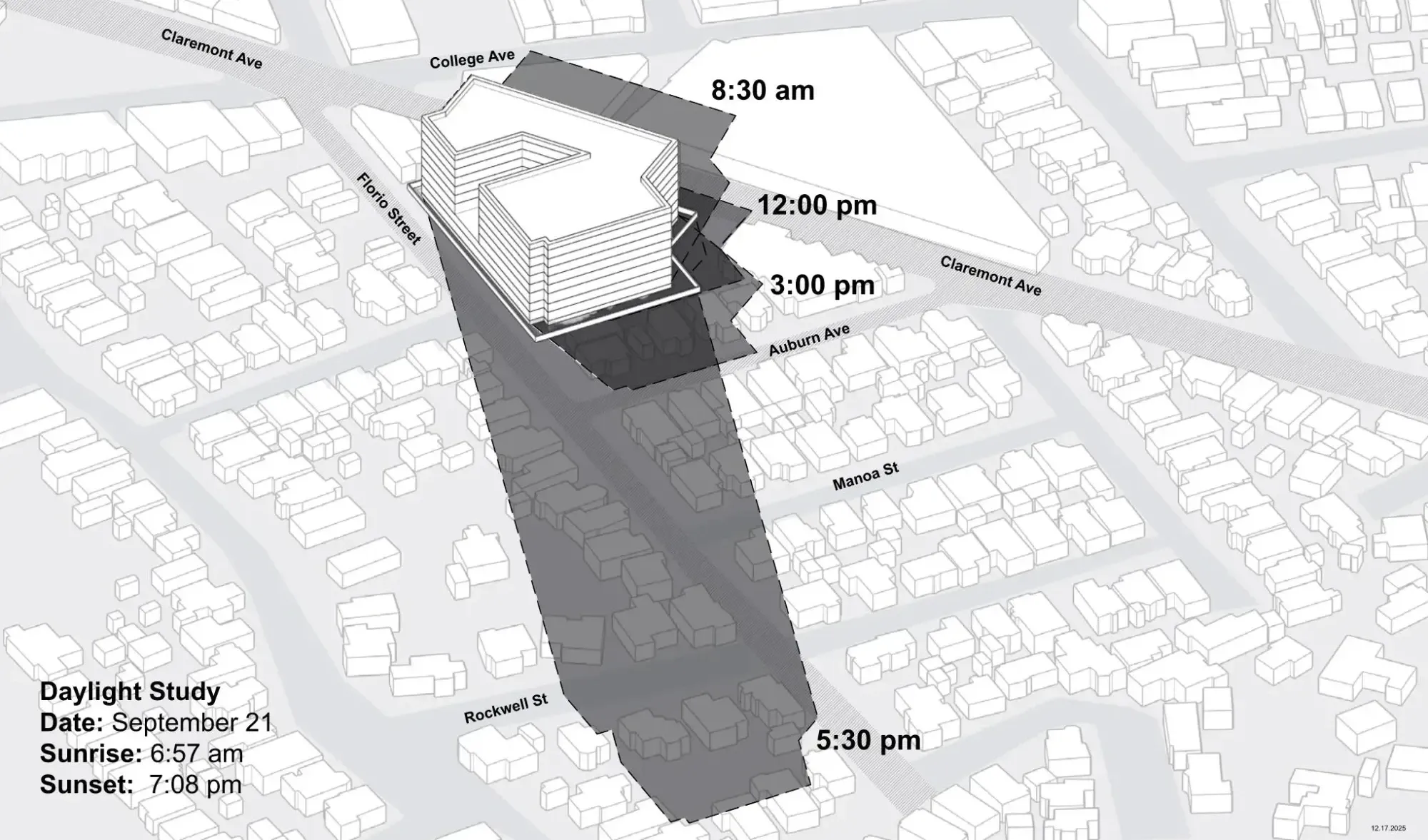
The developers claim to have conducted a shadow study showing that their 83-foot-high building with a 15-foot setback would admit the same amount of sunlight to the adjacent residences to the east as a zone-compliant building 55 feet high with a 5-foot setback. However, their shadow study is inadequate for the following reasons:
- Insufficient Data: The study fails to sample enough solar positions, dates throughout the year, and times of day.
- Lack of Comparative Analysis: The developers’ study does not actually compare the proposal to a zone-compliant building because it does not include step-backs. Per code, buildings over 30 feet adjacent to residential properties must step back one foot for every foot of height above 30 feet. An 83-foot vertical wall will block significantly more afternoon sun than a 55-foot building with code-compliant step-backs.
- Public Space Impact: The proposed height would place the popular public plaza in front of the Safeway in total shadow during winter mornings, depriving the neighborhood of a vital sunlight source during peak usage hours.
Inadequate sunlight is a recognized public health concern. I urge you to investigate the following potential impacts:
- Respiratory Hazards: Increased moisture and mold growth in shaded areas can trigger asthma and chronic lung conditions.
- Seasonal Affective Disorder: Reduced sunlight can exacerbate fatigue and depression.
- Chronic Disease Risks: Research from institutions such as the Mayo Clinic and the Harvard School of Public Health links insufficient sunlight to increased risks of cardiovascular disease and certain cancers.
I urge further reviews include a systematic comparison of the current proposal against a zone-compliant building, alongside a comprehensive health impact assessment.
Jack Gerson, BS, MS, MPH, PhD (Biostatistics)
jackrgerson@gmail.com


