


Walking down the streets of Rockridge is always full of surprises; you never know what plants will be in bloom. Each yard feels like a small revelation, bringing together species from as far away as Australia to mingle with California natives. These gardens, tended mainly by women, are well cared for yet never rigid; they spill with personality and care.
Nowhere else in California have women played such a visible role in shaping the look and feel of urban design. These lush front yards are my retreat from the world — safe havens where my mind and body can drift amid their messy beauty. My eyes linger on the fuchsias that hang like earrings, the tall grasses that rise into skylines, and the pink hibiscus whose petals swirl like the dresses of dancing girls.
These visual, spatial, and sensual encounters with nature are more than decoration; they are woman-led acts of environmental stewardship. They fight climate change by transforming lawns into living, breathing expressions of love and care woven into the urban fabric.
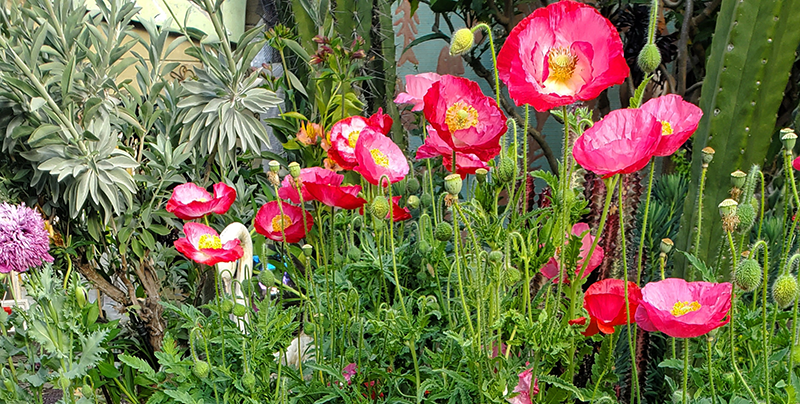
In recent years, however, as housing prices drastically increased, those with greater wealth and privilege have moved into this ready-made neighborhood and, rather than creating it, are consuming it. They’re drawn to the “vibe,” the prestige, but what they often want is a bigger house, a private driveway, and the comforts of consumption.
Nowhere is this shift more visible than at the curb, that thin edge between home and street where the old spirit of Rockridge meets the public life of the neighborhood.
Rockridge’s Curb Appeal
Rockridge’s front yards are critical spaces where nature and community grow hand in hand. Many women play a major role in the neighborhood’s everyday resilience, using their imagination, resources, and hands to retrofit their yards to meet personal, cultural, and environmental needs.
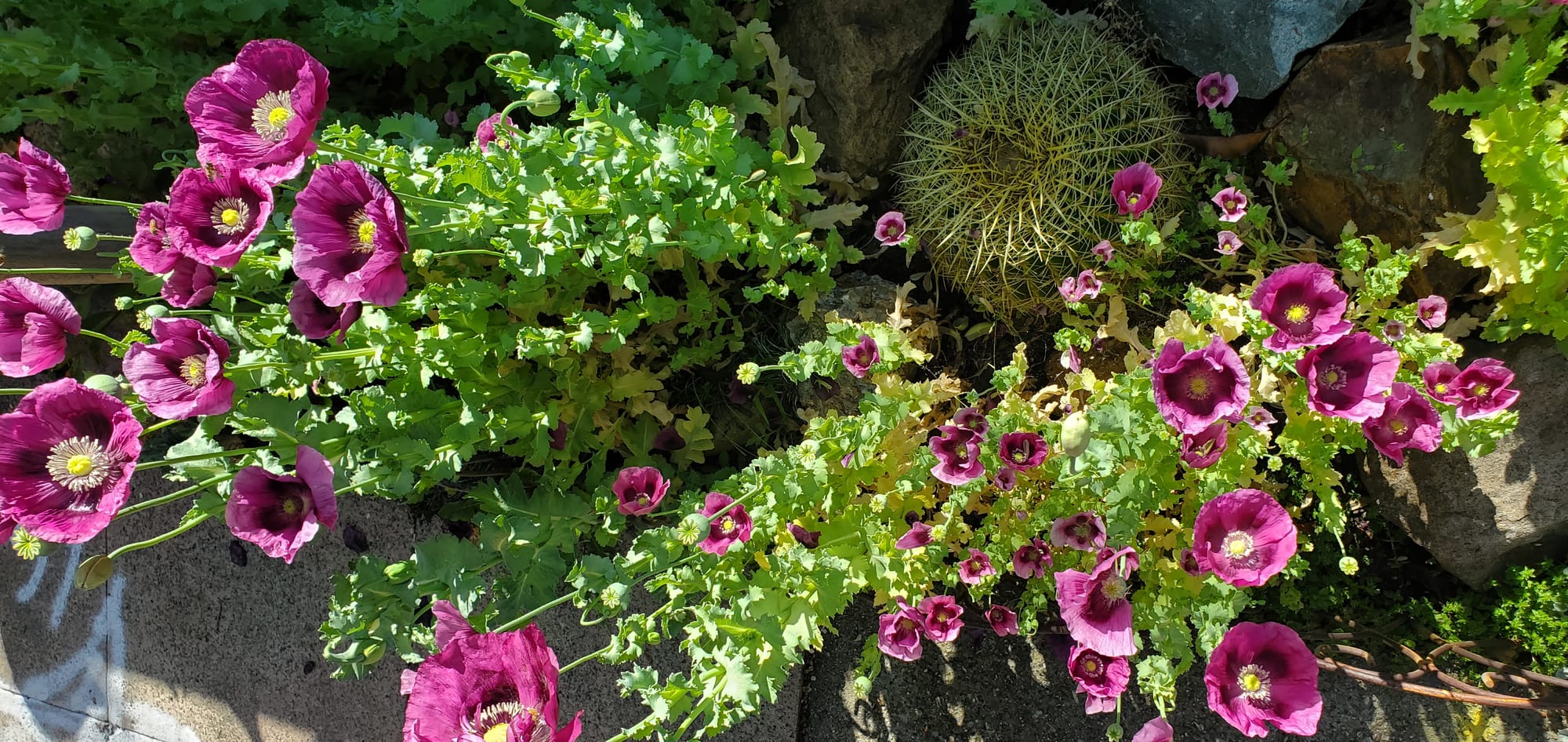
The beauty of these rasquachismo (DIY) gardens cannot be measured by design standards but rather by lived experience, by expression, adaptation, and care. These gardens represent residents’ ongoing adaptation to their environment and the cultural production of space.
Many women from across the U.S. have found a haven in Rockridge. Their front-yard plantings form a kind of silent plaza that ties them all together. The front yard becomes an extension of home life, a dialogue between domestic and public space that manifests in how they redesign their gardens.
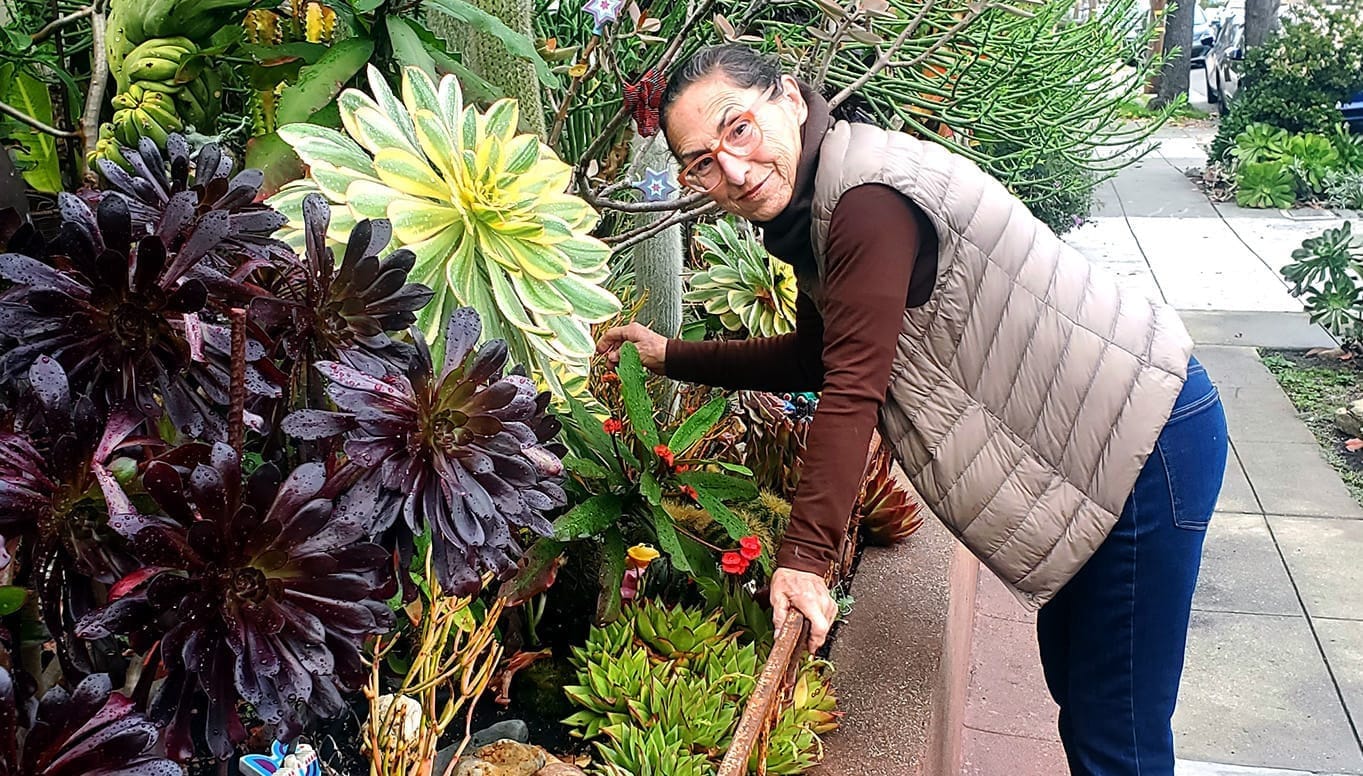
Unlike the conventional American front yard, where order, perfection, and the display of values are the ideal, Rockridge’s grande dame landscapes are messy, alive, and deeply personal. They highlight struggle, survival, and, ultimately, a sense of belonging.
These gardens scale down the home to the pedestrian, creating edges where residents and passersby can meet, pause, and connect. In their layered beauty and imperfection, they model a grassroots urban design, intimate, inclusive, and profoundly human.
Memory, Belonging, and the Production of Place
Digging deep into memories of place and belonging allows everyone, not just city planners, to have a voice in shaping the planning process. Through the stories communities tell about their landscapes, and through the life narratives expressed by front-yard gardens, we begin to understand how we are shaped by the places that have nurtured us, and how we, in turn, can shape landscapes to reflect the values most important to us.
Landscape teaches us to examine the ephemeral yet enduring aspects of nature that help shape our contemporary cities. For a multi-generational community such as Rockridge, this understanding begins with the spaces, relationships, and stories we inherit from our elders.
When we uncover these less tangible but no less integral elements of community, we begin to see how memory, imagination, and care transform mere infrastructure into place.
Show me your front-yard garden, and I will show you Rockridge.


