


In the late summer of 2023, what had once been a derelict playground, then a rose garden, then a patch of dirt penned in by a concrete perimeter, became a completely transformed space, full of life in the form of new plants, wildlife, and people who have come by to enjoy the newly enlivened space.
Called the Frog Park Climatescape, the landscape is a new kind of garden that I created that is both anchored within our mediterranean climate and a response to climate changes. To make the landscape a success, I built off many years of experience designing, installing, and monitoring landscapes that can grow and thrive without supplemental irrigation after the first growing season.
To make the Frog Park Climatescape a success, however, has required a little extra heavy lifting. During the site-prep phase of the project in August 2023, we started digging to plant the plants and discovered that the whole site was lined with asphalt. To give the plants a fighting chance, we ended up having to jackhammer out four-foot-wide holes within the asphalt so that the plants’ roots could access the deeper soil below.
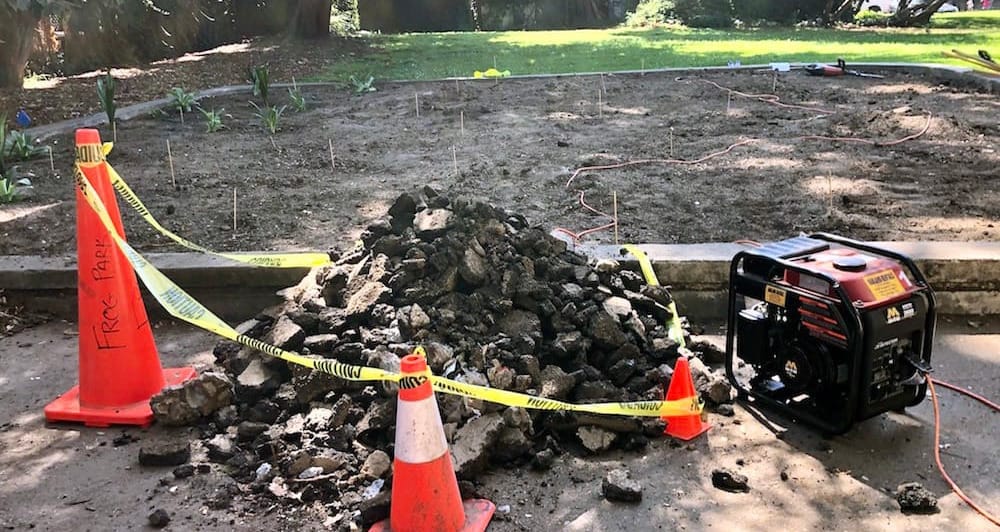
In addition, in the spring of 2024, part of a tree fell on the landscape, causing both extensive damage and drastically changing the light conditions within the space. As a result, we had to retool a portion of the landscape that had been in deep shade but was suddenly in full sun.
We also planted two new trees just to the west of the Climatescape to help add more filtered light back into the space. Those trees are a non-fruiting olive and a Eucalyptus spathulata (no, not Eucalyptus globulata, the one that grows in the hills and is flammable), both of which are from mediterranean climates like our own.
Almost all the plants within the Climatescape hail from the mediterranean climate regions of the world—including California, the Western Cape of South Africa, and the Mediterranean Basin. These plants have all evolved in unique ways over time to withstand dry summers and wet winters.
Some of the plants you can see growing within the space are rarer varieties of Pelargonium (that is what many call “geraniums”), such as “Prince of Orange,” whose leaves smell like oranges; the strange and striking Anchusa azurea with its electric blue flower spikes; and multiple varieties of California’s own buckwheat (aka Eriogonum).
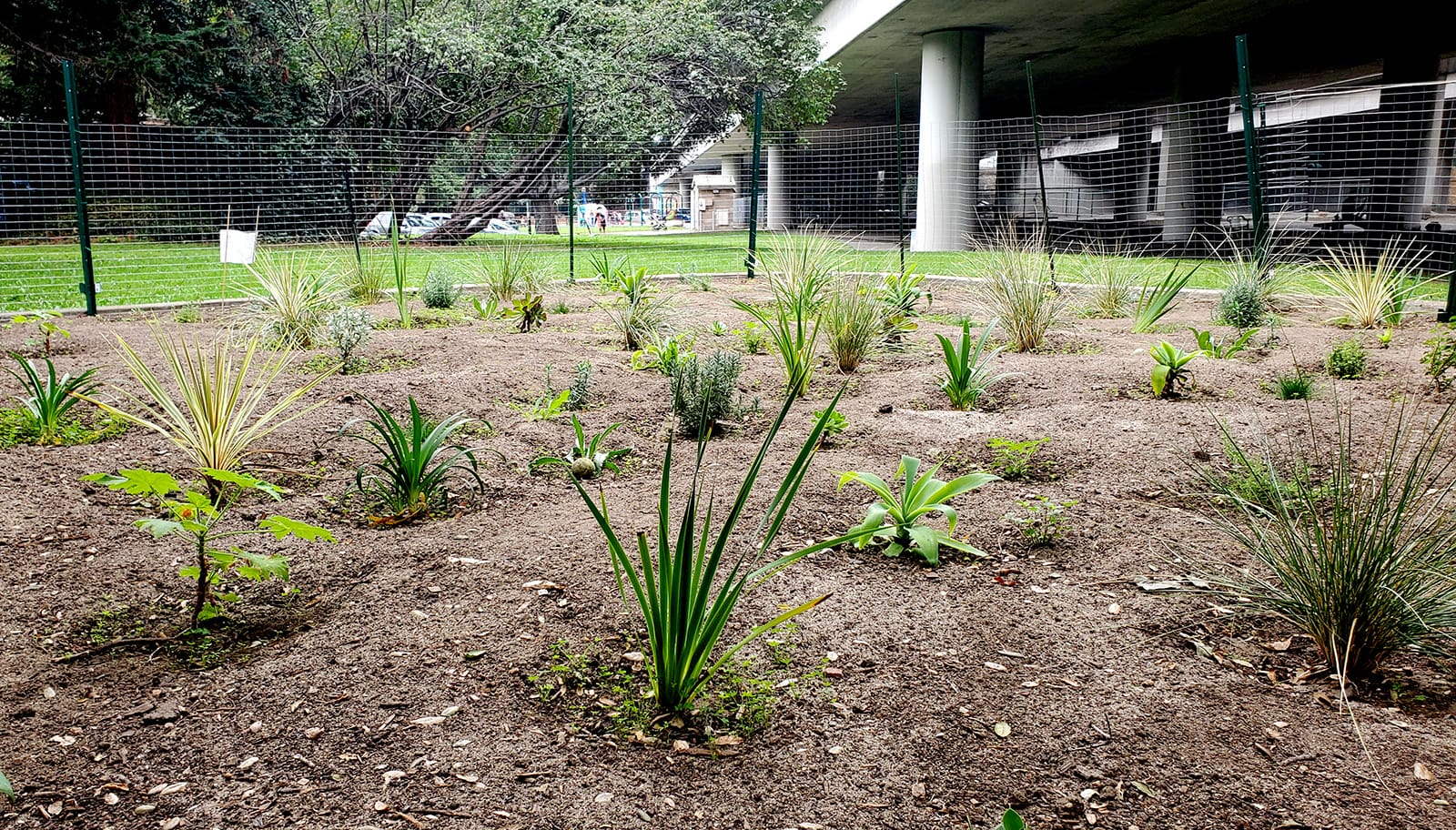
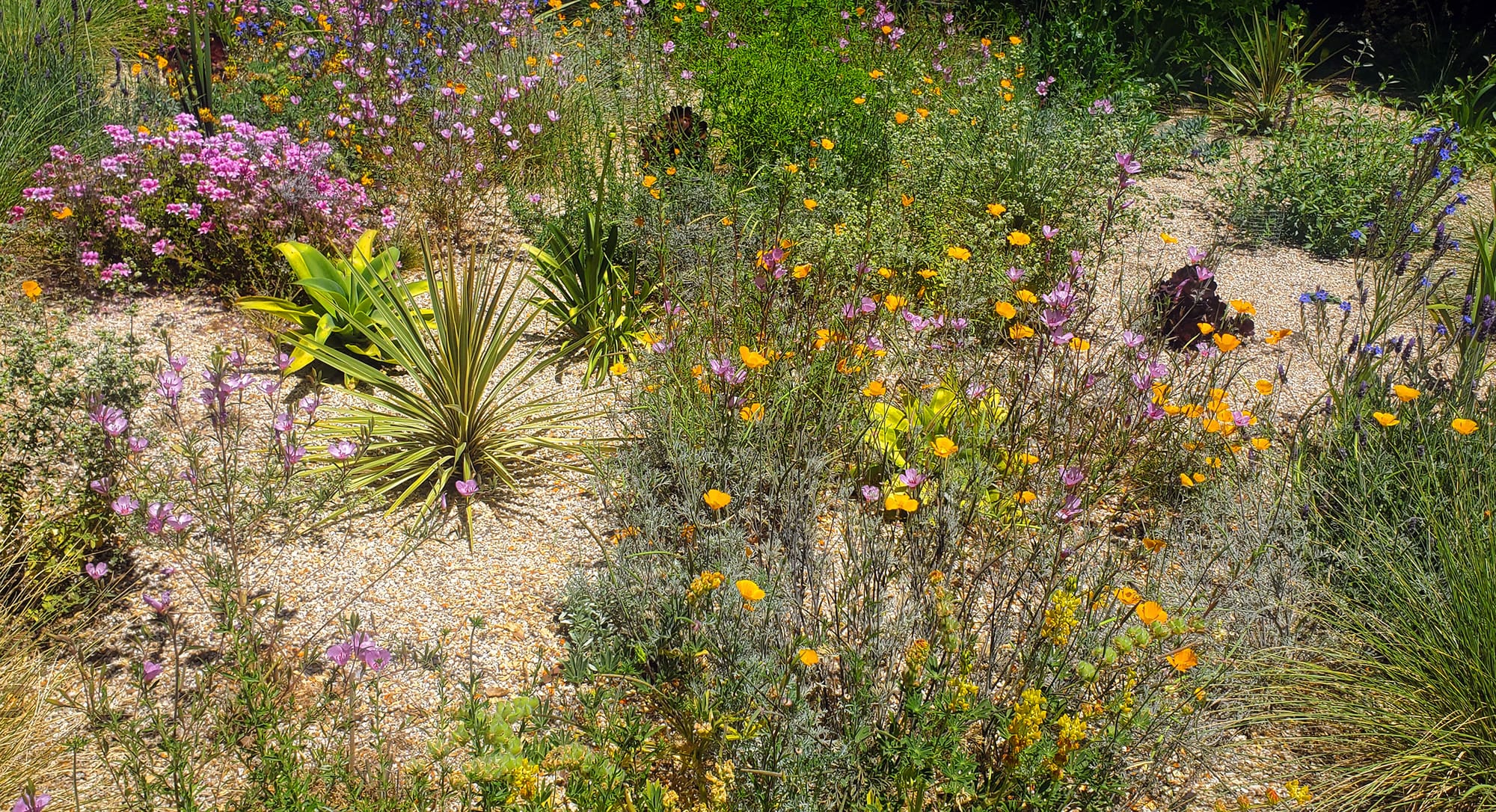
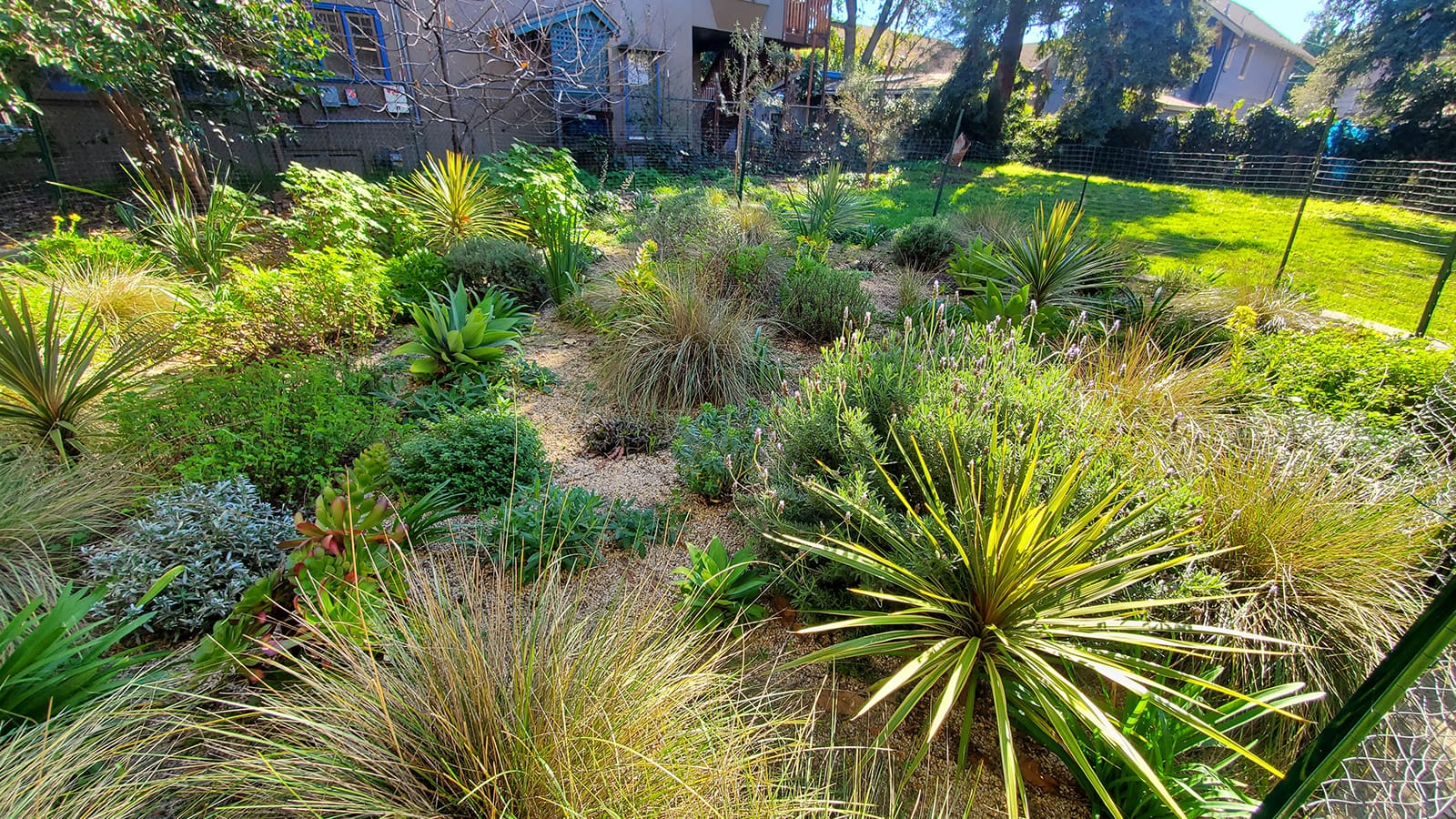
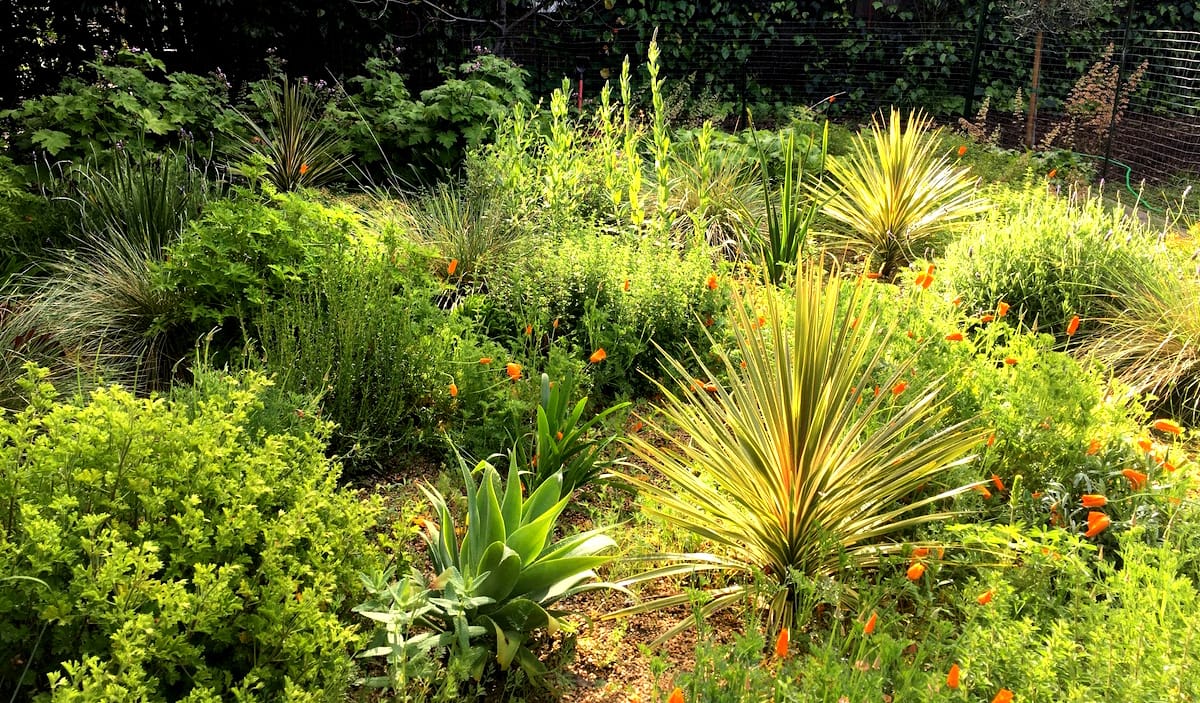
The Climatescape garden has filled in nicely since being planted 2023. Photos: Anna Marks and John Kamp.
The range of flowers within the Climatescape means that a huge variety of pollinators, great and small, descend on the space come spring and summer. To add even more pollinator appeal and seasonal color, we also created a custom wildflower seed mix for the site.
Some of these wildflowers include Clarkia, lupine, California poppies, and a lesser-known variety of Nepeta called Nepeta tuberosa. In fact, Nepeta tuberosa is one of the plants we get asked about the most. Come early summer, its huge purple flower spikes make a strong vertical presence in the Climatescape — and the bees go crazy over them.
Now entering its third year, the Climatescape has grown by leaps and bounds (even I am surprised by how big everything has gotten) and soon will be surrounded by new additions that will allow more park-goers to relax, play, and observe the changes and goings-on within the garden space.
New seating will be added, as well as elements children (and grown-ups) can climb on, creating a kind of deconstructed bleacher/riser arrangement that will allow you to observe the quiet spectacle that is the Climatescape.
A new gate within the chain-link fence will also be added, along with interpretive signage explaining how the Climatescape works and how you can create a landscape without supplemental irrigation and have it grow and thrive.
Additionally, a more permanent, simple, modern fence will be installed around the garden’s perimeter. We will also be removing more asphalt and adding decomposed granite to create a pleasing surface for our feet and eyes, as well as more permeable surfaces to help protect and restore our watershed.


